



Your basket is empty

‘A whole new level of weird,’ according to Warp’s sales notes: ‘Lopatin describes Garden Of Delete as a ‘self- portrait’... Musically the album contains a plethora of ideas spliced together seamlessly: great rushes of death metal and distorted R&B pop vocals, for example, all woven together with typically OPN broken chord synths and sleek sound design.’
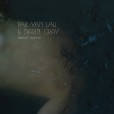
The basis of these works is a set of scintillating, widescreen improvisations by the Brussels-based pianist Pak Yan Lau (prepared piano, toy pianos, synth, objects and electronics) and Darin Gray (bass, preparations, objects and electronics), who has played alongside Jim O’Rourke for twenty years.
Over time Pak Yan added, layered, twisted, subtracted… including a recording of the underground tram in Albert, Brussels, for example. “I frequent this station all the time,” she says, ‘because my daughter goes to kindergarten there. One day there was an electricity problem, the whole station was humming, beautiful overtones coming out.”
“I liked the contrast between trudge (meaning you kind of move forward with difficulty and obstacles on your feet) and lightly (even in that situation doing it gracefully and lightly). The music on this record has that light/dark–ness.”
‘Mesmerising, fresh, inventive and intense,’ writes Stef Gijssels for The Free Jazz Collective.
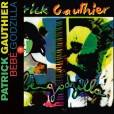
Keyboardist with Heldon, Magma and co, joined on his debut LP by the likes of Richard Pinhas and Christian Vander — no less — together with Bernard Paganotti, François Auger, Didier Batard… An outstanding mixture of synthy electronics and jazz-rock. First vinyl issue.
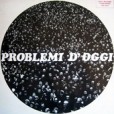
Dark, spooked, early-seventies worries from PU — disguised as M. Zalla, in the throes of his fascination with psychedelia and electronics — with titles like Mondo in Crisi, Problemi Sociali, Azione Sindacale and Mafia Oggi.
Drum-machines, Moog and EMS Synthi.
Still acutely germane; musically and temperamentally.
Demdike Stare has called it the first techno record.
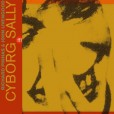
The 1994 return of pioneering electronic guru Richard ‘Heldon’ Pinhas to the forefront of the French underground scene. The fruits of a two-year collaboration with John Livengood from Red Noise and Spacecraft, inspired by Norman Spinrad’s novel Rock Machine. First vinyl issue.
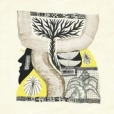
Absorbing new music from Ecuador, named after a street in the historic centre of Quito.
A poignant, trippy, astute, bass-heavy blend of a range of styles including juke, reggaeton and UK garage, flavoured by their to and fro between Latin America and Europe.
Quixosis’ grandad was a key, controversial player in the explosion of musica nacional in the city in the early sixties, and the mix is studded with evocative samples of Italian chanson and South American folk from his record collection, in a kind of reverie about national and self identity, Beat Konducted at the centre of the world.
Check it out.
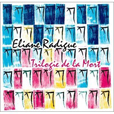
‘What does it mean to listen? I mean, really to listen to the infinite possibilities of every moment of our sonic lives? No composer in 20th and 21st century music asked the question more sensitively, or more profoundly than Eliane Radigue, who has died at the age of 94.
‘Radigue was a sonic pioneer. Pre 2001, her music was made exclusively for synthesisers, because the technology allowed her to get inside the world of sound, stretching individual pitches into seeming infinities of slowness and concentration, in a way that traditional composition didn’t. Listen to the epic scales of ever-changing changelessness — a paradox that makes sense when you encounter her music — of her Trilogie de la Mort to experience what I mean. As Pascal Wyse wrote in his interview with her, Radigue’s use of synthesisers meant that ‘the music didn’t contain sound: the sound contained the music’ (The Guardian).
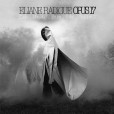
The CD is from Important.
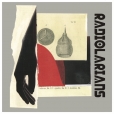
‘Dave Cudlip’s debut album, inaugurating the highly promising, experimental label Klang Tone (spawn of the estimable Stroud record shop): a stunning and unique combination of ethereal ambient soundscapes, undulating rhythms, and atonal sound collage, with Harmonia and Autechre looming amongst its forebears.’

The return of Jim O’Rourke’s Moikai imprint, after an interlude of two decades.
‘Threading together twelve distinct episodes into a flowing whole, Spectral Evolution alternates moments of airy instrumental interplay with dense sonic mass, breaking up the pieces based on chord changes with ambient ‘Spaces’. At points reduced to almost a whisper, at other moments Toral’s electronics wail, squelch, and squeak like David Tudor’s live-electronic rainforest. Similarly, his use of the guitar encompasses an enormous dynamic and textural range, from chiming chords to expansive drones, from crystal clarity to fuzzy grit: on the beautiful Your Goodbye, his filtered, distorted soloing recalls Loren Connors in its emotive depth and wandering melodic sensibility…
‘Spectral Evolution is the quintessential album of guitar music from Rafael Toral.’