
Your basket is empty

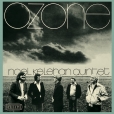
‘Stunning, moody, spiritual jazz from Ireland, recorded in 1979; featuring original compositions such as the deep collectors’ cut Spon Song, subtle Latin flavours on Spacer’s Delight, and a beautiful modal arrangement of the traditional Irish air Castle of Dromore.
‘A legendary recording in Ireland, Ozone reflects Kelehan’s keen appreciation of classic quintet-era Miles, with touches of the cerebral fusion of Ian Carr and the arranging genius of Neil Ardley. Not just a landmark Irish jazz set, Ozone is a lost classic of European jazz more widely.’
Licensed from producer John D’Ardis. Remastered at Abbey Road using the master-tapes; cut at D&M; pressed at Pallas. Presented with previously unseen photographs of the band, and their commentary.
A deadly trump card from Outernational. Essential, startling stuff. Bim bim bim.
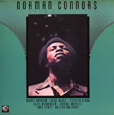
With Stanley Clarke, Cecil McBee, Eddie Henderson, Carlos Garnett, Gary Bartz and Buster Williams.
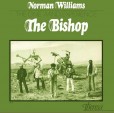
A 1976 recording by this mainstay of the San Francisco jazz scene across the decades, who played with everyone from Sonny Stitt to Pharoah Sanders.
A message from Eddie Henderson…
‘It’s time. It’s time for all to hear the Bishop proclaim spiritual truths in his church, the One Mind Temple, dedicated to the spirit of John Coltrane. The time is also overdue for all to hear the Bishop proclaim musical truths through the medium of his alto saxophone. My first few gigs in 1962 were with the Bishop’s band. I’ll never forget what an inspiration it was for me learning how to play while standing next to the Bishop, who already had it together. I’m sure after hearing the Bishop, you will also agree that his time has come.’
‘A majestic feat in which she blends orchestral arrangements with R&B, jazz, broken beat and dub, resulting in a grand, nuanced record that feels airy and celestial without sacrificing the groove. It’s a deeply personal offering about her trek towards falling back in love with musical composition over the past four years.’
‘As well as pulsating modal workouts (The Seer), there’s real melodic beauty, too, from Set It Free (featuring London-based vocalist and trombonist Richie Seivwright) and We Walk In Gold (featuring Georgia Anne Muldrow) to the ethereal beauty of the instrumental Clarity. Garcia also reveals some lovely arranging touches — the way in which the Chineke! strings and guest vocalist Esperanza Spalding introduce album opener Dawn in free time, while the core trio of Joe Armon-Jones, Daniel Casimir and Sam Jones slowly introduce pulse in a gradual fade in; the dramatic strings-only coda appended to the epic title track; the fabulously rich string pizzicati which drive Water’s Path ever onwards; plus strings and sax ascending together in the all-too-brief Clarity (Outerlude)’ (Jazzwise).
Two spellbinding extended improvisations referring to meteorological and planetary phenomena: evocations of light, wind, clouds, and tidal cycles as shimmering, roaring, rubbing, coalescing and diverging environments of sound; consistent and yet in perpetual flux. The quartet’s signature, singular, honed minimalism subsumes flashes of chaos into winding paths of musical detail; hushed but suspenseful.
Quietly ravishing, stunning music from Norway, by trumpeter Torstein Lavik Larsen, double bassist Adrian Fiskum Myhr, guitarist Fredrik Rasten, and drummer Jan Martin Gismervik.
Gorgeously presented, in a tiny run.
Warmly recommended.
Something else.
Violin or hardanger fiddle, piano or harmonium duets: moody, contemplative, melodic crossings of Norwegian folk and classical in the manner of its nineteenth century muse. Recommended.
Mat Walerian, Matthew Shipp, William Parker, Hamid Drake.
Ace jazz-funk — somewhere between Herbie and RTF — originally released in Finland in 1976, on Love. Featuring the almighty jazz-dance classic Grandma’s Rocking Chair (later revisited by Kenny Dope and Ol’ Dirty Bastard), with Olli soloing on Fender Rhodes.
Over three hundred pages: numerous previously-unpublished photographs of Sun Ra and the Arkestra by Hartmut Geerken and Val Wilmer; a fully revised discography by Chris Trent, co-author of The Earthly Recordings Of Sun Ra; articles by Amiri Baraka, Chris Cutler, Robert L. Campbell, Salah Ragab and others; and newly gathered, full-colour images of hundreds of Sun Ra album covers, posters, handbills and ephemera, including reproductions of rare, hand-drawn, hand-coloured LP sleeves.
French fold cover, metallic foil blocking on cloth, hardback; 290mm x 245mm.
Fab. Pricey, but it’s a must, let’s face it (and Amazon has the previous, inferior edition for a grand).
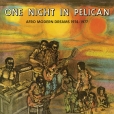
Opening in 1973, tucked into a tangle of railway parts scattered across an industrial park at the western edge of Orlando East, Club Pelican was Soweto’s first night-club, and its premier live music venue throughout the seventies.
Pretty much everyone on the scene passed through its doors — to sing, or perform in the house band, or hang out. Schooled in standards, and fluent in the local musical vernacular, the music would take off in different directions at a moment’s notice — SA twists on jazz, funk, fusion, disco — spurred by the sounds coming in from Philadelphia, Detroit and New York City.
One Night In Pelican encapsulates these halcyon times, with a musical roll call of all the key groups and players, besides evocative, previously-unseen photographs, cover artwork by Zulu ‘Batsumi’ Bidi, and notes by Kwanele Sosibo, lit up by a gallery of first-person testimony.
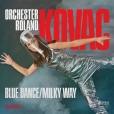
From the 1968 SABA LP Trip To The Mars, with its nods to library music and post bop, and charged, widescreen atmosphere. Blue Dance is a modal waltz dancer; Milky Way trips out into floating brass harmonies and sensuous solos.

‘A collection of canonical, mature acoustic guitar soli to contrast against the fractured downtown conceits of previous acoustic releases… Jump On It, with its living-room aesthetics and big reverb, packs a disarming intimacy absent from the formal starkness of Orcutt’s earlier acoustic outings… Not quite refuting (yet not quite embracing) the polish of revered watershed records by Bert Jansch, John Renbourn, or Bola Sete, Jump On It treads a path between the raw and the refined… Each track is a key to a memory, a building block in a shining anamnesis leading to the recollection that hey, we’re all humans in a shared cosmos, and music is one way we might make that universe go down easy. And who wouldn’t jump on that?’ (Tom Carter)
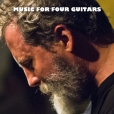
‘What really impressed was its precision, its 14 guitar miniatures bringing to mind the cascading melodies of Steve Reich, or Malian kora music… There’s so much going on in these dense constructions, you’re likely to hear new layers and combinations with each spin’ (The Wire, Releases Of The Year).