
Your basket is empty

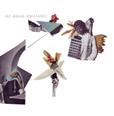
‘The bad influences’, from Bogota, with their third album for us: twenty-eight gorgeous variations of saudade, in a warmly acoustic, post-punk take on Tropicalismo — impromptu, snapshot and sublime.
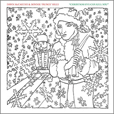
Dawn Le Faun with Billy Le Bon, co-singers of The Letting Go and Wai Notes, digging up a modern(ish) parable from deep in their Everlys sack, afore getting down and sliding around on the flip.
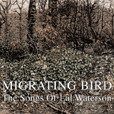
‘folk album of the year’ (The Observer); ‘***** ... not a note is wasted’ (Time Out); **** Mojo; **** Uncut; ‘Compilation Of The Year’ (The Guardian).
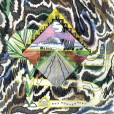
A droning, slo-mo Leonard Cohen cover, and a collaboration with violinist Jessica Moss, from A Silver Mt. Zion; both around twelve minutes. Grouper’s a big fan.
Microtonal folk music mixed with electronics and noise.
The first record was rave-reviewed. ‘I was transported to secluded valleys where age old traditions are the passionate expressions of a community, here re-energized by the chillingly sensitive electronic wizardry of Anders Hana and Morten Joh’ (Songlines). At home in Norway even the tabloids picked it up: ‘Gorrlaus has the same intense and monotonously suggestive sound hunt as early Kraftwerk, at the time they played Ruckzuck’ (VG).
And now II is a next step further in the same direction, more deeply attuned to diverse materials derived from field recordings and other research, with finer nuance and detail… and more fiddle.
Forgotten masterpieces, out-of-this-world improvisations from the 1920s; and dazzling commissions by Sir Richard Bishop, Six Organs Of Admittance and co. ‘Dextrous, frenzied, fearless… awesome’ (Plan B).
Quite different to A Wonder Working Stone and Spoils, the ten songs here are ‘sparse, intimate and concise. The focus throughout is on Alasdair’s deft acoustic fingerstyle guitar and his voice. The songs are variously elliptical and gnomic, direct and personal, romantic and tender.’ With sparing, decisive contributions on clarinet and tin whistle — and from Crying Lion.

A treat for those of us who like their Alasdair Roberts straight-up and hardcore. A pointed, deep selection of mainly Scottish folk songs, recorded live in the studio; beautifully sung, with minimal, exquisite accompaniment by acoustic guitar, or sometimes piano. Sexual oppression, Scottishness, political resistance; stray cows, mystical horses, waterbird royalty. Stiff shots of rapture, fighting talk, heartbreak, and tragedy. Terrific.
‘Their ability to harmonize together is stunning, their reedy voices coming together and pulling apart amid delicate fingerstyle guitar and concertina deployed in just intonation, which imparts a deeply resonant, almost glowing harmonic presence. It’s all quite subtle, and if you only listen to the way the voices of Cater and Rasten blend you might even miss it—but the full sonic spectrum is what distinguishes and, in certain ways, connects it to traditional practice… Although the album is pure balladry, unfolding with exquisite patience, each song contains nifty little flourishes or instrumental elements that set them apart, such as the slide guitar and wheezy bass harmonica on For the Ear That is No More, or the slow peal of trumpet on Death and the Lady, courtesy of Rasten’s partner in Pip and Oker, Torstein Lavik Larsen. (Peter Margasak, Nowhere Street).
‘All done with such grace and elegance, without a note wasted or any required. Wonderful… faultless and deeply considered’ (Glenn Kimpton, KLOF).
Three high English and Scottish ballads, and three original settings of European folk tales.
Matt gatefold cover; gloss spot varnish.
Check it out!
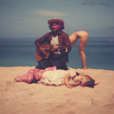
‘An album of cathartic intimacy, built around electronic textures and sparse percussion, with White’s gently yielding, half-spoken vocals pitched pleasingly between Laurie Anderson and Joni Mitchell’ (Mojo).
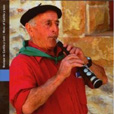
Startlingly fresh and unusual, these timeless, traditional peasant songs from north-west Spain — mostly with percussion accompaniment, sometimes with flute, bagpipe, oboe or rebec.
Terrific analogue recordings of inimitable covers of Thin Lizzy, Nico, Black Sabbath, Abba, Sandy Denny etc, with support from Will Oldham and labelmates Supersilent.