




Your basket is empty

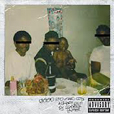
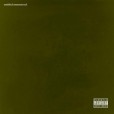
The Compton rapper nailing it on his major-label debut — brilliant story-telling, intimate and natural, but ruminative and densely rhymed — with blaxploitation-style settings by Dre, Pharrell, Just Blaze and co.
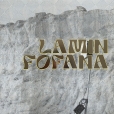
Epic, grooving, extravagantly creative, perfectly attuned blends of complex mbalax drumming, field recordings, thumping kick-drum, and cosmic, bubbling, jamming synths and electronics.
The opening is suitably liminal, haunted by a diachronic sense of times past, present, and to come: ancestral ghosts, scratched playback, scraps of old recordings, voices strangulated or just out of range; puttering drums; futuristic, kosmische keys. Part II picks up the pace; III gives the drummers some, and heightens the atmosphere of enchantment. Jon Hassell’s Fourth World music courses through a kind of Dream Theory In Dakar.
Toco SOS, the second side, is a thumping, throbbing, mesmeric future-classic; perfect for fahr’n fahr’n fahr’n on the Autobahn… in a spacecraft. Expert hand percussion, call-and-response singing, bin-trembling foot-drum, spaceways keys. Sleekly funky as prime Popol Vuh.
Both sides range expansively by way of Berlin, where Lamin resided for a few years: you can hear something of T++’s brilliant, landmark HJ record on the A, and elements of Mark Ernestus’ crucial Ndagga project, on the B.
Half an hour of stunning music; in a beautiful sleeve, with mirror lettering, and an intricate spot-gloss rendition of salt crystals, laid over a photograph of the salt mines at Lac Rose, outside Dakar.

“This is killer,” says Ben UFO.
Spherical collections of stars form around black holes in situ; that is, locally to their cosmic neighbourhoods. It is said that future space colonization will rely on sourcing supplies in situ. Construction in situ uses raw materials at the site: colossal sculptures such as Naqsh-e Rustam, the Leshan Giant Buddha and Mount Rushmore were built in this fashion.
Wild, organic machine grooves, with a mind’s eye on naked treetops and an early sunset. Melody breathes out from dubwise fx, percussion by turns sinewy and floating, sub blasts and stripped synth arrangements. Keys on air.
Spacious, witty, melancholic, deadly.

‘Swooping, sub-heavy sci-fi from Riz Maslen, under a new moniker.
‘Heavy-lidded and ethereal, its balance of bass weight, mechanical metre, and darkly tinted new age feels like a cinematic re-approach to some of the textures, moods, and themes of her 1996 Laundrophonic maxi, under the alias Neotropic.
‘Stairway 13 folds in decades of experience in sound design and theatre, along with shards and elements abstracted from Riz’ more recent folk-like music, zoning into a deep, retreated, altogether dreamlike and expansive atmosphere. The scale and soundscape is reminiscent of Geinoh Yamashirogumi and their Ecophony album series, resonating to similar frequencies and exploring themes of chaos and rebirth in feature-length form.
‘The four parts spread and swoop as single extended sides across this double LP. Carried by waves of sub bass and heavenly chorus, and later punctuated with autonomic clicks of machinery, whirrs, and pulses, the work forms a gothic, otherworldly ambience. A subtle space opera.’
Previously unreleased house from southside Chicago, 1989.
For a moment the room appeared to darken, as it used to do when he was about to perform some singular experiment, and in the darkness the peacocks upon the doors seemed to glow with a more intense colour…
Infectious, party-hearty, yes yes y’all rapping, from deep in the early-80s.
Peter Brown’s in-house Land Of Hits Orchestra gives up the instrumental, on the flip.
His treasurable third solo LP in three decades of collaborative work as Vilod, the Moritz Von Oswald Trio, Non Standard Institute, Sun Electric, Ambiq, and company.
‘Max at his most exhilarating, morphing through bittersweet and optimistic soundscapes to bleak moments of throbbing unease — all while maintaining a musical grace and elegance. Petrichor is a reflection of Loderbauer’s impactful trips to the mountains, and returning from these summits with an electrifying urge to paint this mighty perspective. The harmonies and melodies on the tracks simulate emotional peaks and valleys, with vibration and rhythm rooted in the foundation of the sound, as though woven into the fabric of the fauna and flora.’
‘The second of our odes to soundsystem culture. Logos back-burners the weightless sound for a minute and brings forward a chop-up laced with such tasty ingredients as the Bloom-era Aardvarck white labels, Shed’s Panamax Project and Wormhole-era Ed Rush and Optical.
‘To cap it off, Ossia delivers one of the heaviest remixes of the year. The ice-cold grime sensibilities of Eska infused with the militant sound of early Aba Shanti I on that Jah Lightning album.’
The first volume in a two-part collection of pirate radio adverts & idents, assembled from home recordings of London stations made between 1984 & 1993.

Captivatingly decentred, ghostly dubscapes, unhurriedly rolling out elements of jazz, reggae and — yep — Estonian folk music, with suspenseful toms, groovy double bass and punky-reggae guitar, and some lovely xylophone and accordion playing. Have a listen.