Your basket is empty

Honest Jon's has enrolled with the European Union 'Import One-Stop Shop'. For EU customers, this means that you will not be charged any additional VAT or duty, nor any handling fees. No further costs.
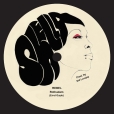
Scorcher!
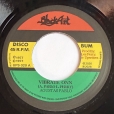
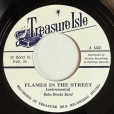
Rothadam aka Errol Gayle tried out for Bunny Lee before following his brothers from Trenchtown to Toronto in the early-1970s. Here, his fellow-welder Sid Lovejoy also ran a record shop, label and studio, at 917 Bathurst Street; and in 1975 the first iteration of Rebel was unleashed on Sid’s LMP imprint (cut a little slower than this reissue), featuring none other than Leroy Sibbles on bin-wobbling bass; and massive, rearing, swinging horns (and melodica). The brass brings to mind the Otravis crew on Skyjack Version, also with Sibbles, for Half Moon; the hi-hats tick with the same serious-mindedness as at the start of Joe Higgs’ Creation; Rothadam channels Horace Andy to full effect.
Then Gayle reprised the song at Half Moon itself, with the Super Eight Corporation. Producer Oswald Creary passed the second recording — side two here — onto Ron Lewis, to put out on Ron-Lew. It’s more Upsetters in style, with a lighter touch; more limber, smoke-filled and cosmic, with a vibesing spoken intro and tasty percussion.
Both sides are raw, intense, inspiring roots.
Neither came with a dub… so dream on, rudie.
Hotly recommended.
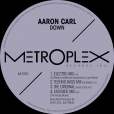
Stone-classic sexed-up Detroit electro banger. Killer diller.
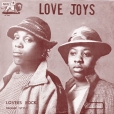
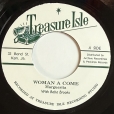
Leading with trumps, this was first in Rhythm And Sound’s crucial Wackies reissue programme. Consummate lovers rock by cousins Sonia Abel and Claudette Brown, originally from Brixton. Stone classic Bullwackies.
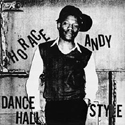
Unmissable, cornerstone Wackies, back in.
Horace Andy’s greatest artistic achievement, surpassing even his Skylarking set for Studio One. With definitive reworks of songs he first recorded for Bunny Lee and Derrick Harriott (Money Money and Lonely Woman); a deadly version of Lloyd Robinson’s Cuss Cuss; and a first outing for Spying Glass, later versioned by Massive Attack. Musicians include Wackies regulars like Owen Stewart and Oral Cooke from Itopia, and Ras Menilik and Jah T; also Sleepy’s multi-instrumentalist spar Myrie Dread from the In The Light sessions for Hungry Town. At the desk, Lloyd Barnes, Junior Delahaye and Douglas Levy coax unequalled vocal performances from the singer, bejewelling ineffable extended mixes.
Crucial.
‘Verve Vault.’
We ship worldwide. The postage rates for your order are displayed before payment, which is processed using Paypal. You can pay using your Paypal account or any of the following cards. No need to join Paypal.