


Honest Jons logo
Warning! nothing found for Seekers_International_MX7 SKRSINTL_Meets_MX7_Inna_Dancehall_Showdown

Honest Jon's has enrolled with the European Union 'Import One-Stop Shop'. For EU customers, this means that you will not be charged any additional VAT or duty, nor any handling fees. No further costs.
‘The AS Colour Heavy Faded Tee, crafted from 100% carded cotton for durability and comfort. With a heavy 240 GSM weight and garment dyed finish, it features a boxy relaxed fit, dropped shoulders, and twin-stitched wide neck ribbing.’
Click through the image for a size guide.

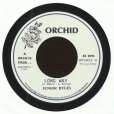
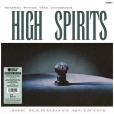
Likely recorded in Chicago around 1956; originally released on Saturn. Ra is co-composer of both sides; it could be him playing the harmonium.
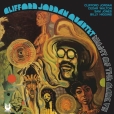
‘I had two main vocal groups at the time,’ Ra once recalled. ‘One was called the Cosmic Echoes. And the Cosmic Rays, too. It was around the same time that John Gilmore joined the band. I saw the possibility that they could be really great so I began to coach them; they were connected with a barber shop, but I taught them other things.’ ‘We’d go down to the barber shops and rehearse some groups,’ added John Gilmore. ‘Sun Ra had them singin’ some beautiful stuff. I think he probably was saving them from themselves. He heard them, heard their potential, snatched them off the street, and started making them do something constructive.’

This expert drummer spent long stints with Archie Shepp and Sam Rivers; and he’s played with scores of other jazz greats, like Mal Waldron, Charles Tolliver, Yusef Lateef, Billy Harper, David Murray, and so on. He toured Europe with Marion Brown in 1977 — recording La Placita live in Willisau — and the following year cut Wooley The Newt for the saxophonist’s Sweet Earth label. His son Makaya sampled it recently on We’re New Again, his Gil Scott-Heron rework.
Free, grooving, spiritual jazz. Check it out.

Earl Morgan and Barry Llewellyn joined by Naggo Morris in 1978, with the genius engineer Sylvan Morris and the mighty Niney the Observer at the controls, and a crack band featuring Sly Dunbar. Every Day Life and Mr. Do Over Man Song are crucial, tip-top Heptones.

Dylan gave it to an enthused Neil Young: ‘the original wealth of our recorded music, the cream of the crop… it’s incredible. It’s in a wooden box and everything, and it’s just so beautiful.’
With a 200-page booklet (and some raw cotton).
In perfect nick. Just one.

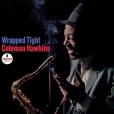
A classy, rock steady sextet — the rhythm section is Art Taylor and Paul Chambers — presenting four compositions by Mal Waldron.

Four thrilling rounds of rampage, school of Basic Channel.

Brand new interpretations of their debut album, ten years on.
‘The Universe Smiles Upon You ii was recorded on January 4-6, 2025, in the same family barn of guitarist Mark Speer, across the same dates where TUSUY was first conceived ten years earlier. Though the conditions were the same — dirt floor, brutally cold, minimal sound isolation, all takes live — the songs aren’t. They’re re-approached, some changed more than others, harnessing the lightning-in-a-bottle energy of TUSUY while discovering what would be unique this time around, in this stage of the band’s life.
‘The result moves like ripples on the water across ten hypnotizing tracks, the barn creating a sense of spaciousness, serenity and creative freedom, nearby wildlife (listen out for the birds on August Twelve ii), rattles and creaks of the barn and all. It’s a tapestry of small movements in nuanced arrangements, slowly revealing the new life, stories and character of someone you’ve met again for the first time in ten years.’

The peerless deejay rocking two turntables and two reel-to-reel tape-recorders.
‘Released in spring 1996, Liquid Room was a mix of such molten intensity that it warped the idea of what DJing could be. The received wisdom of how to construct a club set—one song after another; build-up, breakdown—was obliterated by this lean, striking man mixing like a Spirograph, executing a blur of hip-hop battle techniques over waves of crushing pressure. Records were piped in hot with phased doubles, scratches, stabs, rewinds, inverted frequencies, and hard stops, then torn from the platter without warning and discarded onto the floor, until you couldn’t be certain if this was dance music or a new frontier in free jazz’ (Pitchfork).

The heaviest Cool Ruler of them all; the heaviest Joe Gibbs / Errol T dub. Murder, she wrote.

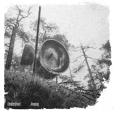
‘Japanese classical music and dance, traditionally performed by families of musicians linked to the ancient Imperial court, and later passed down in Buddhist temple ceremonies and Shinto shrines, Gagaku is the oldest of the Japanese performing arts, with a history more than a thousand years old. Founder and director of the Reigakusha ensemble, Shiba Sukeyasu descends from the Koma clan, dating back to the end of the 10th century. The recordings partly reflect repertoires borrowed from Chinese music between the 5th and 9th centuries.
‘The eternal breath of the flutes (ryuteki and hichiriki) creates a sort of suspension of time, together with the hypnotic and hallucinatory atmosphere of the mouth organs (shō). The meditative tone of the string instruments (bika and koto) that punctuate the voids and silences is impressive, as is the enigmatic percussion section, with the tolling of the gong (shōko) and the calibrated beats of the drums (taiko and kakko).’

1234