








Your basket is empty

Honest Jon's has enrolled with the European Union 'Import One-Stop Shop'. For EU customers, this means that you will not be charged any additional VAT or duty, nor any handling fees. No further costs.

Upsetters
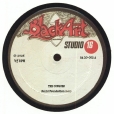
Black Board Jungle
Upsetters / Week-End
At last a worthy reissue of this awesome, monumental masterpiece from way back in late 1972.
Black Board Jungle rounds up masterful dubs of some of the deadliest Upsetters 45s of the preceding couple of years. It’s expertly selected, paced and shaped; not a stop-start compilation. It kicks off with an audacious, one-two knockout: a wildly creative, staggering version of the jaw-dropping Bucky Skank instrumental, followed by a call-the-undertaker, trombone-led, jazzbo rewind. The almighty Words Of My Mouth rhythm is here… Dreamland… Dub Organizer… Place Called Africa… Fever…
The dazzling genius of Lee Perry and King Tubby in full effect; no prisoners taken.
You might be thinking yeah but I’ve already got a copy of this… but the chances are it’s dubiously licensed, with pedestrian sound, and naff, incongruous artwork. Abjectly — not least for an album originally entitled Upsetters 14 Dub — it probably has just twelve tracks. The thumping, juddering dub of The Hurricanes’ killer You Can’t Run has gone walkies. Pure fire. Also a dub of Shenley Duffus’ smash-hit do-over of William Bell’s I Forgot to Be Your Lover… forgotten.
Be thankful for what you got, here they are, both duly restored.
This new iteration is classily presented, with debossed cover and lovely labels, and a substantial booklet. The clicks in the deposed Clocktower reissue are gone; the sound in general is less compressed, and markedly superior. The kitsch artwork is thrown out of class.
CALLING THE MEEK AND THE HUMBLE, WELCOME TO BLACKBOARD JUNGLE. SO DON’T YOU FUMBLE, GIVE YOUR CLOCKTOWER TO THE JUMBLE.
Or maybe you’re new to this album; in that case we’re dead envious.
Either way, do yourselves a no-brainer of a favour.
Hiss Is Bliss meets Murray Man.

Funky highlife from Benin City, produced by the legendary Victor Uwaifo.
Hypnotic polyrhythms, reverb-soaked guitar and joyous call-and-response vocals luxuriate across two side-length medleys.
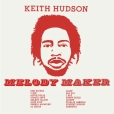
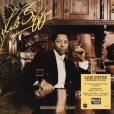
A stupendous haul of early-seventies KH productions, stuffed with crucial classics, loads of them new to CD.
Forty-nine tracks!

Ranging over time and styles; never less than brilliant. Watch out for a young Prince Far I, Prince Francis doing his best Alcapone impression over Ethiopia, and Jazzbo on a discomix of Skylarking.
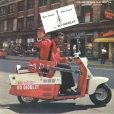
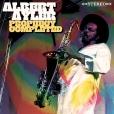
His raw, randy, uproarious 1959 masterpiece. Mumblin Guitar is total carnage.
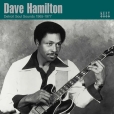
More gems from the vaults of Dave Hamilton, mainstay of Detroit music from the forties through to the eighties.
‘You Got Me Where You Want Me by Chico & Buddy is a fabulous funky number from around 1970 that would have been a soul fan’s favourite whenever it was issued. This is its first public appearance.
‘Funk crosses over to all dance scenes these days and even jazzier tracks like Hamilton’s own Soul Suite, a close relation of his coveted Pisces Piece will pick up plays now it is on vinyl.
‘Northern soul lovers have been demanding JT Rhythm’s I Love The Way You Walk on a seven, as have Motown connoisseurs Rita DuShay’s original of All I Need (Steal Away Tonight), as covered by Barbara McNair on her 1966 Motown LP.
‘Original copies exist of the Ravins’ fast and furious dancer Your Love Is What I Want, but you’ll need several grand to spare.
‘OC Tolbert’s tough and menacing delivery of the Clarence Reid song Along Came A Woman has huge dancefloor potential, like Dave’s own bluesy vocal on his similarly gritty, R&B composition Take Care Of Your Own Business.
‘Dave’s accomplishments into the 70s and 80s are admired by modern soul lovers and Ride The Disco Train by the Moderations hits a perfect groove. Both the Felecia Johnson and New Experience tracks thrive in the laid-back atmosphere Dave was able to conjure up in his home studios.
‘Fresh mastering of both of Little Ann’s uptempo and ballad classics What Should I Do and Deep Shadows seals the deal.
‘An irresistible homage to the unsung heroes of Detroit Soul music.’

Killer record. Banging, complex Mardi Gras rhythms; mesmerising, in-your-face, call-and response vocals. Full-on New Orleans sister-funk.
Scorcher.

Cosmic, electronic, futuristic dabke, by the Casio and synths whiz behind Omar Souleyman’s sound.
‘Blending syncopated dabke rhythms with glittering electro melody and clattering drum programming… infectiously upbeat and frenetically joyful’ (The Guardian).
‘There are moments of dancefloor abandon on Beyond Shaabi but it contains multitudes. Fiddly high-end keyboard rhythms have always made for showstopping solos in Said’s hands, but on Choubi Kawniyya they work just as well as drones, too. Swampy and ominous. On the languid three-minute intro to Naba Kurdi the twiddly keyboards sound more like guitars being shredded in service of prog-rock euphoria, while Mawwal Al Ather sees rhythms eschewed altogether – fizzy synth-flutes betwixt vast steppes of reverb, its one big foggy drone collage.
‘An emphasis on swelling, shifting textures during slower moments instills proceedings with real character amid the floor-fillers. Some cuts here even feel like the Syrian iconoclast’s experimental take on dabke is having its IDM moment. A Selected Ambient workout, dance music but for the brain – headphones wedding music. As well as serving as a palette cleanser, this locked-in textural focus means that – when they do come – the pumping polyrhythmic bangers hit harder than ever before.
‘Beyond Shaabi’s experimentation is welcome, but reassuringly, the lifeblood of Rizan Said’s music remains the fantastic free-flowing stream of dance music. After its digi-prog wig-out intro, Naba Kurdi thunders into the same high-BPM territory occupied by Egyptian electroshaabi – screaming electronics and galloping percussion – while the seven sweaty minutes of Baladi Aajil don’t let up for a second. You feel like you’re dancing and prancing through dozens of different rooms, as Said cycles through an array of different voicings on his keyboard – truly breathless stuff’ (The Quietus).
We ship worldwide. The postage rates for your order are displayed before payment, which is processed using Paypal. You can pay using your Paypal account or any of the following cards. No need to join Paypal.