








Your basket is empty

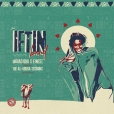
Rawly funky blends of Banaadiri rhythms from southern Somalia with influences from Asia, the Middle East, and Africa — nuff Ethiopiques — featuring stinging Dhaanto guitar licks and hot brass, fronted by Mogadishu’s finest vocalists.
Drawn from cassettes recorded between 1982 and 1987 in the secret studio of the Al-Uruba hotel, and live sessions in the basement of the national theatre.

A Federal 45 from 1974 featuring Ken Boothe, Lloyd Charmers, BB Seaton, Busty Brown… taking off from the Temptations’ Smiling Faces Sometimes. Plus a tropical disco chugger by Leslie Butler, with sick synths, originally out on Jay Wax in 1975.

Reggaefied electro funk from 1986, riding the reverberations of Planet Rock.
Beatbox, synth, trumpet, and nursery-rhyme MC.
Funkin’ for New York (JA).
Betty Boop and a Alleyoop was jumping up and down… This feelin’s funk, that’s what it is, let it get into you, Jamaica funk, that’s what it is… Take it to the cosmo.
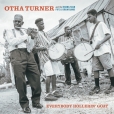
‘The trance blues stylings of Otha Turner and his Rising Star Fife And Drum Band should be a music classification unto itself, a whole new primitive take on drum and bass. This music is the oldest still-practiced post-colonial American music, and Turner was one of its greatest artists of the 20th century. Blowing the cane fife with a band of drummers as back up, The Rising Star Fife And Drum band was legendary in the hills of Tate County, Mississippi, where they would perform during the yearly goat picnics on Turner’s farm. These tracks were recorded by Luther Dickinson during such picnics and released when Turner was ninety years old. Everybody Hollerin’ Goat shows firsthand the hypnotic and rhythmic style of fife and drum music at its best — raw and beautiful. It is every bit as essential a document of America’s folk-music heritage as anything Harry Smith or Alan Lomax ever offered up for posterity. This first ever vinyl release of Everybody Hollerin’ Goat contains a whole side of unreleased recordings from one night of the picnic and is intended to bring the experience of hollerin’ for goat in Senatobia, Mississippi to the living room. Dancing around the plants is recommended (but don’t eat the pickled eggs).’

Songs for dancing, about love and heartache, conflict, and spirituality, over the rolling lilt of the ekonting, a three-stringed gourd lute played by Jola people in Gambia and the Casamance region of Senegal.

Siggy was the piano accompanist of Archie Sheep over several decades; he recorded with Dizzy Reece and Hal Singer.
Here is his key LP as leader, in 1971 — with bassist Gus Nemeth and percussionist Stu Martin — edging from post-Trane into free jazz, with an ear for the contemporary electroacoustic music of Xenakis, Berio and co.

Upful, late-eighties singjaying, with nuff namechecks and squiddly diddlies, over a crisp, bustling rhythm.

Stark, powerful singjaying over tough, livewire digi; produced in Jamaica by Delroy Francis for his Claypot imprint, and originally released in 1987.
These are the original mixes, newly transferred from the master tapes.

Gritty sing-jay reportage, originally released in 1987 on a Claypot 12”, back-to-back with Terrorists. Produced in JA by Delroy Francis, more widely known nowadays as the guvnor of the Park Heights label and record shop in Brooklyn.

This stylish, devoted, two-hundred-plus-page book is based around a deep, fascinating interview, covering the work in detail, but with naturalness and directness; also Radigue’s life, milieux, aesthetics and methods, politics, and so on. There are numerous choice photos; a few precious sketches, flyers and diagrams. The oeuvre is listed, with commentaries. All texts are in both English and French, beginning with her prose poem The Mysterious Power of the Infinitesimal. Pretty much indispensable, if you’re at all interested.
‘Eliane Radigue and I decided to resume our conversation and come up with this expanded second edition of the book. Much had happened since the first edition that deserved to be explored in more depth, in particular the development of the Occam Ocean cycle. But I also took the opportunity to ask her questions about her earlier work that had not been addressed previously. The first four parts of this new edition remain unchanged, but they are now followed by an epilogue. The lists of works and publications have also been updated and extended’ (Julia Eckhardt, December 2023).