

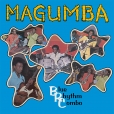
Your basket is empty


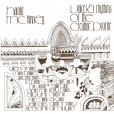
Born in Burlington, Vermont, and conservatory-trained in the US, the cellist Tristan Honsinger moved from Montreal to Amsterdam in 1974, quickly linking with Han Bennink and Misha Mengelberg, and opening a long and fruitful musical relationship with Derek Bailey. Recorded in 1976, Duo displays a performative musical approach already characterised by the lack of inhibition which would later endear him to The Pop Group: he is knockabout, exclamatory, explosively rhythmic; burping Bach and folk melodies with spasmodic lyricism, in amongst the garrulous textures and accents of his scraping, bowing and plucking, and gibbering like a monkey; throwing out his arms and stamping the floor, grappling with his instrument like an expert clown, always on the lookout for new ways to trip himself up. You can hear Bailey revelling in the company, as he ranges between scrabbling solidarity and an askance skewering of his partner’s antics, on prepared (nineteen-string) and standard electric guitars — and a Waisvisz Crackle-box, for the garbled, quizzical, cross-species natter which closes The Shadow. Throughout, the spirited interplay between laconic, analytic wit and guttural, sometimes slapstick physicality is consistently droll, often laugh-out-loud funny; vigorously alert, alive and gripping.
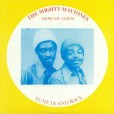
Vernon Buckley and Gladstone Grant — by now The Mighty Maytones — produced by Sidney Crooks in the late-seventies.
The ineffable instrumentals and dubs of Burial Mix numbers 6 to 12.

Sonatas or concerti, says Threadgill: Come and Go for saxophone and cello; Poof for saxophone and guitar; Beneath the Bottom for trombone; Happenstance for flute and drums; Now and Then for tuba and guitar.
‘By this point, the group’s reliance on the serial intervallic system that was the basis of the group’s unique sound is more felt than prescribed, relying on the musicians to fill in the rest.
‘All the other hallmarks are here: unpredictable forms, percolating rhythms, the interwoven melodic strains; there’s really nothing else remotely like it.
‘The best part of it all is that Zooid is the one platform where one still gets to hear Threadgill really play. His keening saxophone wail retains that unmistakable gutbucket blues feel, with no small measure of church thrown into the mix.’
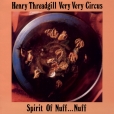
From 1991, the debut, milestone release of this lineup featuring dual tubas and dual electric guitars.
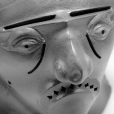
Pure loveliness. Proper music-making,
DIY Classical, but nothing slapdash or posey. Intimate and tentative, seamed with risk, occasional mis-steps, dodgy tuning, minor technical fuck-ups; but driven by gripping, stilled dedication and deep musical understanding.
Double bass, electric guitar, flute, melodica, singing; recorded at home in NYC, on dodgy gear, with snug, woody, shhshh-ing, analogue-style ambience.
The trio hovers between cheerful relish — who’s that giggling at the back — and hushed, humble reverence, basking in the processes of musical communion and learning. They play like they are gingerly passing on a precious, fragile gift; but without prissy conceit.
Luminous selections from the last six hundred years — John of Dunstable meets Friedrich Nietzsche — are lovingly arranged by the group, with a bent for stripped-to-the-bone, emotionally restrained sublimity, steady as she blows.
Very warmly recommended. Soul food.
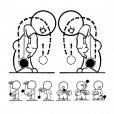
Prime Cuts from the legendary Scratch Perverts crew with an upful six-tracker, full of life and intelligence, and teeming with fidgety, DIY, turntablist energy.
For us it’s a bit like a raid on the racks at Honest Jons, over the decades… but fresh and bright. It kicks off with a headlong garbling of eighties jazz-funk, complete with synths, a vocoder, and some incipient Herbie, all sagging woozily into some nuts pitch control, before a mean beat-down. Some dubwise Channel One follows up, with almightily anthemic snatches of melody and unmistakable chords, almost breaking down under a barrage of skittering effects, scratching, laser-fire, strangulated melodica, and cowbell. Then three excursions in classic Detroit techno: moody electro funk, with a sprinkling of Harold Faltermeyer; hard-grooving minimalism, with a dash of It Takes Two; then a more industrial outing, with clattering percussion and gobbling synth. Finally an ambient interlude — overcast but twinklingly ambivalent — to close.
Ace. A lot of fun. Check it out.
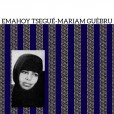
‘Gebru is a true original,’ says Mississippi. ‘Her playing is somewhere between Satie, Debussy, the liturgical music of the Coptic Ethiopian Church, and Ethiopian traditional music. It is some of the most moving piano music you will ever hear! All original compositions available for the first time on vinyl beyond the original early 1960s editions, which are completely impossible to find. Old school tip-on cover with gold foil printing. A must-have masterpiece for anyone who needs some spiritual comfort.’

‘Emahoy recorded these songs direct to cassette tape in her family’s home in Addis Ababa in the late 70s. She carried the master tapes with her when she entered permanent exile in Jerusalem in 1985. They stayed in her tiny cell at the Church of Kidane Mehret until her passing, in March 2023, aged 99.
‘I was on my way to see Emahoy and talk about the release of these songs when she passed away. While helping her family clear and pack her belongings, we found the original master tapes, from which this album is produced. Intimate, close, home recordings. You can hear Emahoy’s finger pressing down the stop button, the creak of her piano bench, birds out the window.
‘These are songs of mourning and exile. The Ethiopian Revolution of 1974 had changed her country so radically that Emahoy sang of missing home even though she was still physically in the country.
‘Emahoy wanted badly for these songs to be heard. She was proud of them, and even produced a tiny run of private press CDs sold at the gift shop of the monastery in 2013. But her family and those closest to her advised her against the release, worried about the intense backlash she’d receive for singing as a nun in the conservative Orthodox church.
‘Finally, these recordings get the release they deserve. We hope to do justice to the music and Emahoy’s legacy with this release — packaged in a reflective gold sleeve, with a sixteen-page booklet featuring lyric translations and photos of Emahoy’s life in the monastery in Jerusalem.’
(Cyrus, Mississippi Records).
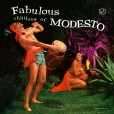
‘A disciple of mambo innovator Perez Prado, the Cuban-born Modesto Duran was a pivotal figure in Latin dance music’s transitionary mid-century period. His gentle slaps can be heard across dozens of 1950s mega-sellers, from Esquivel to Belafonte, Eartha Kitt to Lena Horne. On his 1960 solo debut, Duran gathers a who’s who of conga-men, including Mongo Santamaría, Willie Bobo, and Juan Cheda, delivering a cinematic and percussive melange of afro-cuban, cha cha, and exotic jazz styles.’