



Your basket is empty

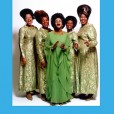
A scorcher from the golden age of gospel, via its cardinal label.
From 1960, during the family’s second decade with Savoy, featuring Gertrude Ward, Christine Jackson, Mildred Means and Vermettya Royster — and Clara, totally riveting and in-your-face with evangelistic fervour and raw soul.
Plus a rambunctious, floor-filling Wade In The Water, by Jessy Dixon and his Singers.
Handsomely sleeved (showing a contemporary but slightly different Wards lineup).

With Barry Guy and Tony Oxley in 1971. Gatefold sleeve.
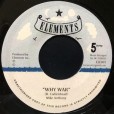
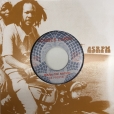
Superb, fat, classic roots production by Michael Forbes, with full horn section, organ, expert percussion and drumming. Strong, heartfelt, resigned singing by Mike Anthony (not to be confused with the much more prolific Lovers singer from Lewisham).
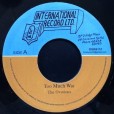
Sublime vocal harmony roots. Pure Abyssinians manners.
George Wright and the boys cut one of our favourite Lovers a few years later… Secret Admirer.
Killer.
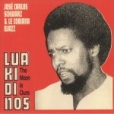
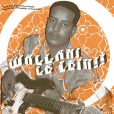
From seventies Guinea-Bissau, a captivating, poignant blend of anti-colonial militancy and the knot of homesickness, regret, loss and melancholy at the heart of saudade. Sung in Guinean Kriol, and reviving traditional musical genres like Gumbé, lavished with jazz, Latin, funk and general dancefloor nous, José & Cobiana Djazz went down a storm nationally, hugely influencing local bands like Super Mama Djombo, and hailed by giants like Orchestra Baobab, Letta Mbulu and Miriam Makeba (with whom Zé Carlos recorded his only solo album).
Lua Ki Di Nos, The Moon Is Ours, is a mixture of thumping, blistering high-life, with burning horns and mesmerising guitar lines, for dancing, and sublime, swaying, moodily contemplative body-rockers. The mournful Na Kolonia, for example, is knockout. Locked up for his politics on Ilha das Galinhas, a few miles off the coast of Bissau, the singer wonders what has become of his friends. ‘Where is Sara? Back at the colony. Where is Saidu? Back at the colony. Uncle Malam, tell them not to cry, not to suffer. One day we’ll be back in Bissau, a day that is slow to arrive. Our brothers from Bissau, don’t forget about us. If you think that we’re dead, we haven’t died, we’re waiting here.’
Ace.

We Have Delivered Ourselves From the Tonal – Of, Towards, On, For Julius Eastman
Bonaventure Soh Bejeng Ndikung & others
Savvy Contemporary
264 pages of essays, librettos, lyrics, memories, nuff photos, scores, personal anecdotes by musicians, visual artists, researchers and archivists; including contributions by Mary Jane Leach, George Lewis and Kodwo Eshun, besides Eastman in his own words.
Bracingly hostile towards settled, sanctimonious thinking about the composer and musician — Hans Werner Henze’s favourite bass player, featured on Arthur Russel’s Go Bang — especially any squaring off his sexuality and skin colour in relation to canonical minimalism, this is a punchy, immersive, diverse and thought-provoking homage.
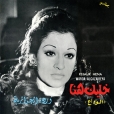
Warda Ftouki is one of the great Arab divas of the twentieth century.
Aka Warda Al-Jazairia, Warda the Algerian was forced to leave Algeria in 1956, when FLN guns were discovered in her dad’s nightclub. (Warda was a lifelong, unflinching supporter of independence.)
Aged twenty, now singing in Beirut cabarets, she became the protege of Mohammed Abdel Wahab. Returning to Algeria after independence in 1961, she took a ten year break from singing, because this was forbidden by her new husband. She left him in 1972, moving to Egypt, where she married Baligh Hamdi.
Here she is in 1973, singing a composition by Hamdi, backed by a full Egyptian orchestra, including electric guitar and organ, in front of a euphoric, adoring crowd.
Wonderful music — swirling and grooving with dazzling virtuosity; imperiously funky and giddily soulful.
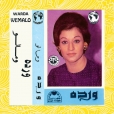
The great Algerian diva of Arab song — a Dilla favourite, incidentally — accompanied by a full-sized orchestra, augmented by electric guitar and organ, in a characteristically grooving, classy composition by her old man Baligh Hamdi. This reissue features newly remastered audio, the original cassette artwork, and a two-page insert with a new introduction by Mario Choueiry from the Institut du Monde Arabe