Your basket is empty

‘In 1971 Ra accepted a lectureship at University of California, Berkeley, teaching a class titled The Black Man and the Cosmos. This course of study was held in some secrecy, apparently open exclusively to Black students who were strictly forbidden to record the lectures. Ra’s assistants did, however, document the sessions, and some of these recordings have made their way to YouTube. The incredible half-hour of Berkeley Lecture presented here, however, is previously unknown, extracted from the Creative Audio Archive’s extensive holdings. It presents Ra walking his students through a series of wonderful paradoxes and riddles, the sound of his chalk on the chalkboard serving as a kind of Greek chorus, commenting on or complementing his highly creative pedagogy. At the end of the lecture, Ra performs two musical demonstrations, the first a piano version of the Arkestra classic Love in Outer Space, followed by a blistering 16-minute solo on the Moog synthesizer.’
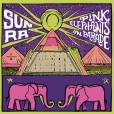
Joyous, uniquely Arkestral renditions of songs from Disney films like Peter Pan, Sleeping Beauty, Snow White & the Seven Dwarfs, Dumbo, and Mary Poppins.
Ra loved this repertoire, faithfully re-visiting it over the decades. He once had his band billed as Sun Ra & His Disney Odyssey Adventure Arkestra.
All previously unissued; drawn from concert performances, 1985-1990.
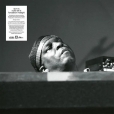
Sensational price for easily the most outstanding release on RSD 2025, imperiously superseding Shandar’s selection of edits.
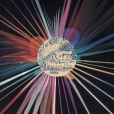
The Arkestra at its magnificent peak, in its very first performances outside North America (complete with dancers, light-shows, and psychedelic projections of New York and Chicago, moon rockets, Egyptian Gods and plumed African warriors).
‘Plenty of fiery avant-garde action,’ notes Daniel Spicer in The Quietus. ‘Much of this emanates from Ra’s solo interludes. On piano, he remains a suis generis genius of spontaneous creation, drifting from wistful melodic daydreams to sudden irruptions of violent intensity and back again.
‘Around this time, at the turn of the 1970s, he had also begun his tumultuous explorations of the recently purchased Moog synthesizer. Here, Ra approaches the synth not as an electric guitar substitute, as contemporaries such as The Mahavishnu Orchestra’s Jan Hammer were then doing, but as a furious generator of alien sounds and timbres as though beamed in from some far galactic outpost. There are also group improvisations of boiling energy – often conducted by Ra using a lexicon of theatrical gestures – which forge ahead into the most coruscating free jazz, with saxophonists John Gilmore and Marshall Allen straining at the horn’s limits.
‘And yet, for all that, the shows were approachable, enjoyable and, above all, fun. Across the four hours of music, a wide range of moods are touched upon. There are the many anthemic songs and chants – such as Satellites Are Spinning and We Travel The Spaceways – delivered in vocalist June Tyson’s sweet, down-home tones with enthusiastically ragged call-and-response choruses by the rest of the Arkestra spelling out Ra’s sci-fi philosophy. There are wafting space-ballads; muscular, big band hard-bop workouts; and percussion-heavy rainforest modal jams. Each of the two evening programmes feels like a meandering yet comprehensive journey into the deepest recesses of Ra’s imagination, calling in on all his obsessions and preoccupations.’
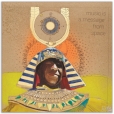
‘New and archival recordings all orbiting around the intergalactic soundscape introduced by Sun Ra. Ra’s own a capella I Don’t Believe in Love, recorded by Ra at home in Chicago during the 1950s, kicks the program off. This intimate private recording is followed by two intense new solo improvisations by French guitarist Raymond Boni, one acoustic and one electric, inspired by seeing the Arkestra preparing for a gig in Arles in 1976. The first side wraps up with Jason Adasiewicz’s riveting unaccompanied vibraphone workout on Ra’s Lanquidity and Where Pathways Meet. With a completely different take on Lanquidity, Side Two begins with four wild remixes by legendary Cologne techno pioneer Wolfgang Voigt, using layered samples from the LP. Hailing from the intersection of free jazz and out rock, Ken Vandermark’s band Spaceways Inc., with bassist Nate McBride and drummer Hamid Drake, continue with a Ra medley, in collaboration with the Italian band Zu. And where the program started in disbelief, love-skepticism, it concludes with Joe McPhee’s emphatic loving embrace on Cosmic Love, a classic tenor/synth sound-on-sound recording from 1970.’
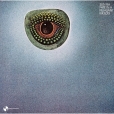
With cover art by Emil Schult, who designed classic 1970s LPs for Kraftwerk. Very limited.
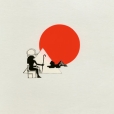
The first definitive reissue of this 1977 session recorded at the Bluebird in Bloomington, Indiana; restoring previously excised material, a true running order, and the natural transitions between pieces.
‘The Arkestra were at the peak of their powers in 1977, releasing revered albums like The Soul Vibration Of Man and My Favorite Things, with Arkestra regulars Marshall Allen, Danny Ray Thompson, Michael Ray and Luqman Ali among the core musicians. Ra also continued his touring in Europe with historic gigs in Italy. During this period, Arkestra live performances were often loosely structured into thematic blocks that moved from reflections on jazz history to cosmic ‘space narrative’ sections featuring collective chants, extended Africa/Egypt-inspired grooves and selections from the Great American Songbook. This recording brings in all of these features with re-imagined versions of standards like Take The A Train, St. Louis Blues, and title track Over The Rainbow, alongside rarely recorded Ra compositions like Make Another Mistake and Amen Meni Many Amens. Ra conducted improvisations to guide the listener seamlessly from one musical scene to the next. As he described it: ‘It’s like a party—we enjoy ourselves and everybody’s invited to enjoy it with us.’
Newly remastered using the original source tapes; extensive new liner notes by Chris Cutler
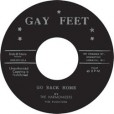
Top-notch, super-soulful rocksteady.
With an alternate take.
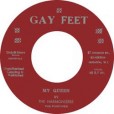
Jackie Bernard leading a thumping, yearning overture; backed with The Valentines’ classic Blam Blam Fever. Top-notch rock steady.
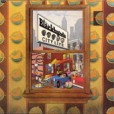
Wonderful third album, from 1975, with the almighty jazz-funk masterpiece Rock Creek Park and the get-down-and-party murder of Happy Music (as rinsed by Kool Herc and a cast of millions). Takes your troubles off your mind.
‘Jazz Dispensary Top Shelf Series.’
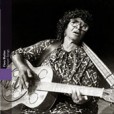
Rough, rousing gospel recorded live in 1987 by the seventy-nine-year-old (who came through busking in Washington DC). Mostly traditional songs, with Flora’s full-flavoured singing self-accompanied on slide, and extra guitar backing by Eleanor Ellis.
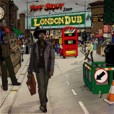
Exclusive mixes of key versions in the TS mission so far, dub-plate style.
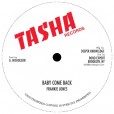
Three excellent, diverse vocal excursions on a heavy, mid-eighties, Channel One-style rhythm by The Gladiators Band. The dub follows Frankie.