



Your basket is empty


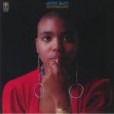
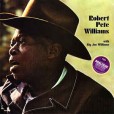
Top-notch, neglected southern soul, plenty deep, produced by Willie Mitchell at Hi in 1970.
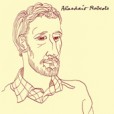
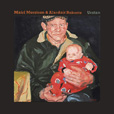
Quite different to A Wonder Working Stone and Spoils, the ten songs here are ‘sparse, intimate and concise. The focus throughout is on Alasdair’s deft acoustic fingerstyle guitar and his voice. The songs are variously elliptical and gnomic, direct and personal, romantic and tender.’ With sparing, decisive contributions on clarinet and tin whistle — and from Crying Lion.
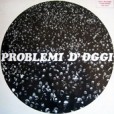
Dark, spooked, early-seventies worries from PU — disguised as M. Zalla, in the throes of his fascination with psychedelia and electronics — with titles like Mondo in Crisi, Problemi Sociali, Azione Sindacale and Mafia Oggi.
Drum-machines, Moog and EMS Synthi.
Still acutely germane; musically and temperamentally.
Demdike Stare has called it the first techno record.
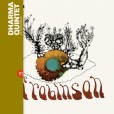
“We try to reach within free jazz the same sort of rhythmic cohesion as in bop… based not exactly on tempo, but something which feels like tempo. A kind of underlying pulse.”
This is Dharma’s first LP: from the same neck of the woods as the Cohelmec Ensemble, a mixture of spiritual jazz, free jazz and electric Miles — especially for its keyboards — infused by the anti-authoritarian politics of collectivism and anti-hierarchism.
Saxophonists Jef Sicard and Gérard Coppéré are moonlighting from Claude Delcloo’s Full Moon Ensemble.
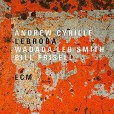
The great drummer with Wadada Leo Smith (who chips in a seventeen-minute tribute to Alice Coltrane) and Bill Frisell.

‘One of the most provocative ongoing bodies of work by any American musician’ (Pitchfork). ‘Astonishing work of history, memory and sensed experience. Confirms Roberts’ place as one of the most important living artists in any field’ (The Quietus).
With Hannah Marcus (guitars, fiddle, accordion), percussionist Ryan Sawyer, bassist Nicolas Caloia, and Sam Shalabi on guitar and oud — plus trombonist Steve Swell and vibraphonist Ryan White guesting. ‘Memphis unspools as a continuous work of 21st century liberation music, oscillating between meditative incantatory explorations, raucous melodic themes, and unbridled free-improv suites, quoting archly and ecstatically from various folk traditions along the way.’
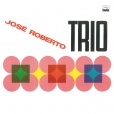
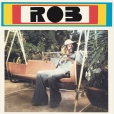
A year after Os Tatuís, José Bertrami returned to the studio, this time stripping back to a trio. Again featuring Claudio Henrique Bertrami on double bass, and with Jovito Coluna on drums, the José Roberto Trio recorded their one and only album in 1966, featuring compositions by Baden Powell, Manfredo Fest, and Marcos Valle. The LP also featured three of Betrami’s own compositions: the wistful Lilos Watts, the groovy Kebar, and the dazzling Talhuama.
Another jewel from the golden age of the Brazilian bossa jazz trio — Bossa Três, Milton Banana Trio, Tenório Jr,, Bertrami’s own Bossa Jazz Trio — ushered in by the Tamba Trio, and nourished along the way by jazz greats from Nat King Cole to Bill Evans,
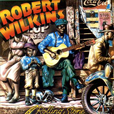
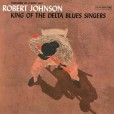
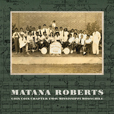
1928-35 recordings by the Memphis bluesman (with Cherokee Indian close by in his family tree) — including That’s No Way To Get Along, later covered by the Rolling Stones as Prodigal Son.

A treat for those of us who like their Alasdair Roberts straight-up and hardcore. A pointed, deep selection of mainly Scottish folk songs, recorded live in the studio; beautifully sung, with minimal, exquisite accompaniment by acoustic guitar, or sometimes piano. Sexual oppression, Scottishness, political resistance; stray cows, mystical horses, waterbird royalty. Stiff shots of rapture, fighting talk, heartbreak, and tragedy. Terrific.
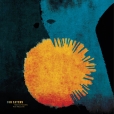
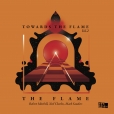
‘This improvised, telepathic collaboration between underground legend Rob Mazurek and modular-synth maestro Alberto Novello is a dizzying, psychedelic space ritual. A delicate weft of harmony and melody on trumpet — plus atmospheric bells and samples — rides a loose rhythmic, timbral magic carpet, way out into uncharted dimensions of sound.’
‘A new album of category-scrambling song-craft by the elusive and shape-shifting Thomas Bush; the latest stage in a wayward path between everything from murky dirges to head-nodding laments to crystalline synths that hang precariously in the air over your new-favourite bass line.
‘Critical responses along the way have focussed on a predilection for the folkey-dokey, but judging from releases like 2026’s guld, Bush’s definition of ‘folk’ has as much to do with A Guy Called Gerald as it does with Shirley Collins or John Martyn.
‘For all its diversity, what unites Bush’s ever-expanding body of work is its dual commitment to experimentation and a job well done.’
“Random Constraint Satisfaction Problems was recorded at Vista Studio 1, Malmö, between 2022 and 2025. After creating an account at academia.edu for the purpose of reading a text now forgotten, I began to get emails asking me questions such as ‘Thomas Bush, did you write Brucellosis and Sacroiliitis: A Common Presentation of an Uncommon Pathogen?’, and ‘Are you the Thomas Bush who wrote ATR-dependent Phosphorylation of FANCA on Serine 1449 after DNA Damage is Important for FA Pathway Function?’, which began to make me wonder if I was, or if I wasn’t, perhaps I should be.
“The resulting work is an attempt to find meaning in this, and other chaotic and ambiguous situations through analysis using materials and equipment to hand. Being sensitive to signs and following them up with enthusiasm. Both source material and evaluation are presented.”