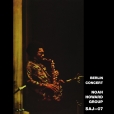
Your basket is empty

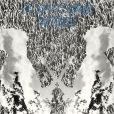
‘From 1971, the first LP the altoist self-produced for his own Altsax label; recorded in the Netherlands during Howard’s second stint in Europe, with an intriguing lineup including Misha Mengelberg and Han Bennink.
‘Howard’s saxophone work alternates between leading with passionate, lyrical lines and blending into the collective improvisation. The dynamic interplay, particularly between Mengelberg’s dissonant piano clusters and Bennink’s thunderous drumming, creates a vivid sound painting full of contrasting forms and colours. Patterns remains one of Howard’s most unique, visionary and celebrated recordings.’
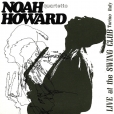
With Michael Smith on piano, Noel McGhie on drums, and Bob Reid on bass, in April 1974; originally released by Calumet Records.
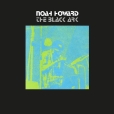
‘Listeners expecting unrelenting blasts of ‘energy music’ might be surprised to find a cohesion atypical of free jazz: amidst the wild, impassioned solos, Howard weaves in Latin rhythms and fat-bottomed grooves. On the first side, Domiabra and Ole Negro sound as if they could have appeared on some of Blue Note’s proto-spiritual jazz, groove-heavy releases — evoking the likes of Horace Silver or Bobby Hutcherson — before ceding the floor to the horn players’ anarchic firepower. As John Corbett writes in the liner notes, ‘Two players stand out. Bassist Norris Jones — aka Sirone — is given ample room, largely unaccompanied; his corporal approach foreshadows later work with the Revolutionary Ensemble. But the secret weapon on The Black Ark is Arthur Doyle. Straight from basement rehearsal sessions with Milford Graves, whose ensemble he had joined and who remained a favorite of the drummer for decades, Doyle is a human flamethrower.’ Trumpeter Earl Cross’ guttural, vocal effects complement Doyle’s take-no-prisoners approach, while the estimable combination of Muhammad Ali (Rashied’s brother) on drums and Juma Sultan on congas adds an ever-shifting propulsion. The septet is rounded out by the enigmatic pianist Leslie Waldron, who anchors the group with imaginative accompaniment and occasional boppish flourishes. Every bit worthy of its reputation as an ‘out-jazz’ holy grail, The Black Ark only sounds better with age.’
We ship worldwide. The postage rates for your order are displayed before payment, which is processed using Paypal. You can pay using your Paypal account or any of the following cards. No need to join Paypal.