
Your basket is empty

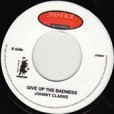
No surprise that JC does the absolute business over this scorching do-over of Winston Riley’s Nothing Is Impossible rhythm (as nailed originally by the Interns / Viceroys).
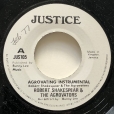
Super-heavyweight Aggrovators roots. Barry Brown at his very best; deadly, sombre horns; lethal Tubbys dub. Scorcher.
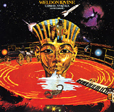
His ambitious 1974 breakthrough as leader, superbly mixing funk and jazz improvisation on a major-label recording budget, with strong political and spiritual themes, even a nod to the Duke.
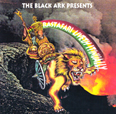
Plenty of prime Upsetters here.
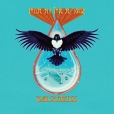
The Funeral for Justice LP completely re-recorded and rearranged for acoustic and traditional instruments.
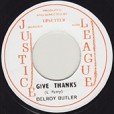
Utterly genius mid-seventies Upsetters. The great Horse Mouth aka Mad Roy playing melodica (like on his classic Far Beyond for Studio One, where he started out printing labels) and drums (like on War Ina Babylon), and spliffically hymning his local dealer.
With Delroy Butler/Denton from The Silvertones, on the flip.
Neglected, stunning, mystical Upsetters roots — with scrumptiously extended trombone — first released in Amsterdam on Henk Targowski’s Black Art imprint (bundled with special mixes of Cane River Rock and Dread Lion).
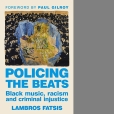
Policing The Beats: Black music, racism and criminal injustice
Lambros Fatsis
Manchester University Press
Calling all HJ massive: here is a terrific, vivifying guide to your record collection, and a political kick up the bum. Within ten minutes of engaging with this book, you’ll sprout a fresh pair of ears and a fifth lobe, or your money back.
This is a riveting, bracingly militant account of the racist British policing of Black Atlantic musical culture, from slavery days bang up to date. Extended sections consider the suppression of African drumming and dancing; calypso, and reggae sound systems; rap and drill.
The writing is deep, wide-ranging and richly erudite, but accessible and unstuffy. Compellingly, Lambros takes it all personally, and crucially his book blazes with love for a bunch of our favourite music: a long, diverse playlist in the back ricochets from Count Ossie and Salah Ragab through to A Tribe Called Quest and 24-Carat Black.
It joyously celebrates Black music as a reparative safe space, but also a key to getting to grips with the world; a contagion of ‘creole planetarity’, in the words of Paul Gilroy’s foreword, ‘capable of facilitating and intensifying political mobilisation, collective refusal and acting in concert. It can do this because it has promoted and amplified meaningful, relational life amidst a general haemorrhaging of meaning…’
‘The healing force of the universe,’ in Albert Ayler’s phrase. ‘My sanctuary… my life,’ as Gary Bartz put it. ‘Songs in the key of life.’
Very warmly recommended.
We ship worldwide. The postage rates for your order are displayed before payment, which is processed using Paypal. You can pay using your Paypal account or any of the following cards. No need to join Paypal.