
Your basket is empty


‘If you are poor, you walk in your shoes, you lean.’ Three Unity revive 12s in today, remastered and in spanking new sleeves. Altogether, as a label, the greatest UK digi there ever was.

Diplo / Newham Generals / Elewedu Of Agege
Fuji Ouija / Tetsuya's Theme / Dance / Thank You
Honest Jon's Records
A Lagos fuji session sets Diplo tearing up walls and stomping across the ceiling; a fragment of afro-folk percussion triggers the Generals’ brilliant futurism; and two sumptuous cuts of the original deal.

Precious, timely, moody reflections on migrating from Côte d’Ivoire to Moss, in Norway, over ruff breakbeat funk supplied by the nimble bass-playing of Maimouna’s old man (from Kambo Super Sound), and the expert conga and kit-drumming of Stliletti-Ana (from Jesse, in Helsinki). Even in their delirium, b-boys and girls will savour traces of the Incredible Bongo Band, in the chorus. Over the eight minutes, and going deeper on the flip, the mix lifts off into a cosmic steppers dub, featuring Gilb-r alongside Sotofett on keyboards, with no let up for the dancefloor in energy and vibes.
“It was in 2001 / I got the letter / A letter that said / I would travel to a cold world / Not knowing what would happen / I was full of loneliness / No country / Everyone was different / Not only skin colour / The way people spoke / The way people behaved / That’s the adventure / Obey / This is the story we’re told / The key to success / So we can do everything for our parents / Who need us / Desperate for a better life / That’s the adventure.”
Three knockout EPs, in hand-stamped, poly-lined sleeves.

Hebi is tough, stomping, mesmerizing romany funk, riding Far East from the Baltic Sea on clopping hooves of uranium, with synths from spaceways further out still. Weakheart deejays will scatter, but Sotofett has road-tested this on dubplate for six months, tearing up parties and dancefloors.
Deeply meditative, desolately beautiful, Haru will stop you in your tracks. Osaruxo’s violin could be a rebab or a shamisen, a reed instrument or a voice. Ravishing music.

Red hot gospel soul from 1983. Only ever issued as a test white-label; never before released commercially.
Plus some classic early-eighties soul vibes on the flip, as Helen Hollins — from James Cleveland’s Southern California Community Choir— magnificently busts loose Burt Bacharach, strutting resplendently onto the dancefloor with her dad, husband and two daughters Alicia and Francheasca in glorious cahoots.
Lovely spot-glossed sleeve.
Devilishly limited, all three of our Savoy singles.

Cold-sweat compounds of art-funk, baglama high-life, horrorama, yacht.


Mark Ernestus / DJ Pete / Sleeparchive
Thursday May 7 2009, Plastic People, London
Honest Jon's Records
Honest Jon’s presents Mark Ernestus from Rhythm And Sound spinning 45s alongside DJ Pete from Substance and Scion Versions, with a live set from Sleeparchive.

‘10/10… fucks your brain so hard you’ll feel like a vegetable afterwards’ (Vice).
With guests including Mark E. Smith, Dalek, Steve Beresford and Sensational.

‘Beautiful, haunting… spiritual reflection is sung with carnal force, songs of romance are rendered like hymns. For a few moments, on these ancient records, Baghdad sounds like paradise’ (Rolling Stone).

Rough, tough, tumping, bumping soundboy breakbeat from the Caribbean coast of Colombia.
Forty brand new buckaroos, tooled and primed by Jeanpi Perreo, Edwin Producciones and DJ Ander — all from local sound-systems — careering guarapo-style out of punches of vintage Nigerian highlife, waka and co, by legends like Steven Amechi, Sagbeni Aragbada and Cardinal Rex Jim Lawson.
Edited and mastered by CGB at D&M for maximum oomph and worries, and presented in a gatefold sleeve with cool and deadly varnishing. Plus a full-size booklet detailing the fascinating history of this music, seamed into the strange, tentacular byways of hand-to-hand vinyl distribution, record collecting and musical connoisseurship, and the soundclash traditions of the region, suffused with the politics and culture of the Black Atlantic, stretching back to the 1950s.

The second son of King Jammy, Trevor James aka Baby G is at the cutting edge of the new wave of dancehall producers. Jammy’s stalwarts Ward 21 and newcomers Rasta Youth on the mic.

Chaabi — ‘of the people’ — has its roots in the Andalusian music of Moorish Spain, spreading to North Africa with exiled Jewish and Moorish communities; but it really took off in post-WWII Algiers…
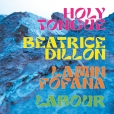
Four dazzling, extended engagements with mbalax master-drumming.
The contribution from Holy Tongue is chase-the-devil steppers — thumping, clangorous, reverberating — super-charged with energy and atmosphere. From the off, drummer Valentina Magaletti detonates a hard rain of small bombs, rounds of fire, ticking fuses. Musical co-ordinates are somewhere between classic On-U Sound crew like African Head Charge, The Mothmen, and Creation Rebel, and the experimental funk of the Pop Group and 23 Skidoo, at their funkiest. Thrillingly, the two dubs are increasingly deranged.
Adjusting the same wavelengths as her superb Workaround LP, Beatrice Dillon plays spaced-out, abstract synth-work against the bodily physicality of the ancient, shifting mbalax rhythms. The music is poised, mindful, tentative; but also limber, fleet, and magical.
Phantasmagorical and efflorescent, Lamin Fofana’s one-two is simply stunning. Both excursions are wide-open, beautiful, epic, and propulsive — the first mix is banging and headlong, the second more syncopated and serpentine — teeming with freshly sublime, funkdafied updates on Jon Hassell’s Fourth World possible musics.
The two parts of LABOUR’s Etu Keur Gui engage the same sequence of drum patterns (called bakks) from different perspectives. The duo performed portions of this piece at the opening ceremony of the Dakar Biennial in 2022, at the Grand National Theater, with thirty sabar players from the family of Doudou Ndiaye Rose. This Wolof phrase for the inside-yard of a home — a meeting-place, an architectural breather — doubles here as a metaphor for inner space on a metaphysical level; and Pan Sonic, Muslimgauze, Zoviet France, early Shackleton… all ghost across the threshold.
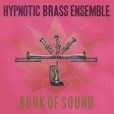
“We started with a cosmic idea that we were taught from a very young age – that the stars and planets make a sound, that deep in outer space there is audible harmony.”
Book Of Sound is the brilliant, richly resonant exploration of these interstellar low ways. By turns urgent and contemplative, funky and reflective; varied in its textures, but entirely of one piece. Underpinned by cosmology, held in place by meditation, swirling with notions of history, science, theology, ancestry — this is a heady conceptual brew. But the music speaks loudest: ‘the sound of surprise’, magnificently retrieving Spiritual Jazz from the knacker’s yard.
It’s a deeply Chicagoan record. “It’s got the vibe of the lake,’ continues trombonist Cid, “the vibe of the prairies opening up to the west.” Also the Sun Ra albums recorded there in the 1950s, and — of course, being the dad of all seven ensemblists — Phil Cohran’s wonderful albums from the 1960s.
“You know, it’s tough trying to satisfy everybody with our music. It’s hard enough satisfying ourselves, let alone the jazz scene, the hip hop guys, what have you. With this album we just dropped all that as a consideration, and tuned into deeper principles.”

Tear-up bad-boy brass-band scorchers. Just like dad crossed Sun Ra with Kool And The Gang, this crashes funkdafied New Orleans street jazz into hip hop. With Flea, Damon, Tony Allen, Malcolm from The Heliocentrics.

A top-quality, hard-enamel lapel pin (with back post and gold-metal clutch); the size of a 2p coin.
New colours.

White on grey. Premium cotton, smooth and durable. 67cm shoulder strap.
Takes twenty-odd LPs.

Red and pink on dark navy. Premium cotton, smooth and durable. 67cm shoulder strap.
Takes twenty-odd LPs.

A top-quality, hard-enamel lapel pin (with back post and gold metal clutch); the size of a 2p coin.
New colours.
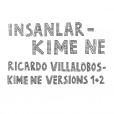
Stunning new music from Istanbul!
A twenty-four-minute wig-out you can dance to — wild baglama improvisation and mystical male-unison singing, atop the propulsive mass of a Berlin half-stepper, with turbulent detours into dub, radiophonics and psychedelia.
‘Kime Ne’ means ‘so what’, ‘what’s it got to do with you’. The song adapts verses from the seventeenth-century poet Kul Nesimi, wistfully invoking the Melami strain of Sufism as a touchstone of humility and tolerance, in dark times. ‘Insanlar’ means ‘humankind’... ‘The Human Beings’.
RV’s mixes are expert, taut and hard-grooving. 2 is the more agitated and dubwise.
Nearly an hour of music, on three sides; the fourth is etched with Katharina Immekus’ lovely artwork.
Knockout stuff, honestly.
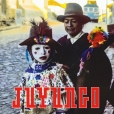
‘Since the 16th century, the Ecuadorian province of Esmeraldas has been home to a unique Afro-Indigenous culture originating in the integration of the Indigenous Chachi and Nigua peoples with African Maroon communities. Juyungo documents significant Esmeraldan artists and bands playing the Afro-Ecuadorian folklore of the province, as well as including some older field recordings. Based mostly on the marimba, whose origins lie partly in the African balafon, partly in Indigenous percussion instruments, the music is laced with call and response chants, ambient insect and bird noise, the filigree finger-styles of the Andean guitar tradition and the panpipes of the mountains. This is resonant insider roots music at its headiest — the mystic revelation of Esmeraldas, gully deep and lustral.’ Francis Gooding, The Wire.
The fifth in our series of LPs compiling classic music from Ecuador. Customary Honest Jons runnings: a beautiful gatefold sleeve; superior pressing, with vivid, intimate sound; full-size, sixteen-page booklet, in colour throughout, with detailed, fascinating, bi-lingual notes, and stunning photographs.
The music is transfixing, magical; not like anything else. From start to finish, this album is continuously, profoundly immersive; a kind of journeying, trippy meditation about slavery and cultural resistance, identity and mix, places and spaces, futures and pasts. It’s inscrutable to net-surfing, algorithms, Shuffle. But for a taste try the insurgent marimba roller Agua Largo, jet-propelled by Rosa Huila’s rapturous blend of African spiritualist and Christian chant. ‘Healing music,’ Zakia called it on Gilles Peterson’s BBC show recently. And the ravishing pasillo Kasilla Shungulla — ‘calm your heart’ in the Quichua language — a duet between the Peruvian master-guitarist Raúl García Zárate and viola da gamba by Juan Luis Restrepo from Medellin, recorded in a baroque church in Buzbanza, Colombia.
Pure worries from Leipzig — three club burners steeped in Detroit traditions, distilling the explorations in collective, nervy hypnosis of KM live sets. As the music slowly unfurls, there he is at every turn, subtly tweaking its parameters, redistributing its weight, pricking its grooves into a state of utterly infectious perpetual movement.
The two visions of Chilazon track opposite pathways: the first is twelve minutes of gorgeous, dubwise, aquatic techno, spattered with kicks and razor-sharp hi-hats, and smeared with ghostly echoes; then a terse mesh of broken drums, escalating to a quiet yet feverishly intense peak. Lanthanum is calligraphic swordplay, its toms and bass stabs warily circling one another in a graceful steppers’ dance, spaced-out and fathoms-deep.