
Your basket is empty


The Handover
New Old Medicine
Sublime Frequencies
‘Though one long piece, New Old Medicine moves through several unofficial chapters. It originates in the psychic depths with a pensive melody. Gradually solidifying, the organ’s first solo ushers the piece into a swaying, reverent dance. This dance nears its end with a vigorously percussive section on oud, handing it off to the violin for a climactic solo. A momentary pause, then the rhythm thickens, and the musicians ride untethered through the midnight. This frenzy is followed by a calm repose on placid water. But this calm is merely a deep inhale before the final charged ascent into cosmic rapture.’
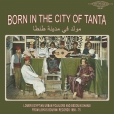
‘Egypt’s ‘official’ popular music throughout much of the twentieth century was a complex form of art song steeped in tradition, well-loved by the middle and upper classes. The music business was highly structured and professional; centred in Cairo. However, far from the metropolis, to the north and northwest, in towns like Tanta and Alexandria and extending across the Saharan Desert to the Libyan border, a raw, hybrid shaabi/al-musiqa al-shabiya style of music was springing up, supported by small, upstart labels.
‘This compilation covers the full range of styles presented by the short-lived but fecund Bourini Records, launched in the late 1960s in Benghazi, Libya. Gobsmacking moments include Basis Rahouma’s transformation into a growling, barking man-lion, and Reem Kamal’s onwards-and-upwards hand-clapping party banger, with a grooving nihilistic dissonance reminiscent of the Velvet Underground. The thorough-going contrast with mainstream Egyptian popular music is stark in Ana Mish Hafwatak, its vocal woven deftly through a constant accordion drone, and the sparse, slow-burning lament Al Bint al Libya. Whereas the mainstream was aspirational, projecting Egyptian culture at its most refined, the performances captured by Bourini were authentic expressions of ordinary, everyday life. More than half a century old, this music has lost none of its urgency, presence, or relevance.’
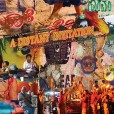
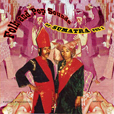
Limited, gatefold LP version of the first SF CD release in 2003: droning beat pop, early Orkes Melayu songs, Batak Tapanuli, traditional Minang, and rare folk drama from the Indonesian island, from cassettes.
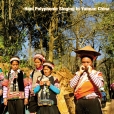
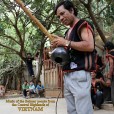
‘As with many other ethnic groups of the area, a traditional singing pattern is used with each singer adapting words to context. Many of these songs express intimate, strong emotions that bring tears to the performers while they are singing. The cascading mournful feel of this music is beautifully transcendent. You’ve never heard anything like it.
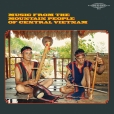
‘Instruments used by the ensemble include the babi (single tree leaf ) and mepa (tree leaf rolled up into the shape of a horn or mirliton), a chiwo (three-stringed bowed instrument), a labi (six-holed bamboo flute), a lahe (three-stringed small lute) and a meba (vertical reed instrument).’
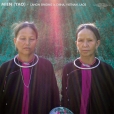
Rawly ethereal, other-worldly singing by members of hill tribes in China, Vietnam, and Laos.
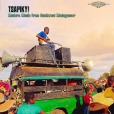
‘Wild ecstatic vocals, distorted electric guitars, rocket bass, and an amphetamine beat! Unlike anything else, this is THE high life music you’ve always wanted — ceremonial music played with abandon and extreme intent, honoring the living and dead alike.
‘In Toliara and its surrounding region, funerals, weddings, circumcisions and other rites of passage have been celebrated for decades in ceremonies called mandriampototse. During three and seven days, cigarettes, beer and toaky gasy (artisanal rum) are passed around while electric orchestras play on the same dirt floor as the dancing crowds and zebus. Locally and even nationally renowned bands play their own songs on makeshift instruments, blaring through patched-up amps and horn speakers hung in tamarind trees, projecting the music kilometers away. Lead guitarists and female lead singers are the central figures of tsapiky.
‘What results during these ceremonies is unclassifiable music of astonishing intensity and creativity, played by artists carving out their own path, indifferent to the standards of any other music industry: Malagasy, African or global.’
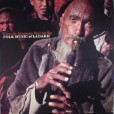
Precious witness to the dying musical traditions of Ladakh, high in the Western Himalayas, for centuries a hub of the Silk Road to India, Tibet, and Kashmir.
We ship worldwide. The postage rates for your order are displayed before payment, which is processed using Paypal. You can pay using your Paypal account or any of the following cards. No need to join Paypal.