Your basket is empty

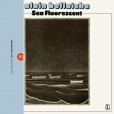
Highly sought-after French jazz fusion — blending in West Coast funk, gentle blues, sketches of Andalusia — with John Hicks, Jerry Goodman from the Mahavishnu Orchestra, and Jean-Marie Fabiano from the Fabiano Orchestra.
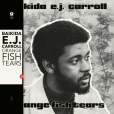
Encouraged by the Art Ensemble of Chicago, the trumpeter Baikida Carroll upped sticks in 1972, moving from Missouri to Paris. He travelled with several colleagues from the Black Artists Group: saxophonist/flutist Oliver Lake, trombonist Joseph Bowie, drummer Charles ‘Bobo’ Shaw, and trumpeter Floyd LeFlore. Inevitably, they soon crossed paths with Jef Gilson, who invited Carroll to record for his young Palm label, in June 1974. Carroll brought along Lake, and the Franco-Chilean pianist Manuel Villaroel, from the group Matchi-Oul, which had already appeared on Futura in 1971. The lineup was completed by the great Brazilian percussionist Naná Vasconcelos, fresh from the triumph of his own debut LP as leader — the terrific Africadeus, for Saravah.
The first side is knockout: everybody plays a range of percussion and bells on the opener — its own iteration of space jungle love — embedding stately interventions by woodwind and brass; before the wildly funky free-jazz of Forest Scorpio, with raging saxophone and keyboard, and monster groove. The second half is thrillingly hybrid and one-of-a-kind: more reflective, intimate, and spaced-out — increasingly hallucinatory — with an improvisatory feel for dissonance and repetition which beckons Terry Riley and György Ligeti into the mix.
The original Palm artwork is scrupulously reproduced, and an eight-page booklet contains rare and previously unpublished photos. The more expensive LP is from an edition of just 175 copies, with see-through vinyl, and a silk-screened wraparound sleeve, numbered and signed by the artist Stefan Thanneur.
Hotly recommended.
Unique improvised pop from 1974, by Jean-Jacques Birgé — one of the first French synthesizer players (ARP 2600) — and guitar virtuoso Francis Gorgé.
‘Have you ever imagined what a meeting between the Silver Apples and Sonny Sharrock would sound like?’
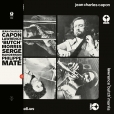
The fruits of a recording session deftly convened by Jef Gilson, to take advantage of Serge Rahoerson’s visit to Paris from Madagascar for just a few days in November 1976. Though a saxophonist by training, Serge had played drums on The Creator Has A Master Plan for the Malagasy album. To establish rhythmic foundations, Gilson reunited him in this capacity with Baroque Jazz Trio bassist Jean-Charles Capon. Recruited from Gilson’s current big band, Saravah saxophonist Philippe Maté and cornetist Butch Morris — on the verge of hooking up with David Murray — added their contributions later.
A live recording of a concert given at the Theatre de l’Est Parisien.
Stretched-out but closely textured and highly evocative, more bluesy than before, and brooding with Milesian intensity.
There is a strong spirituality to all of Cohelmec’s music ... but here they go deep.
Try Teotihuacan. Killer.

COH as in Jean Cohen (saxophones), EL as in Dominique Elbaz (piano) and MEC as in the brothers François and Jean-Louis Méchali (bass and drums) — joined by the American clarinettist and flautist Evan Chandlee for this debut album, originally released by Saravah in 1969.
“We wanted to avoid that kind of ‘free’ which is characterized by pounding drumming and a saxophonist freaking out in the high register, that type of music that kicks off suddenly then stops without us being able to sense the motivation. There is never any difference in intensity: nothing is destroyed, nothing is created, nothing is elaborated, nothing is questioned — when, even on the simple level of sound, there is so much that can be done.”
With French roots running back through the music of Jef Gilson, and pitched at the time somewhere between ESP and Actuel/BYG, with full-blooded nods to the likes of Cecil Taylor, John Coltrane and Walt Dickerson, this is expert, exuberant music-making, searching out its own way.
Ten tracks, even-handedly improvised and composed, beautifully played; intense and free-spirited but always engaging, attentive and communicative.
Top-notch sound; heavyweight gatefold sleeve with obi-strip; twelve-page booklet.
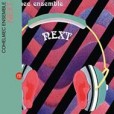
Their second LP, from 1971, with guitarist Joseph Dejean from the Full Moon Ensemble propelling the music forwards, as pianist Dominique Elbaz stands down.
The sound swells and contracts dramatically across the eleven tracks and interludes, with fresh senses of break-down and silence, and new intimacy. There is some Steve Lacy to its fierce repetition of key phrases; some Sharrock to Dejean; sparing experimentation with effects; portions of central African polyphony (Boa Constrictor), summer-breeze funk (Desert Angel), and plenty of characteristically rootsy prog and cosmic skronk.
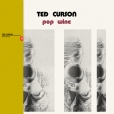
Outstanding modal set for Futura in 1971, with the superb French trio Georges Arvanitas, Jacky Samson, and Charles Saudrais, expertly proliferating Mingus and Trane.
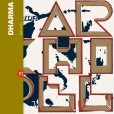
‘Winding operations down after End Starting, Archipel is likewise planned-out music, mixing free rock and European free jazz in a series of collective explosions based on abrupt and contrasting improvisations. For much of the time, piano, guitar and saxophone intertwine over intense rhythms. Everything is electric, with the density of On The Corner, and flashes of viciousness all its own.
‘Along with the Cohelmec Ensemble, the Workshop de Lyon, the Full Moon Ensemble, Perception, Armonicord or the Michel Portal Unit, the Dharma Quintet stands out as one of the most important examples of free jazz as it was played in France at the beginning of the 1970s.’
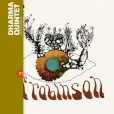
“We try to reach within free jazz the same sort of rhythmic cohesion as in bop… based not exactly on tempo, but something which feels like tempo. A kind of underlying pulse.”
This is Dharma’s first LP: from the same neck of the woods as the Cohelmec Ensemble, a mixture of spiritual jazz, free jazz and electric Miles — especially for its keyboards — infused by the anti-authoritarian politics of collectivism and anti-hierarchism.
Saxophonists Jef Sicard and Gérard Coppéré are moonlighting from Claude Delcloo’s Full Moon Ensemble.
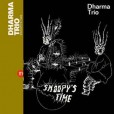
Their second LP, released three months after Mr. Robinson in 1970.
Funky jazz-rock — tight, direct, restless. Pianist Patricio Villarroel lays on the Corea / Jarrett vibes; alongside bassist Michel Gladieux and drummer Jacques Mahieux.
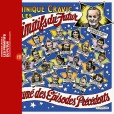
New recordings of self-styled ‘world tribal musette’ by this long-standing orchestra fronted by the ukulele of Dominique Cravic and the banjo of Robert Crumb. The valse musette of 1920s Paris, blending with Congolese rumba, gypsy jazz, Hindu waltzes, Argentine tango, blues, Paso Doble, chanson réaliste…
‘The Primitifs Du Futur travel on sound waves back in time to the early twentieth century and make the world seem like a far better place than it ever actually was. I cant get the band’s music off my turntable or out of my head. Accordion, mandolin, harmonica, saxophone, musical saw, and beautiful haunting melodies — what’s not to love? Even their sad songs make me happy’ (Art Spiegelman).
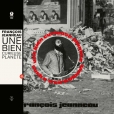
Janneau contributed to François Tusques’ 1965 landmark Free Jazz sessions. He was a stalwart of Jef Gilson’s big band in the years leading up to this first album as leader in 1975, with Jenny-Clark on bass and percussions, Bernard Lubat on drums, and Michel Grailler from Magma on spaced-out synths. The compositions are all FJ originals: check the monumental Droit d’Asile, the spooky Theme For An Unknown Island, and the homage Mr J.C. For Ever.
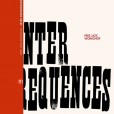
Their first LP, released in 1973 after six years together, with the first drummer Pierre Guyon having been replaced by Christian Rollet in 1970. Brilliant, roiling and free, with a celebratory lyricism to its grapplings with Cecil Taylor, Gary Peacock, Milford Graves and co, and a wheeling melancholia straight from Ornette.
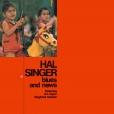
Recorded for Futura in the spring of 1971 — soon after the veteran saxophonist arrived in Paris — with his spar Art Taylor and local musicians including Siegfried Kessler.
Singer came up through numerous swing bands, and then team-ups with bop luminaries like Don Byas and Roy Eldridge, before joining Duke Ellington’s orchestra.
A long look back, blues and news, keenly open to the new thing, this is superb, generous, upful jazz — with dashes of modal, r&b, swing, soul jazz — book-ended by tributes to his time with James Brown. It’s My Thing is JB by way of Cannonball; the limber, extended, new version of Malcolm X, with Kessler whipping up a storm, is simply unmissable.
“I get something out of listening to Coltrane, Shepp and Coleman; I’m really pleased that young players are trying to change things. If they go back to the roots and come up with something new, that’s fantastic.”
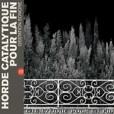
The French avant-garde quartet, four years in, improvising with instruments from Western, African, Middle-Eastern, and Far-Eastern cultures. Recorded for Futura in 1971, this is their sole album. “We just wanted the sound, the raw sound-texture, before being treated and shaped by any cultural code.”
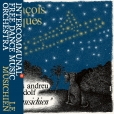
From 1981, the further excursions of ‘the people’s jazz workshop’, in the words of founder Francois Tusques.
Le Musichien is an Afro-Catalan adventure, free as a bird, headed for the outer spaceways. Tusques sings together with the Spaniard Carlos Andreu, riding the grooving bass-playing of Jean-Jacques Avenel, percussion from Kilikus, the saxophones Sylvain Kassap and Yebga Likoba, and Ramadolf playing trombone.
Les Amis d’Afrique was recorded the following year, at the Tombées de la Nuit festival in Rennes. Tusques and bassist Tanguy Le Doré weave the backdrop of an explosive new brotherhood of breath, in the tradition of John Coltrane and Pharoah Sanders: Bernard Vitet on trumpet, Danièle Dumas and Sylvain Kassap on saxophones, Jean-Louis Le Vallegant and Philippe Le Strat on… yes… cannons.
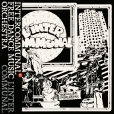
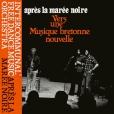
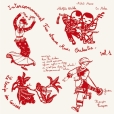
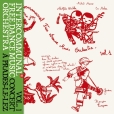
The Intercommunal Free Dance Music Orchestra was created in 1971 by the legendary pianist François Tusques. L’Inter Communal compiles extracts from concerts given between 1976 and 1978, revelling in the political engagement which lit up free jazz and popular music in that period.
According to Tusques, the Spanish singer Carlos Andreu was a griot ‘who created of new genre of popular song improvised with our music, based on events going on at the time.’
The opener Blues Pour Miguel Enriquez invokes Thelonious Monk in an uproarious homage to the Chilean revolutionary. Another song is entitled L’heure est à la lutte’... The time to fight is now.
We ship worldwide. The postage rates for your order are displayed before payment, which is processed using Paypal. You can pay using your Paypal account or any of the following cards. No need to join Paypal.