Your basket is empty

This saxophonist came through with the likes of Roy Ayers and Joe Henderson in the sixties, before hooking up with Steve Lacy in Paris in 1973. In this soundtrack composed for a film by his friend Joaquin Lledó — entitled Le Sujet Ou Le Secrétaire Aux Mille Et Un Tiroirs — he was joined by members of the group around Lacy, and diverse co-conspirators including friends from the funk outfit Ice, French accordionist Joss Bassellion, and none other than Jef Gilson at the mixing desk. It’s a dazzling, intensely entertaining blend of modal, cosmic and spiritual jazz, free funk, dirty grooves, heavy jams, bistro boogie and Javanese wah-wah.
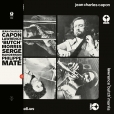
The fruits of a recording session deftly convened by Jef Gilson, to take advantage of Serge Rahoerson’s visit to Paris from Madagascar for just a few days in November 1976. Though a saxophonist by training, Serge had played drums on The Creator Has A Master Plan for the Malagasy album. To establish rhythmic foundations, Gilson reunited him in this capacity with Baroque Jazz Trio bassist Jean-Charles Capon. Recruited from Gilson’s current big band, Saravah saxophonist Philippe Maté and cornetist Butch Morris — on the verge of hooking up with David Murray — added their contributions later.
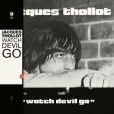
‘Four years after a first album on the Futura label in 1971, Jacques Thollot returned, this time on the Palm label of Jef Gilson, still with just as much surrealist poetry in his jazz. In thirty-five minutes, the French composer and drummer, who had been on the scene since he was thirteen — recording Gilson LPs when he was just sixteen — established himself as a link between Arnold Schoenberg and Don Cherry. Resistant to any imposed framework and always excessive, Thollot allows himself to do anything and everything: suspended time of an extraordinary delicacy, a stealthy explosion of the brass section, hallucinatory improvisation of the synthesisers, tight writing, teetering on the classical, and in the middle of all that, a hit, the title-track — which Madlib would one day end up hearing and sampling.
‘In a career lasting half a century, centred on freedom, Jacques Thollot played with a roll-call of key experimental musicians (Don Cherry, Sonny Sharrock, Michel Roques, Barney Wilen, Steve Lacy, François Tusques, Michel Portal, Jac Berrocal, Noël Akchoté...) who all heard in him a pulsation coming from another world.’
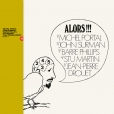
The illustrious clarinettist alongside John Surman, Barre Phillips, Stu Martin, and Jean-Pierre Drouet, in 1970. Iconic Futura cover-art by Avoine.
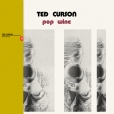
Outstanding modal set for Futura in 1971, with the superb French trio Georges Arvanitas, Jacky Samson, and Charles Saudrais, expertly proliferating Mingus and Trane.
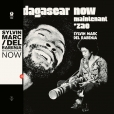
These two sharpened their musical skills in the celebrated seja-jazz band from La Réunion, Le Club Rythmique. In 1967 Sylvin Marc put out a terrific funk 45, saturated in James Brown. Later, he would play bass for Nina Simone on her album Fodder On My Wings, whilst Del Rabenja would work with Manu Dibango.
In these 1972 recordings for Jef Gilson’s Palme label, they are joined by their Madagascan compatriots Ange Japhet, Gérard Rakotoarivony and Frank Raholison — comprising the same group of five which lights up Funny Funky Rib Crib by Byard Lancaster and Soul Of Africa by Hal Singer & Jef Gilson.
The first side showcases the valiha harp-playing of Del Rabenja: three excursions in tribute to the great Rakotozafy, hypnotic and full of spirituality. The second side presents four compositions by Marc — free, grooving and cosmic.
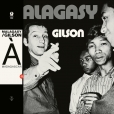
The fabulous, legendary LP originally issued by Lumen in 1972, born out of several visits to Madagascar by Gilson and fellow musicians from Paris, and their collaborations with musicians on the island.
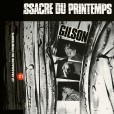
Fittingly the first trip was on May 13 1968, the day of the general strike in France: this is tumultuous, insurgent, joyous, blisteringly swinging, outernational Malagasy jazz, including a a charged, unmissable The Creator Has A Masterplan, and Avaradoha, a composition by Madagascan saxophonist Serge Rahoerson (who leads this recording), which was the anthem of the rotaka protests in 1972, bringing down the neo-colonial First Republic of Madagascar. The closer showcases various traditional Madagascan percussion instruments, played by the same trio which that year recorded Le Massacre Du Printemps, Gilson’s avant-noise homage in memoriam of Stravinsky.
Hot.
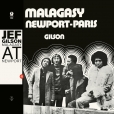
Jef Gilson, Sylvin Marc and his cousin Ange Japhet, Del Rabenja, Gérard Rakotoarivony and Frank Raholison, blending together bebop, sub-Saharan roots and electric funk.
Requiem Pour Django, Dizzy 48 and Anamorphose — renamed Salegy Jef after this re-routing via Madagascar — rejuvenate Gilson compositions from the previous couple of decades. Newport Bounce is a reworking of Interlude, recorded by Gilson in 1969 with Philly Joe Jones. Le Newport was a club in rue Grégoire de Tours, Saint Germain des Prés.
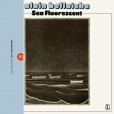
Highly sought-after French jazz fusion — blending in West Coast funk, gentle blues, sketches of Andalusia — with John Hicks, Jerry Goodman from the Mahavishnu Orchestra, and Jean-Marie Fabiano from the Fabiano Orchestra.
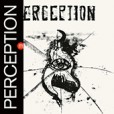
The first of a fascinating trio of LPs — this for Futura in 1970, by Hungarian saxophonist Yochk’O Seffer, German pianist Siegfried Kessler, French bassist Didier Levallet and Vietnamese drummer Jean-My Truong.
‘Lyrically incandescent free jazz, made up of startling interactions between complex harmonies and disjointed rhythms.’
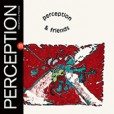
‘The second LP, from 1971, augmenting the original quartet with numerous guests including Teddy Lasry, Jean-Charles Capon, Kent Carter and Jean-François Jenny-Clark. Siegfried Kessler is largely absent on this recording, temporarily replaced by Manuel Villaroel, a pianist from Chile with a completely different temperament.
‘It all seems to predict the after-life of Perception would subsequently take. One track, by Yochk’O Seffer, who had already been part of Magma two years previously, looks forward to the more structured Neffesh Music, whilst, in the opposite direction, another track, by Didier Levallet, is more evocative of the future arrangements on Swing Strings System. All these different elements, from tightly written pieces to wild improvisation, work so well together: their coherence is one the key attributes of a group free like few others.’
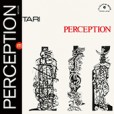
‘By the time Mestari, their third and final album, came out, Perception had four years of questing and originality behind them, developing their own individual language, in which the improvisatory spontaneity did not exclude influences from European folk or classical traditions.
‘Balanced, ethereal and structured, Mestari reinstated the original quartet. It opens infinite perspectives, totally in phase with what was being produced in France at the same time by the Cohelmec Ensemble and the Dharma Quintet.’
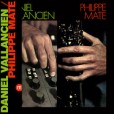
Saxophonist Phillipe Maté has played with the Acting Trio, Jef Gilson and Butch Morris, amongst others; and that’s him on Jean-Claude Vannier’s brilliant L’Enfant Assassin Des Mouches. As the recording engineer of BYG, Daniel Vallancien worked alongside Anthony Braxton, Don Cherry and Sonny Sharrock; for Saravah he recorded Brigitte Fontaine and the Cohelmec Ensemble. From 1972, this free-form saxophone/electronics collaboration is another bonafide classic of the French musical underground, revived with characteristic panache by Souffle Continu.
‘Winding operations down after End Starting, Archipel is likewise planned-out music, mixing free rock and European free jazz in a series of collective explosions based on abrupt and contrasting improvisations. For much of the time, piano, guitar and saxophone intertwine over intense rhythms. Everything is electric, with the density of On The Corner, and flashes of viciousness all its own.
‘Along with the Cohelmec Ensemble, the Workshop de Lyon, the Full Moon Ensemble, Perception, Armonicord or the Michel Portal Unit, the Dharma Quintet stands out as one of the most important examples of free jazz as it was played in France at the beginning of the 1970s.’
“We try to reach within free jazz the same sort of rhythmic cohesion as in bop… based not exactly on tempo, but something which feels like tempo. A kind of underlying pulse.”
This is Dharma’s first LP: from the same neck of the woods as the Cohelmec Ensemble, a mixture of spiritual jazz, free jazz and electric Miles — especially for its keyboards — infused by the anti-authoritarian politics of collectivism and anti-hierarchism.
Saxophonists Jef Sicard and Gérard Coppéré are moonlighting from Claude Delcloo’s Full Moon Ensemble.
Their second LP, released three months after Mr. Robinson in 1970.
Funky jazz-rock — tight, direct, restless. Pianist Patricio Villarroel lays on the Corea / Jarrett vibes; alongside bassist Michel Gladieux and drummer Jacques Mahieux.
Their first LP, released in 1973 after six years together, with the first drummer Pierre Guyon having been replaced by Christian Rollet in 1970. Brilliant, roiling and free, with a celebratory lyricism to its grapplings with Cecil Taylor, Gary Peacock, Milford Graves and co, and a wheeling melancholia straight from Ornette.
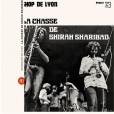
With the arrival of clarinettist-saxophonist Louis Sclavis in 1973 (and the departure of trumpeter Jean Mereu in 1975), the Workshop De Lyon was born of the Free Jazz Workshop.
A warmly accessible, beautifully performed, joyous mixture of wailing improv and propulsive, rootical preparations, this second album derives its upful, digressive theatricality from the Arts Ensemble Of Chicago, and its urgent sublimification of vernacular rhythms and melodies from Albert Ayler. Wild and free, but grounded in stuff like Bechet, Monk and George Russell.
Terrific.