Your basket is empty


China
Chen Leiji, Album Of The Prunus Hermitage
Ocora
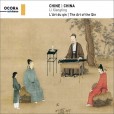
Masterful playing of the qin zither, in China considered the most noble of instruments, as if tracing the shapes and meanings of silence.
The three main genres of Labë polyphony, all aiming for maximum emotional impact: vaj, lamenting life’s dramas; dashuri, love songs; historical epics.

From the north-eastern provinces, mixing Spanish, African and Guarani influences (and long derided for it), a distant cousin of tango. Guitar and six-string guitarron, accordion and bandoneon, double bass, singing.
Haydee Alba’s 1990 debut album — emotional and poetic from the off, already steeped in tradition — following the evolution of the form over its nineteen tracks. ‘An artist’s job is to make her public dream.’
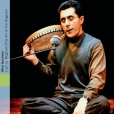
Intense, virtuosic singing in this ancient tradition, accompanied by Qasimov himself playing the daf frame drum and the brothers Mansurov on the tar lute and kamancha fiddle.
‘Simply one of the greatest singers alive, with a searing spontaneity that conjures passion and devotion, contemplation and incantation’ (New York Times).
Mainly female vocal ensembles performing seasonal, child-bearing and wedding songs, with instrumental dance excursions by violin, reed-pipe, cymbalum, accordion and drum.
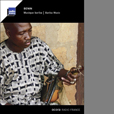
Griot music with delicate dambararou lute; ritual possession songs with gogue fiddle and gon and karou drums; and a women’s choir.
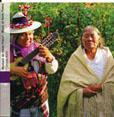
The dignified, expressive music of Andean Indians — the huayno, the slower tonado, the syncopated pascua — sung and played on charangos and guitarrillas by the Alvis Family, including Barbara, aged eighty-six.
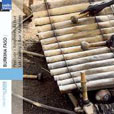
Brilliant, jacking, extended, improvisatory, ancient dance music played at the initiation of diviners (drugged with jolonthi, to ward off spells) on a twelve-blade xylophone with calabash resonators.
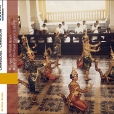
Pinpeat and mohori music — courtly and abstract versus nocturnal and soulful — performed by a female choir and the orchestra of the Royal Palace.
Differently pitched xylophones with bamboo blades suspended above a sound-box; sets of horizontal gongs; oboes; two big buffalo-skin kettledrums.
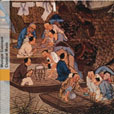
Delicate, quietly profound 1959-60 chamber recordings of old masters, on a dozen instruments, notably the guqin zither, the pipa lute and the xiao flute.
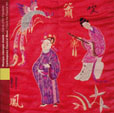
Traditional and popular pieces for drums, xiao and dizi flutes, banhu fiddle, sheng mouth organ, yangkin hammered zither, pipa lute, and xun ocarina (an instrument at least 7,000 years old).
Playing the xun, an ancient ocarina, the xiao, a vertical flute, and the qin zither, half the time with ‘amateur’ ensemble or zheng zither accompaniment. A last exponent in 1996, haunting and poised… dead now.
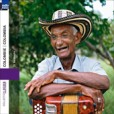
Festive folk music from the country’s Caribbean region, with four basic forms — the son, paseo, merengue and puya — played with three traditional instruments: the caja vallenata drum, wooden guacharaca scraper, and three-line, German-style button accordion. Here are some of its most celebrated performers, including Francisco ‘Pacho’ Rada, Nicolas ‘Colacho’ Mendoza and Victor Camarillo.
Gaitas music, for flutes and alegre, llamador and tambora drums.

Yeli singing, from northern Congo. Meandering, polyphonic counterpoint, with a sophisticated interlacing of sounds and motifs, and complex yodelling techniques.
‘When something grave occurs, when someone fall sick, when the hunt is bad, or when death strikes, it must be that the forest herself is asleep and unable to watch over her children… We have to wake her up. And we do this with singing…’
We ship worldwide. The postage rates for your order are displayed before payment, which is processed using Paypal. You can pay using your Paypal account or any of the following cards. No need to join Paypal.