

Your basket is empty

Though music journalists made a big deal recently about the release of a 1965 rehearsal tape by Derek Bailey’s Joseph Holbrooke trio with Gavin Bryars and Tony Oxley, those early efforts were mere tentative steps along a cliff edge wearing a line safely attached to Coltrane. There’s still a whiff of jazz to Bailey and Parker’s work with the Spontaneous Music Ensemble up to and including 1968’s Karyobin.
But with the addition of Jamie Muir — the first great free improvising percussionist who didn’t start out as a jazz drummer — and the way-leftfield electronics of Hugh Davies, the MIC leapt right off that cliff.
These six tracks — tight, electric, pointillistic, brilliant, uncompromising and exhilarating — sound like nothing else that came before.
In a word, seminal.

A dazzling survey of the last, bohemian flowering of the so-called Golden Era of Ecuadorian musica national, before the oil boom and incoming musical styles — especially cumbia — swept away its achingly beautiful, phantasmagorical, utopian juggling of indigenous and mestizo traditions.
Forms like the tonada, albazo, danzante, yaravi, carnaval, and sanjuanito; the yumbo, with roots in pre-Incan ritual, and the pasillo, a take on the Viennese waltz, arriving through the Caribbean via Portugal and Spain.
Exhumations like the astoundingly out-there organist Lucho Munoz, from Panama, toying with the expressive and technical limits of his instrument; and our curtain-raiser Biluka, who travelled to Quito from Rio, naming his new band Los Canibales in honour of the late-twenties Cannibalist movement back home, dedicated to cannibalising other cultures in the fight against post-colonial, Eurocentric hegemony. He played the ficus leaf, hands-free, laying it on his tongue. One leaf was playable for ten hours. He spent long periods living on the street, in rags, when he wasn’t in the CAIFE studio recording his chamber jazz-from-space, with the swing, elegance and detail of Ellington’s small groups, crossed with the brassy energy of ska — try Cashari Shunguito — and an enthralling other-worldliness.
Utterly scintillating guitar-playing, prowling double bass, piercing dulzaina, wailing organ, rollicking gypsy violin, brass, accordion, harps, and flutes. Bangers to get drunk and dance to. Slow songs galore to drown your sorrows in, with wildly sentimental lyrics drawn from the Generacion Decapitada group of poets (who all killed themselves); expert heart-breakers, with the raw passion of the best rembetica, but reined in, like the best fado.
Fabulous music, like nothing else, exquisitely suffused with sadness and soul. Hotly recommended.
Sumptuously presented, in a gatefold sleeve and printed inners, with a full-size, full-colour booklet, with wonderful photos and excellent notes. Limpid sound, too, courtesy of original reels in Quito, and Abbey Road in London; pressed at Pallas.
Fired-up, originary African pop, conjuring the Congolese rumba from imported Latin 78s — with thumb pianos, kazoos, banjos, bottles, violins, and irresistible little songs about pimps, dope, clubbing, sex, death.
Stunningly beautiful, poignant music from Bilād al-Shām — ‘the countries of Damascus’, known nowadays as Syria, Lebanon and Palestine — including performances from the very first recording sessions in the region.
The legendary, moody Beirut singer Būlus Ṣulbān is here — some historians have him singing before Egypt’s Pasha Ibrāhīm Bāshā during his military campaign in Syria, in 1841 — and Ḥasība Moshēh, Jewish ‘nightingale of the Damascene gardens’. Thurayyā Qaddūra from Jerusalem; Yūsuf Tāj, a folk singer from Mount-Lebanon; Farjallāh Baiḍā, cousin to the founders of Baidaphon Records… Musical directors like the lutist Qāsim Abū Jamīl al-Durzī and the violinist Anṭūn al-Shawwā (followed by his son Sāmī); such virtuosi as the qanun-players Nakhleh Ilyās al-Maṭarjī and Ya‘qūb Ghazāla, and lutist Salīm ‘Awaḍ.
Even at the time, notwithstanding such brilliance, public music-making was frowned upon as morally demeaning, especially for women. Musical venues were generally dodgy. Ṣulbān once cut short a wedding performance for the Beiruti posh, after just one song, he was so disgusted with his audience.
‘If I had to tell you about the catcalls,’ one commentator wrote about the musical theatre of the time, ‘the stomping of feet, the sound of sticks hitting the ground, the noise of the water-pipes, the teeth cracking watermelon seeds and pistachio nuts, the screams of the waiters, and the clinking of arak glasses on the tables, I would need to go on and on and on…’

Tipped by the New York Times: ‘I have heard no more beautiful record this year… a righteous calm takes over the album like a spirit force.’
‘brilliant… concise, deeply romantic, totally original ****’ (Mojo); ‘freewheeling and delightfully quirky ****’ (The Guardian); ‘CD Of The Week… terrific’ (The Observer); ‘like nobody ****’ (Sunday Times).
‘Jesus fucking shit! These jamz claw so hard at the tatties below methinks the Lord misnamed them, having intended to say trembling BALLS’ (Will Oldham). ‘My kind of band… Highly recommended’ (Joe Boyd).

‘New levels of excellence… a poetic incantation of British identity far brighter than Michael Gove’s proposed GCSE history syllabus *****’ (The Sunday Times). ‘Magnificent ****’ (The Guardian).
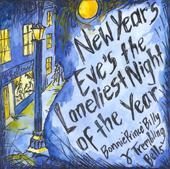
A terrific, bountiful seasonal single — with Bonnie Prince Billy in his cups on one side, and Mike Heron from The Incredible String Band on the other, with a Boxing Day ghost story. Beautifully sleeved, limited.
‘Hair-raisingly good… incandescent’ (The Observer).
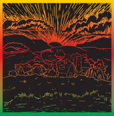
Entirely exclusive music, unique to this release, with a radiant silk-screened sleeve: four from The Marble Downs sessions with Will Oldham, a Scott Walker to start; and a side of unaccompanied folk singing.
Something really special.
Juddering bangers and hypnotic body-rockers, dazed spells and rootical wig-outs spun from early Detroit techno, West African field recordings, soundboy dub and beatbox hip hop; rough as fuck and clatteringly percussive, but shot through with a gritty numinousness. Stokey worries.
Gorgeously sleeved in midnight-black art-paper, intricately printed in silver with the visionary photography of Katrin Koenning, folded by hand and packed into Japanese cellophane envelopes.
Very warmly recommended, unsurprisingly.
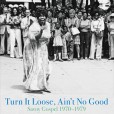
The second of three volumes presents sublime crossings of gospel with the soul, funk and jazz of the Black Power era. Twenty cuts dot dazzlingly between Muscle Shoals soul, screwed breakbeat, Mizells-style fusion, disco and proto-house. Triumphant re-workings of Sly Stone, Donny Hathaway and Herbie Hancock’s Head Hunters will have listeners throwing their pew cushions into the air.

A bobbing, minimal groover from the Berlin corner, dug-in and funked-up over ten minutes; and icily original, top-dog work from Pev, tethered between a kind of arrested Highlife and a Detroit breakout.

Two EPs of storming, squinty Shangaan Electro to herald the European tour of Tiyiselani, the Tshetshas and producer Dog, in the summer of 2011.

An exclusive mix, featuring the original Light Of Saba drummers; with two new instrumentals, one in a more laid-back grounation style, the other blood-and-fire; and a chant, upful and defiant.

Headlong, fierce, banked rasta drumming fit to discombobulate any kind of system, with sweet, jazzy trombone riding it down, bubbling bass driving it home, and all of it classically dubwise.
Wareika Hill Sounds is the contemporary roots reggae project of Calvin Cameron — mainstay of the original Light Of Saba line-up, the genius behind Lambs Bread Collie — who to this day lives above the headquarters of the Mystic Revelation Of Rastafari, in the Wareika Hill district of Kingston, Jamaica.
In the great pedagogical traditions of the multi-cultural Light Of Saba, and before that Count Ossie, this new recording runs together two JA musical traditions — a kind of drumming (and drum) brought from the Congo, and the island’s variation of calypso — into a thundering grounation charge. As always, the Skatalite’s trombone-playing is majestic: deadly, gripping, deeply cultivated.
The dub is tremendous, too.
‘From the college where you get your musical knowledge, shower on the hour every hour’ — as I-Roy would say, in a Leninist style and fashion — ‘Knowledge Is Power.’
Two no-flim-flam, cross-border, dub-wise stompers — paired with masterful versions — from the veteran, Kingston-based unit led by the trombonist of Count Ossie’s Mystic Revelation Of Rastafari and The Light Of Saba.

In the great tradition of his time with Count Ossie, four new grounation furies — hypnotic, thunderous, urgent, mystical — with dubwise repeta, funde and bass drums embedding the Light Of Saba veteran’s gorgeous trombone classicism.
The opener is a rocking kumina rhythm, with ring-the-alarm metal percussion and exhortatory brass; Free The People swirls some apocalyptic reasoning into the foggy, thumping mix. Universe In Crisis is another emergency call, chuffing headlong down the grooves… before the beautiful, anthemic Chant takes a step back from the fire, closing with a sense of thankful, spiritual reconciliation, the expert drumming and lyrical bone-work in full effect.

Full, bone-heavy horns, swirling organ and rocking nyabinghi drumming; and with a storming dub.

An unexpectedly upful, shuffling, percussive rug-cutter, with the Light Of Saba veteran bringing a little go-go to the grounation, and a deft, lovely dub mixed by Moritz von Oswald.

From this veteran of the Count Ossie group and The Light Of Saba — ‘These are my recordings from the last couple of years, blazing grounation roots reggae.’

Watch How The People Dancing
Unity Sounds From The London Dancehall 1986 - 1989
Honest Jon's Records
Exhilarating reggae music from Stoke Newington, north east London, made by soundboys on a Casio and a drum machine, in a room over Eddie Regal’s record shop.