


Your basket is empty

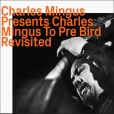
Presents CM is unmissable. The cool and deadly b-line funk of Folk Forms gives way to a New Orleans funeral march; the Original Faubus Fables is irresistible, knockabout antifa, straight to the head of a dingus; What Love showcases brilliant interplay between Mingus and Dolphy; All The Things rages freely about Mental Health.
Pre Bird is from 1960 but ostensibly before Mingus heard Charlie Parker.
A host of stellar players — including Eric Dolphy, Booker Ervin, Max Roach, Marcus Belgrave, Slide Hampton, Yusef Lateef — in variously large ensembles, reading mostly tight, post-Duke scores.
It kicks off with a startling mash-up of Take the A Train, in the left channel, and Exactly Like You in the right. ( On the flip, Do Nothin’ Till You Hear From Me is likewise bundled with I Let a Song Go Out of My Heart.)
The great Mingus art songs Eclipse — hymning black-white relationships — and Weird Nightmare are here. Apparently vocalist Lorraine Cusson fluffed the last line of Nightmare — singing ‘Bring me a heart with a love of gold’ instead of ‘Bring me a love with a heart of gold’ — but Mingus was so happy with the take, he let it go.
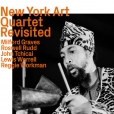
Strikingly original, still: open and untethered, dreamily ramshackle and provisional, dazzlingly polyphonic.
‘All that is solid melts into air,’ as Marx puts it; ‘all that is holy is profaned, and man is at last compelled to face with sober senses his real conditions of life, and his relations with his kind.’
Tracks 1-4 comprised the eponymous release on ESP in 1964: Roswell Rudd, John Tchicai, Lewis Worrell, Milford Graves, with a walk-on by Leroi Jones (reciting Black Dada Nihilismus).
Tracks 5-9 were released on Fontana the following year, as Mohawk: Roswell Rudd, John Tchicai, Reggie Workman, Milford Graves.

Vibraphone and soprano saxophone.
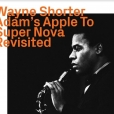
The classic Adam’s Apple album from 1965, with Herbie, Reggie Workman, and Joe Chambers, featuring the first time out for Footprints, and the samba dancer El Gaucho. And the questing Super Nova album from 1969, entangled with Miles’ Water Babies, featuring a wigged-out Dindi: three guitarists (John McLaughlin, Sonny Sharrock, Walter Booker) and three percussionists/drummers (Jack DeJohnette, Chick Corea, Airto Moreira), plus Miroslav Vitous.
‘Michael Brändli’s sound restoration and mastering skills take Ezz-thetics’ carefully curated reissues further into exalted territory. Once again, Brändli has woven his magic and for the listener the result is almost like hearing the material for the first time’ (Chris May, AllAboutJazz).