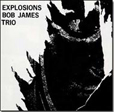
With bassist Michael Bisio and drummer Newman Taylor Baker — Henry Threadgill crew — who chips in a couple of brilliant solo tracks before the trio’s sixteen-minute, tour-de-force Matrix, to close.
‘Unquestionably the most important piano trio of its time, not so much extending the literature as starting a whole new volume. It really is that good,’ writes Brain Case in The Wire.
‘He’s both deeply imbued in the jazz pano tradition, channelling Monk on the opening Tangible, and completely beyond it. Listening to the softly tumbling, free associating line of Mysterious State is to leave the existing literature far behind and move into a whole new idiom. Likewise, the possibly tongue in cheek Jazz Posture and the almost ritualistic opening to Beyond Understanding where he plays a bare minimum of notes (contrast the rapid transitions of Talk Power right after it) but manages to suggest whole areas of musical possibility.’
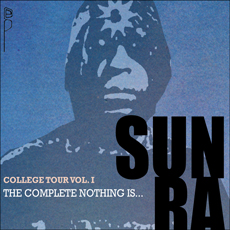
From 1966, burning, mostly free-form, a quintet featuring the missus Barbara Donald’s brilliant trumpet-playing, and an up-and-coming John Hicks.
With different lineups in 1966, including pianists Ran Blake, Burton Greene and Dave Burrell; and Giuseppi Logan.
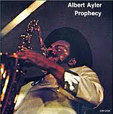
The Alabama-born saxophonist and clarinettist in 1966, with Sonny Sharrock, Byard Lancaster, Clifford Thornton, Karl Berger, Henry Grimes and co.
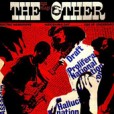
His 1966 debut (with Henry Grimes on bass), after ESP founder Bernard Stollman saw him play as John Coltrane’s guest at the Village Vanguard.
Clifford Allen commented in All About Jazz: ‘Wright was one of the forerunners of the multiphonics-driven school of saxophonists to follow the direction pointed by Ayler, but with a more pronounced bar-walking influence than most of his contemporaries. Whereas Ayler’s high-pitched wails, wide vibrato and guttural honks all belied an R&B pedigree, his solos still contained the breakneck tempos and facility of bebop… Wright, on the other hand, offers his honks and squawks with a phraseology derived from the slower, earthier funk of R&B and gospel music… The opening The Earth starts with a brief vibrato-heavy and bluesy slow theme on unaccompanied tenor that quickly erupts into a frantic screamer of a solo, a mix of buzzing upper-register cries and low bleating honks, occasional recognizable stock R&B phrases making their way into the melange… Unlike Ayler, there is not a significant amount of solo construction, for it appears Wright was throwing together ideas in a spirit of jubilation.’
His second ESP, one year after the Trio date, offering ‘passionate explorations of four of his originals, plus Jones’ The Lady. Rather intense at times, these emotional performances still sound groundbreaking three decades later. One of Frank Wright’s finest recordings’ (AllMusic).
Intriguing quartet, with Jacques Coursil and FW’s Cleveland homie Arthur Jones — two BYG mainstays in the making — and bassist Steve Tintweiss and Muhammad Ali both on fire.