Your basket is empty

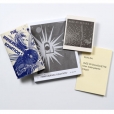
Fastidiously designed facsimiles of two pamphlets which accompanied early Sun Ra albums; and two substantial publications more than a decade later by Infinity Inc./Saturn Research.
Issued in 1957 by the Boston-based Transition label, his debut LP Jazz By Sun Ra contained a beautiful booklet, now as prized as the LP itself, with rare photographs and a selection of poems and proclamations, as well as the personnel and recording credits.
Ra’s Jazz In Silhouette was released two years later on Saturn Records, coming with a mimeographed, folded, unstapled booklet. The CvsD version folds this slim pamphlet of poetry into a slipcover with a classic photo portrait of Ra by Thomas “Bugs” Hunter on the back.
Perhaps Ra’s best known book of poetry, The Immeasurable Equation is restored after the original Infinity Inc./Saturn Research version, published in Chicago in 1972, and distributed widely by the Arkestra, often from the bandstand. It features more than sixty of Ra’s poems.
Finally, perhaps the rarest of Ra’s poetry books is Extensions Out: Immeasurable Equation Vol. II, which was also published by Infinity Inc./Saturn Research. This 8.5 x 11-inch book is a massive compendium of more than 130 poems, very much in step with the mimeo poetry publications of its era — simple staple binding, one-sided pages — featuring three photographs of artwork by Ayé Aton, a close ally of Ra’s in this, the period of the Arkestra classic Space Is The Place, on which Aton plays percussion. Great care was taken to reproduce the special textured cover of this highly sought after book.
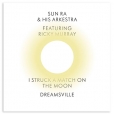
In 1961 Sun Ra took off from Chicago – where he had established the Arkestra, his dedicated ensemble and the vehicle for his mission to better the planet – and with a scaled-down version of the band he landed in NewYork. Their first recording session was in Newark in October of that year. The Futuristic Sounds Of Sun Ra, recorded for the Savoy label, is a beautiful document of the material they’d honed during a long residency at the Wonder Inn at the end of the Chicago period. Among tracks left in the vault from that day in the studio were these two great ballads sung by Ricky Murray, both of them redolent of the bright popcraft that had long been part of Ra’s repertoire, with classic Afrofuturist themes of navigating outer space and altered destiny cloaked in sweet songs with tart arrangements.
“Marshall Allen especially liked playing I Struck A Match On The Moon,” recalls Ricky, “because he got a chance to light up a cigarette while we were singing.”
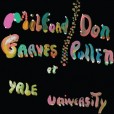
Bringing together two of the most prized, auratic LPs in all of free music, with music as vital and challenging today as it was more than five decades ago.
In Concert At Yale University, Vol. 1 was self-released on the duo’s Self-Reliance Program imprint in 1966. Copies are impossibly rare, especially the first few, which sported hand-painted covers by the musicians. (Several of these are displayed in the CD gatefold, together with a terrific photo of the pair selling LPs at a Nation of Islam convention.)
It was followed by Nommo, the next year.
For a performance at Yale University in New Haven, Connecticut, in spring of 1966, percussionist Milford Graves invited pianist Don Pullen to play duets. The two musicians had worked together in a band fronted by saxophonist and clarinettist Giusseppi Logan, with whom they had recorded two LPs in 1965 for ESP. Graves was already a daunting presence in free music. One step at a time, he was busy transforming the role of drumming in jazz, introducing a new way of dealing with unmetered time and accomplishing this task with technique that was almost inconceivable. His experience playing timbales in Latin bands had been formative, suggesting that the snare could be used as accent rather than beat-keeper, but by the mid 60s he’d worked up a holistic approach to sound and energy that was the most radical of his improvising percussion contemporaries.
For his part, this early setting finds Pullen at his most hard-hitting, and his pianism here lays to rest any allegations of Cecil Taylorism.
From the mid-eighties, when he was lining up with Barry Guy and Paul Rutherford in Iskra 1903.
Spacious, detailed excursions layering violin, vocalese and electronics, Bach and a little dub.
Lovely, captivating stuff.
‘Never-before-issued music from three very different settings in upstate New York, all recorded in the period running up to Nation Time.
‘First, from a year before, in the same hall at Vassar College, with soulful vibraphonist Ernie Bostic and a rhythm section of Tyrone Crabb and Bruce Thompson, both on Nation Time, performing a Trane-oriented set that included versions of Mongo Santamaria’s Afro Blue besides Naima, as well as McPhee-fave God Bless The Child. Deeply emotional and fiery playing with this unusual instrumentation — and it’s rare to find McPhee playing with a harmonically based instrument like vibes.
‘Also a quartet concert at a monastery in nearby New Windsor, with saxophonist Reggie Marks, playing a powerful combination of originals and the Patty Waters-associated traditional tune Black Is The Color.
‘Finally, three cuts document a more rough-and-tumble gig taped outdoors in the park at Poughkeepsie’s Lincoln Centre. A funky, bluesy, lowdown, explosive configuration, they feature vocals by one Octavius Graham, great drumming by Chico Hawkins, and Tyrone Crabb on electric bass.
‘This two-CD set has been lovingly transferred from original tapes in McPhee’s personal archives, and is augmented by newly discovered photographs of the concerts.
‘A spectacular deep dive into the pure magic of Mr. McPhee.’
‘One of the all-time great records of improvised music from Europe. Period. Blisteringly hot. Uncompromisingly inventive. Staggeringly beautiful. And insanely rare. Originally issued in the mid ‘70s on FMP, featuring the legendary Schlippenbach Trio — with Evan Parker and Paul Lovens — joined by Peter Kowald.
‘Just the first track, an incredible twenty-plus-minutes burner called Range, is worth the price of admission — as punk rock as free music gets, it shows Parker’s spectacular capacity for high-octane blowing. Kowald adds a chewy, molasses bottom to the group, offsetting Lovens’ flinty metal, stick and skin and Schlippenbach’s hyper-focused intensity.
‘A stone cold classic of creative music. Remastered from original tapes.’
LP from Cien Fuegos.
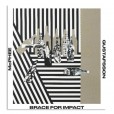
‘As searching and searing as anything either of them has made, these 2008 duets live up to their explosive title. Gustafsson is known for his energy, and it’s here in droves, but there are other nuances brought out by McPhee — a supple sense of melodicism (hey now, Gustafsson is a Swede, so by birthright he’s melodic) and the love of experimental sound-making that McPhee displayed on his sound-on-sound recordings in the late ‘60s…
‘Insanely powerful. We recommend that you prepare yourself for the impact.’
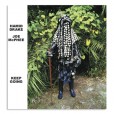
‘The session somehow consolidated their shared energy in an unexpected way — the drummer’s incredible warmth and sense of buoyancy, the saxophonist and trumpeter’s preternatural musicality and quest for social justice. The recording started with McPhee reciting words by Harriett Tubman, resulting in the title track; Drake’s support was an achingly slow Max Roach-like beat. From this inspired, inspiring starting point, the twosome frolicked through a rich program, McPhee donning tenor and alto saxes, and pocket trumpet, Drake turning momentarily to the frame drum. Each musician contributes an introspective solo track. McPhee at one point plays trumpet into an open gong, which gives him otherworldly overtones, a sort of acoustic version of electric Miles…’
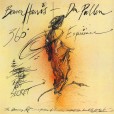
‘First issued in 1985 by Hal Willner’s Shemp label. With its unconventional lineup featuring steel drums, Latin percussion, and French horns, along with the co-leaders’ drum-kit and piano, it is among the most wonderful outings of its decade. Pullen was in top form, his inside-outside approach to the keyboard perhaps optimally heard on the exuberant Double Arc Jake, where the bright melody suddenly breaks into pieces, snapping back into miraculous shape. The band includes Hamiet Bluiett on baritone saxophone and Ricky Ford on tenor saxophone, along with Buster Williams on bass, Francis Hayes on steel pans, and a special brass section led by Sharon Freeman on the seventeen-minute Goree.’
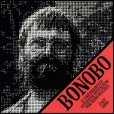
His second LP, originally released by FMP in 1976. ‘Microtonal string investigations still beguiling and fresh four decades later.’
The violinist’s first solo record, originally released on Hat Hut in 1980. A mixture of his own compositions, extrapolated at length in an intimate live concert, as well as traditional and improvised material. Remastered from original tapes and augmented by newly discovered recordings from the same concert. Great to hear Giuseppi Logan on here, briefly in from the cold.
‘A studio recording from 1979, previously unreleased. It is primarily structured around pairs of tunes by Charles Mingus, Thelonious Monk, and Duke Ellington (or Billy Strayhorn), adding Ornette Coleman’s Lonely Woman for good measure. The results are stunningly intimate and show the twosome’s capacity for creative interplay at a fairly early stage in its unfolding. Pithecanthropus Erectus gets pared down to its essential walking-bass-ness, while Monk’s Evidence is taken apart, and solo spots by both men are as riveting as one would expect.’
Wonderful 1985 recording led by the brilliant cellist Tristan Honsinger, originally released by Data.
With trumpeter Toshinori Kondo, saxophonist Sean Bergen, Jean Jacques Avenel on bass, Michael Vatcher on drums and percussion, and Tiziana Simona Vigni singing.
‘Deceptively vicious little songs with hilarious twists and the kind of intense improvising you’d expect from a band that incorporates players of this calibre.’
‘Arguably the rarest LP of European free jazz, recorded in 1963 for the Danish label Sonet, but not fully released. Impossibly uncommon, exceptionally wonderful music, featuring an extended tenor saxophone solo by Frits Krogh, influenced by Sonny Rollins, but strikingly his own man. The rhythm section is deep into non-metrical time, and comparisons to Cecil Taylor are valid, though Prehn’s playing favours chords and clusters over linear runs. For the CD, the two tracks of the original LP, mastered from both extant copies of the test master, are augmented by a single track from 1966, never before released.’
The marvellous Art Ensemble Of Chicago drummer, solo and duetting with cornettist Olu Dara in 1977-8 — ‘with extreme intimacy, sometimes exploring the sonority of his kit, sometimes extrapolating on a beat… alongside Dara, one of the great figures of the loft era and a wonderfully polymath musician [and Nas’ dad to boot]... stretching all the way out on the three dedications to Lester Bowie.’
Cecil Taylor’s stalwart collaborator, in the best of his recordings as leader; recorded in 1978 and originally issued by Hat Hut as a 3-LP box set. ‘Five extended pieces, all by Lyons, with a working quintet: Lyons himself on alto, his wife Karen Borca on bassoon, Hayes Burnett on bass, Munner Bernard Fennell on cello, and Roger Blank on drums. Jolting, quicksilver free jazz with terse themes and brilliant interplay, the music is quintessential Lyons — searching, pliant and sincere. Remastered from the original tapes, this first reissue of Push Pull restores the original tracks — two of which were split into LP sides — to their true continuous length.’
‘Multi-track, multi-instrumental recordings — more compositional in nature than Sound On Sound — especially prized by the man himself. Over-dubbing builds and sculpts each piece, creating complete wind ensembles one track at a time. In 1974 and then again in a longer session in 1979, McPhee recorded himself in concise solo, duo, and tripartite self-communion, like a one-man-WSQ, his probing investigations and lyrical statements as incisive and insightful as those of his best-known recordings.’
‘Three adventurous, spacious displays of Smith’s unique and innovative trumpet — besides percussion, tuned percussion and flute — right at the crest of his induction into the pantheon of AACM greats. A candid snapshot of one of the most vital musicians to extend the jazz tradition, testing his craft and artistry with a bright, pure-toned sensibility and deeply soulful melodic imagination.’
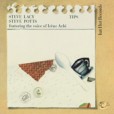
Utterly captivating settings for soprano and alto saxophone — Lacy and Steve Potts terrifically on song — of Georges Braques’ bons mots. With Irene Aebi.
Recorded in 1979 by Jef Gilson.
The first CvsD re-release of Lacy’s full Hat Hut oeuvre, mastered from the original tapes.