Your basket is empty

‘Listeners expecting unrelenting blasts of ‘energy music’ might be surprised to find a cohesion atypical of free jazz: amidst the wild, impassioned solos, Howard weaves in Latin rhythms and fat-bottomed grooves. On the first side, Domiabra and Ole Negro sound as if they could have appeared on some of Blue Note’s proto-spiritual jazz, groove-heavy releases — evoking the likes of Horace Silver or Bobby Hutcherson — before ceding the floor to the horn players’ anarchic firepower. As John Corbett writes in the liner notes, ‘Two players stand out. Bassist Norris Jones — aka Sirone — is given ample room, largely unaccompanied; his corporal approach foreshadows later work with the Revolutionary Ensemble. But the secret weapon on The Black Ark is Arthur Doyle. Straight from basement rehearsal sessions with Milford Graves, whose ensemble he had joined and who remained a favorite of the drummer for decades, Doyle is a human flamethrower.’ Trumpeter Earl Cross’ guttural, vocal effects complement Doyle’s take-no-prisoners approach, while the estimable combination of Muhammad Ali (Rashied’s brother) on drums and Juma Sultan on congas adds an ever-shifting propulsion. The septet is rounded out by the enigmatic pianist Leslie Waldron, who anchors the group with imaginative accompaniment and occasional boppish flourishes. Every bit worthy of its reputation as an ‘out-jazz’ holy grail, The Black Ark only sounds better with age.’
The business — pure, heavy, deep Afro Cuban funk grooves. 1970s bass-driven percussion delirium. Lazaro Pla aka Manteca alongside Nelson ‘El Flaco’ Pardon on timbales and Carlos Potato Valdes on congas.
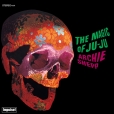
‘Verve By Request.’
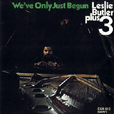
Soul jazz from the jazz pianist plus trio. The first half’s a bit soft, before Aquarius marks the dawning of the funky stuff — Evil Ways, Shaft, Booty Butt — ending with a cooking cover of The Meters’ Funky Miracle.
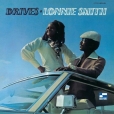
Classic Vinyl Series.
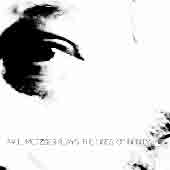
‘A 6 part cosmic hobo’s dream suite for 23 string banjo… Metzger plucks, picks, bows and spins his way through a 40 minute odyssey making for his most ambitious and adventurous musical trip to date.’
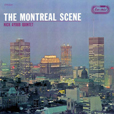
Sparkling, limber post-bop from 1964 — with touches of modal, bossa, and Eastern Sounds — impeccably reissued in Japan.
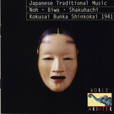
A magical, poignant selection from sixty 78s issued in 1942. Featuring Noh theatre musicians, many trained by artists active before the Meiji period, prior to 1868.
An LP’s worth of vintage Studio One rhythms (and Coxsone productions), vocals plus dubs, all unavailable elsewhere.
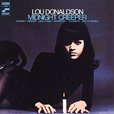
Bringing the funk in 1968, with George Benson, Lonnie Smith, Blue Mitchell, and Leo Morris (who became Idris Muhammed)... not forgetting Dapper Dan.
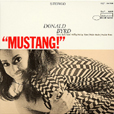
Donald Byrd (trumpet), Hank Mobley (tenor sax), Sonny Red (alto sax), McCoy Tyner (piano), Walter Booker (bass), Freddie Waits (drums).
1968, stereo pressing.
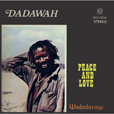
Dark, hypnotic, tripping nyabinghi from 1974.
Led by Ras Michael over four extended excursions, the music is organic, sublime and expansive, grounation-drums and bass heavy (with no rhythm guitar, rather Willie Lindo brilliantly improvising a kind of dazed, harmolodic blues).
Lloyd Charmers and Federal engineer George Raymond stayed up all night after the session, to mix the recording, opening out the enraptured mood into echoing space, adding sparse, startling effects to the keyboards.
At no cost to its deep spirituality, this is the closest reggae comes to psychedelia.
Warm, nostalgic, stirring settings for voice, guitar, accordion and violin. Knowing nothing, we can hear Jacques Brel and Jake Thackray.
Sid Bucknor supervising a mix of master musicians from the London scene and JA visitors — Rico, Tan Tan, Lester Sterling, Winston Wright and co. Ace versions of Rebel Woman and the Lumumbo rhythm for starters.
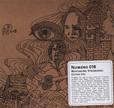
‘Bridging the gap between American primitive pioneers John Fahey and Leo Kottke and the California Modernists… the private side of the solo guitar movement from 1966-81.’ 40-page booklet, usual Numero class.
We ship worldwide. The postage rates for your order are displayed before payment, which is processed using Paypal. You can pay using your Paypal account or any of the following cards. No need to join Paypal.