









‘Their ability to harmonize together is stunning, their reedy voices coming together and pulling apart amid delicate fingerstyle guitar and concertina deployed in just intonation, which imparts a deeply resonant, almost glowing harmonic presence. It’s all quite subtle, and if you only listen to the way the voices of Cater and Rasten blend you might even miss it—but the full sonic spectrum is what distinguishes and, in certain ways, connects it to traditional practice… Although the album is pure balladry, unfolding with exquisite patience, each song contains nifty little flourishes or instrumental elements that set them apart, such as the slide guitar and wheezy bass harmonica on For the Ear That is No More, or the slow peal of trumpet on Death and the Lady, courtesy of Rasten’s partner in Pip and Oker, Torstein Lavik Larsen. (Peter Margasak, Nowhere Street).
‘All done with such grace and elegance, without a note wasted or any required. Wonderful… faultless and deeply considered’ (Glenn Kimpton, KLOF).
Three high English and Scottish ballads, and three original settings of European folk tales.
Matt gatefold cover; gloss spot varnish.
Check it out!
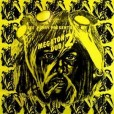
Calling all HJ massive: here is a terrific, vivifying guide to your record collection, and a political kick up the bum. Within ten minutes of engaging with this book, you’ll sprout a fresh pair of ears and a fifth lobe, or your money back.
This is a riveting, bracingly militant account of the racist British policing of Black Atlantic musical culture, from slavery days bang up to date. Extended sections consider the suppression of African drumming and dancing; calypso, and reggae sound systems; rap and drill.
The writing is deep, wide-ranging and richly erudite, but accessible and unstuffy. Compellingly, Lambros takes it all personally, and crucially his book blazes with love for a bunch of our favourite music: a long, diverse playlist in the back ricochets from Count Ossie and Salah Ragab through to A Tribe Called Quest and 24-Carat Black.
It joyously celebrates Black music as a reparative safe space, but also a key to getting to grips with the world; a contagion of ‘creole planetarity’, in the words of Paul Gilroy’s foreword, ‘capable of facilitating and intensifying political mobilisation, collective refusal and acting in concert. It can do this because it has promoted and amplified meaningful, relational life amidst a general haemorrhaging of meaning…’
‘The healing force of the universe,’ in Albert Ayler’s phrase. ‘My sanctuary… my life,’ as Gary Bartz put it. ‘Songs in the key of life.’
Very warmly recommended.
Another cracker of a book. Going on three hundred flyers, one per page; a handful in colour. Poignant loveliness from beginning to end. Click through for a couple more images.
Hard, rollicking soul-jazz by the Texas Twister — sideman to Ray Charles and Amos Milburn, spar of Cannonball Addereley — with Sonny Clark and Grant Green.
Dem Tambourines is for the dancers.
Still sealed.
His first session for Blue Note, with a killer lineup: Sonny Clark, Lee Morgan (just nineteen), Doug Watkins and Art Blakey.
The bluesy Nutville and latinized Minor Move are Brooks originals. He takes a jacking reading of Jerome Kern’s The Way You Look Tonight for his own. Star Eyes is borrowed from Bird, showing off Lee Morgan, with a magical, inimitable solo by Sonny Clark.
With Herbie, Joe Chambers and bassist Albert Stinson in 1967 (after Happenings). Smart, swinging, affective stuff. Theme From Blow Up gets a good seeing to.
1961 session with Pepper Adams and Herbie Hancock. Kicks off with I’m An Old Cowhand… always a winner.
Terrific, early-sixties, west-coast soul jazz, with Jack Wilson and Dupree Bolton.
Triumphant risk-taking from 1963 — in the same group of key, reaching Blue Notes as Unity and Dialogue — showcasing the great trombonist’s own tricky, moody, shape-shifting compositions, including a strongly evocative Monk tribute. It’s thrilling to hear Lee Morgan stretch out like this; Jackie Mac really goes for it, too. Not to mention Bobby Hutcherson, Bob Cranshaw and the dazzling drumming of Tony Williams, just seventeen.
‘Classic Vinyl Series.’
Coloured vinyl.