

Honest Jons logo

Honest Jon's has enrolled with the European Union 'Import One-Stop Shop'. For EU customers, this means that you will not be charged any additional VAT or duty, nor any handling fees. No further costs.
Twin detournements of Lieber & Stoller.
Hugh Godfrey coolly channels Love Potion No. 9 into a rude boy anthem, with tasty riding-east piano and full-steam-ahead saxophone.
On the flip, Norma Fraser swaps over the roles of the Big Mama Thornton classic. An erstwhile dawg is played by the singer. The raucous, sexually dismissive wordplay of the original — ‘You can wag your tail / But I ain’t gonna feed you no more’ — is replaced by dignified verses about female independence and resilience.
Killer 45.

The son of the world-renowned tar and setar virtuoso Hossein Alizadeh; a true master of the Iranian spike fiddle, or kamancheh; and a key voice in contemporary Iranian music, blending classical Persian traditions with avantgarde experimentation.
The two Rituals presented here are deeply immersive, epic, meditative soundscapes, charged with memory, emotion, and the spirit of resistance.

‘At the heart of the album lies the resonance, focus and slightly surreal shapes conjured by guitarist Bill Frisell. These gain extra substance by Potter’s arrangements for trombone, clarinet and violin which, added to Potter’s own strident tones, add extra layers of tension and sonic possibility. Bags of detail, soloists in elegant form and the narrative drive of the excellent Nate Smith and Burniss Travis on drums and bass, complete an album that engages and grips.
‘The set, bookended by the stirring fanfares and collective improv of the title track, unfolds thrillingly through layered melodies and blues-rooted solos, hints of Americana and seriously funky grooves… Two bonus tracks are covers featuring the core quartet and are worth the price of the deluxe release’ (Mike Hobart, Financial Times).

A meditation on the white abolitionist John Brown’s 1859 raid on Harpers Ferry, aiming to ignite a massive armed slave revolt across the American South.
“Looked at from one angle, John Brown was a religious zealot who used violence to try and achieve his aims. From a different angle, he was on the right side of justice, and gave his life hoping others would be free.”

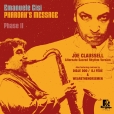
‘What might appear to be a heart-wrenching ballad — tapping 1960s or ‘70s radio-friendly Italian pop — is likely to transform into a state of pure sonic abstraction and tense tonal and timbral relationships, before travelling any number of places next (or not). What remains ever-present, as the album traverses its many territories, is the remarkable sense of compositional rigour, while also managing to feel perfectly balanced and unlaboured. Tarozzi elegantly intertwines voices, personal narrative and memories. From the album’s opening blasts of a radiant brass ensemble, reaching startling heights with her own Lucciole and a live-in-studio cover of Milton Nascimento’s River Phoenix, to its conclusion, which enlists the Piccolo Coro Angelico children’s choir, with whom she has worked for over fifteen years, the album is a profound journey into the potential of music on numerous levels, further establishing Tarozzi as one of the most important and distinct artists working today.
‘A truly astounding accomplishment, it’s hard to imagine an album imbued with a greater sense of wonder, joy, and creative accomplishment. It’s a truly stunning thing to behold, revealing new depths and dimensions with every return…
‘Well beyond ten out of ten and will unquestionably prove to be among 2026’s absolute best’ (Soundohm, Milan).

Legendary stoner folk by former Jefferson Airplane and Moby Grape member (who dropped some LSD and motorcycyled from California to the Nashville studio in his pyjamas).

Roman Norfleet from the Cosmic Tones Research Trio and Andre Raiah from Brown Calculus. Esoteric texts, sacred imagery, and mystic thought feed into spare diagrams of sound as space, tone, and pulse, drawn by saxophone, keyboard and percussion.
Warmly recommended; check it out.

‘The significance of Alice Coltrane’s presence in 20th century music cannot be overstated. Andy Beta’s Cosmic Music is a remarkable detailing of this visionary woman’s vocation in devotion to a sanctified art. From her childhood playing piano in the community of Pentecostal and Baptist churches, where ecstatic transcendence was at the heart of practice, to her engagement with the Detroit Jazz scene, and finding a kindred spirit in a life shared with the great John Coltrane, her music expressed a timeless expression of both divinity and dignity’ (Thurston Moore).
‘Alice Coltrane was co-architect of some of the most spiritually profound and formally challenging music ever made. The way Andy Beta tells it, it is one of the greatest adventures of the 20th century’ (David Keenan).

‘If Alice had been the wife of a Detroit auto worker, she’d obviously be a nonentity’; ‘a sincere but virtually talentless lady who married the right man’ (Down Beat, 1977).

Clearly written and thoroughly researched — wide-ranging and stuffed with interest — it’s a must. Warmly recommended.
Hardback; 450 pages.

‘Among the most influential European ensembles of the 21st century, this chamber group’s work on ECM and Hubro has redefined the boundaries between jazz, contemporary composition and folk music, developing a highly distinctive language built on restraint, timbral nuance and collective interplay…
‘Over time, the Ensemble has developed a language that is immediately recognizable — marked by reduction, clarity and a deep attention to sonic detail. While each release has its own character, the underlying aesthetic remains consistent: a focus on the inner life of sound itself. Rather than foregrounding gesture or virtuosity, the music draws the listener toward the smallest elements, where meaning emerges gradually through texture, spacing and timbre. The listening experience becomes one of concentration and proximity, where each sound carries weight, and the accumulation of detail forms a larger whole. References may be sensed — to early polyphonic music, Norwegian folk traditions, or more recent experimental practices — but these are absorbed into a singular musical language that resists categorization.
‘Non Sonett advances the group’s integration of electronics as a fundamental part of the sound world. Each musician engages with electronic elements alongside their acoustic instruments, creating a layered and dynamic sonic environment. At times, this leads into extended, exploratory passages reminiscent of analogue musique concrète; at others, electronics operate almost imperceptibly, subtly altering and extending the acoustic textures in real time.’

Storming, stomping, insurgent Niney. Stunning record.

‘I think it was 1979, or 1978. That rhythm, I record it at Channel One, and take it to Perry. So when me go down there and record it with Perry, I would have to get it mixed down so it would fit Perry’s 4-track Teac. So this is where now I voice it, and Scratch mix it, mix the voice. Then we put back the rhythm on the thing, and go back down to Channel One, and then Ranking Barnabas mix it. So it’s really Scratch, Barnabas and Scientist work on that song. That’s why you hear Scientist develop the foot and all those… double drumming you see there. It was Sly, Sly was the one who play that drum. Sly, Fullwood, Tony Chin, Chinna, Bobby Ellis, Dizzy the guy that play Riot for Keith Hudson, and Tommy McCook.’

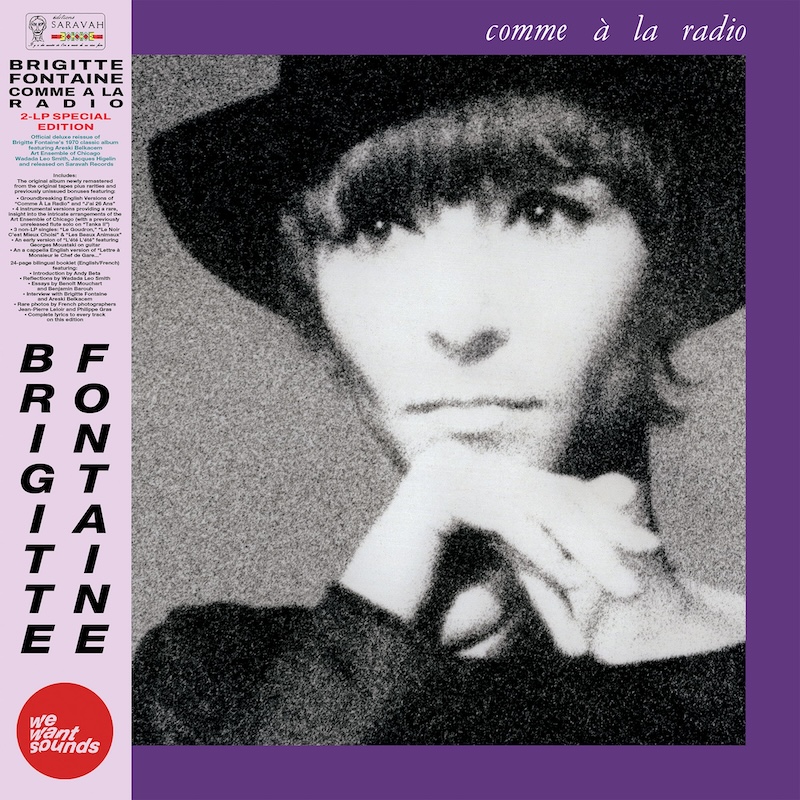
For John Corbett ‘one of the most luminous albums of creative music ever made’, this forty-minute work by the four-piece — Roscoe Mitchell, Joseph Jarman, Lester Bowie, Malachi Favors — is surely the apex of the fourteen studio albums recorded by the Art Ensemble during their two years’ sojourn in France.
‘Still-startling music, which uses space, dynamics, and a wide range of emotions expertly’ (AllMusic).

Sensational fusion of modal jazz and flamenco, with members of Tete Montoliu’s group, and the mighty Paco DeLucia, dazzling on electric guitar. Hotly recommended.

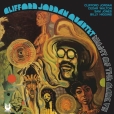
‘A more selfless album is hard to imagine,’ according to Down Beat in 1975. ‘The sound is supreme, and all the players strive to achieve a thorough blending.’ Recorded in New York in 1974, the disc’s personnel is drawn from the circle around Herbie Hancock in the period, but the music has a character all its own.
‘A classic of 1970s spiritual jazz, and as much as any recording on Strata East or Black Jazz, Maupin’s ECM offering is a wonder of arrangement and composition with gorgeous ensemble play, long yet sparse passages, space, and genuine strangeness. Maupin plays all of his reeds and flute in addition to glockenspiel here; Summers’ percussion effects include a water-filled garbage can. The two drummers swirling around in different channels don’t ever play the same thing, but counter and complement one another. And Hancock plays some of the most truly Spartan and lyrically modal piano in his career here… This album sounds as timeless and adventurous in the present as the day it was released’ (AllMusic).
‘Luminessence Series.’

1234