



Honest Jons logo

Honest Jon's has enrolled with the European Union 'Import One-Stop Shop'. For EU customers, this means that you will not be charged any additional VAT or duty, nor any handling fees. No further costs.

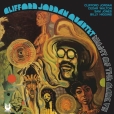
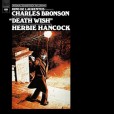
Killer lost blaxploitation soundtrack to Calvin Lockhart’s 1974 film fiasco — deep JA funk, rocking lovers, moody dub, punchy Carib jazz, and sweet soul, bubbling together, warmed by the genius of US inspiration like Jimmy Smith, Curtis Mayfield, and The Meters. There’s a deejay version of John Holt’s Same Song, with a red-eyed nod to U-Roy and Scotty from ‘The Scorpion’. Keyboardist Leslie Butler tears up the deadly instrumental originals Funky Nigger, Negril, and Ghetto Funk (which kicked off Darker Than Blue). Boris is especially heartfelt on the acoustic version of Star (which he wrote, and Big Youth covered). Gardiner on bass and Paul Douglas on drums keep it tight as Titus Andronicus; Tommy McCook leads the horns; Sid Bucknor from Studio One is at the controls, inside Channel One.

‘The deeply moving second LP by Portland’s The Cosmic Tones Research Trio. A follow up to last year’s beloved All Is Sound, this one sees the Tones adding more percussive elements and pushing their sound into more melodic song-based territory while keeping the ambient / spiritual effect. It’s pretty amazing.
‘Blending cello, alto sax, piano, flutes, and an eclectic palette of textures and percussions, the album channels a sacred energy that feels both ancient and forward-reaching. It is music for reflection, for movement, and for inner travel. Tracks unfold with patient grace, yet pulse with deliberate rhythms that ground the listener—echoing the ceremonial spirit of cosmic jazz and deep improvisational traditions.
‘This is not background music—it’s an invitation to engage fully, to breathe with the instruments, and to explore the liminal space where sound becomes prayer. With The Cosmic Tones Research Trio, Norfleet, Silverman, and Verrett continue to map sonic territories where the mystical and the musical converge.’

Knockout.
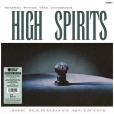
The opener is gorgeous. Ron Carter locks down the groove; Joe Henderson takes flight. Right away you know it’s a classic in store.
JH’s second for Milestone, from 1967-68, with two different rhythm sections; Kenny Barron; plenty of Trane in the air.
Very warmly recommended.

Edwin Morgan read by Dominic West, Mahmoud Darwish read by Khalid Abdalla, and Jorie Graham read by Adjoa Andoh.
A handmade box-set, with a forty-page photographic booklet, in a numbered, limited edition of just 360.

A new recording of Tony Harrison’s v., read by Maxine Peake.
A handmade box-set, with a 32-page photographic booklet, and an art print, in a numbered, limited edition of just 360.

‘Dora’s signature, sublime, open-hearted refinement of modern classical, folk and ambient is at its most colourful and rhythmic, in this suite of keyboard instrumentals; an aural mille-feuille, in dramatic contrast with her previous, melancholic vocal works.
‘Atmospheric drone miniatures underpin flowing, cyclical arpeggios, spiralling into an unpredictable dream space of melodic polyphony. Drawing on an essay by Hartmut Rosa, the music mulls over conceptions of the acceleration of time and the experience of alienation. It reveals the inescapable pulsation of time as at once mesmerizing and unsettling.’

A piano quintet composed for and recorded by Apartment House. 

‘The instruments are muted and heavily prepared. Players are instructed to perform very quietly with an exaggerated flautando, using as much of the bow as possible while producing minimal sound. Sheen often even asks them to mime. The result is an unsettling disconnect between the intensity of physical exertion and the sound produced’ (Ed Cooper, VAN).
‘Press moves with grossly impoverished intent… trembling and stumbling on the cusp of accident… right on the edge of culture, just before language. Most of the time, it is enough simply to breathe and move: the complexity of these actions alone is astonishing… And then, through the buzz of wood, guts, and bluebottles, a piano appears—all shining lacquer, muscle, and grammar’ (Ed Atkins).

“When people play my violin pieces, I always joke with them that when you start playing them, the audience should feel like they’ve gone deaf or something. The sound is so not there that you should think there’s something wrong for a second…
“It’s so disappointing when you see a bunch of instrumentalists walk on stage and you already know how the piece is going to sound. It’s not what music is about for me…
“The word ‘liminal’ is such a cliché but it’s annoyingly pertinent for my music. Trying to find a sweet spot between states: in between presence and not presence, in between tonality and not tonality, whatever that is, between noise and pitch. I really want things to sit in an uncertain middle ground between everything.”

Ricardo Villalobos, Underground Resistance, Chez Damier and full crew sparking off the Arkestra LP Living Sky and a spoken-word album of Sun Ra’s poetry, My Words Are Music.

‘Perhaps the first time he has chosen to showcase the full range of his skills. The set is intoxicatingly rich and, with a couple of exceptions, largely downbeat… Sonically there’s much more variation — if not in the pace of the riddims, then certainly the instrumentation and textures — making it St. Hilaire’s most approachable album for non-dub-techno aficionados… A modern master whose importance and influence can now — though long overdue — be fully recognised’ ((Steve Barker, The Wire).

‘What does it mean to listen? I mean, really to listen to the infinite possibilities of every moment of our sonic lives? No composer in 20th and 21st century music asked the question more sensitively, or more profoundly than Eliane Radigue, who has died at the age of 94.
‘Radigue was a sonic pioneer. Pre 2001, her music was made exclusively for synthesisers, because the technology allowed her to get inside the world of sound, stretching individual pitches into seeming infinities of slowness and concentration, in a way that traditional composition didn’t. Listen to the epic scales of ever-changing changelessness — a paradox that makes sense when you encounter her music — of her Trilogie de la Mort to experience what I mean. As Pascal Wyse wrote in his interview with her, Radigue’s use of synthesisers meant that ‘the music didn’t contain sound: the sound contained the music’ (The Guardian).

1234