












Your basket is empty


From 1974, featuring knockout rare groove like I Don’t Need Nobody Else and What Do You Want Me To Do.
Limber, feeling and introspective, with full horns and strings setting fine songs and frankly soulful singing.
Lou came through in Detroit as a writer and producer with Barbara Lewis, before signing in his own right to Epic, via the Rags label run by legendary producer Jerry Ragovoy. Hereafter he was briefly a member of The Fifth Dimension.
One of the greatest of all modern soul albums.

‘Earl is on another level. The way he deploys his skill, humor, and encyclopedic knowledge of hip-hop has made him one of the most effortlessly deep and cool rappers alive’ (Pitchfork).

Olive ‘Senya’ Grant makes Horace Andy’s Please Don’t Go her own.
Family Man at the controls, on Clive Chin’s ticket.
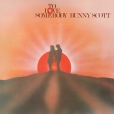
With Lee Perry in 1975.
Kinky Fly is here… plus eight killer bonus tracks.
Mastered from the original tapes.
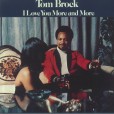
Masterly Barry White production from 1974, the same year Brock handed Gloria Scott his killer song A Case Of Too Much Love Makin’. The title track is the business.
Plundered by Jay Z, Mos Def and Pete Rock.

Hypnotic, infectious space-funk from Chicago’s south side — and some bedroom funk on the flip — produced by Staple Singer’s engineer Don Greer in 1980.

Gonzalo Benitez and Luis Alberto Valencia were kingpins of the musica nacional movement in Ecuador. Check them out on the cover, on a rooftop in Quito’s Old Town, surveying their dominion.
In 1970, when Valencia collapsed onstage during a performance of the yaravi Desesperacion — ‘My heart is already in ashes’ — and died four days later, aged 52, his coffin was carried through those city streets on the shoulders of a throng of his fans.
They began singing as a duo in their mid-teens. During twenty-eight years together they recorded more than six hundred songs, for Discos Ecuador, Nacional, Granja, Ortiz, Rondador, Onix, Fuente, Real, Tropical, Fadisa, RCA Victor — and of course CAIFE.
Their exquisitely romantic harmonising is a sublime blend of collected forbearance and abject self-annihilation, underpinned and elaborated by the heart-piercing, improvisatory guitar-playing of Bolivar Ortiz. Effectively the third member of the group. ‘El Pollo’ sets the tone and intensity for everything that follows: listen to his soloing at the start of our opener, Lamparilla.
Musically a pasillo — a cross between a Viennese waltz and the indigenous yaravi rhythm — Lamparilla draws its verses from a poem by Luz Martinez from Riobamba, written in 1918 when she was 15, under the influence of Baudelaire and Mallarme. Another pasillo here, Sombras (‘Shadows’) is one of the best-loved songs in the musica nacional canon, setting poetry about undercover sex and lost love by the Mexican poet Maria Pren, which was considered pornographic on publication in 1911. ‘When oblivion comes / I will lose you to the shadows / To the hazy gloom / Where one warm afternoon I laid bare my unbridled feelings for you / Never again will I search out your eyes / Or kiss your mouth.’
And Benitez & Valencia looked back still further, to the indigenous roots of Ecuadorian music, as the key to its future. Carnaval de Guaranda is their take on a song dating back to the era of the Mitimaes, a broad group of Bolivian tribes conquered by the Incas and displaced to Ecuador. ‘Impossible love of mine / I love you for being impossible / Who loves what is impossible / Is the truest lover.’
Fiercely beautiful, desolate music from the shadowy mists of time, the lip of oblivion, for anyone who had a heart, for anyone who ever dreamed.