Your basket is empty


Precious, timely, moody reflections on migrating from Côte d’Ivoire to Moss, in Norway, over ruff breakbeat funk supplied by the nimble bass-playing of Maimouna’s old man (from Kambo Super Sound), and the expert conga and kit-drumming of Stliletti-Ana (from Jesse, in Helsinki). Even in their delirium, b-boys and girls will savour traces of the Incredible Bongo Band, in the chorus. Over the eight minutes, and going deeper on the flip, the mix lifts off into a cosmic steppers dub, featuring Gilb-r alongside Sotofett on keyboards, with no let up for the dancefloor in energy and vibes.
“It was in 2001 / I got the letter / A letter that said / I would travel to a cold world / Not knowing what would happen / I was full of loneliness / No country / Everyone was different / Not only skin colour / The way people spoke / The way people behaved / That’s the adventure / Obey / This is the story we’re told / The key to success / So we can do everything for our parents / Who need us / Desperate for a better life / That’s the adventure.”
Three knockout EPs, in hand-stamped, poly-lined sleeves.
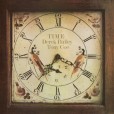
Multi-reedist Tony Coe was born in 1934, four years after guitarist Derek Bailey. He cut his teeth as a career jazzman with Humphrey Lyttleton, before an extended stint with the Kenny Clarke/Francy Boland Big Band. On this rare 1979 duo outing, he sticks to clarinet. And though that instrument has an illustrious jazz pedigree, Coe’s playing here is something else.
It’s worth noting that the clarinettist has also played under the baton of arch-modernist Pierre Boulez, the kind of composer Derek Bailey enjoyed taking to task in his book Improvisation. You might think the Frenchman’s uncompromising serialism and the free playing Bailey defended with such passion all his life would have little in common, yet both men were hugely influenced by Anton Webern. It’s an influence you can hear right through Bailey’s career in his obsessive exploration of tight parcels of registrally-fixed pitches, notably those trademark ringing harmonics. Meanwhile, Coe’s meandering semitones and sinuous arabesques here recall both Boulez’s clarinet writing in Domaines, and the harmonic world of Boulez’s own teacher Olivier Messiaen.
Still, no traditional classical musical notation could ever render the extraordinary rhythmic subtlety and timbral complexity of this music. It’s at one and the same time dazzlingly virtuosic — Coe and Bailey are on stellar form throughout, and have enough sense to, yes, accompany each other where needs be — and supremely lyrical and spacious.
An absolute delight.

When Cyro Baptista moved to New York in 1980 from his home city of São Paulo, he brought with him an arsenal of percussion instruments, including the cuica (friction drum), surdo (the booming bass drum associated with samba), berimbau (single-string bow with resonating gourd), and cabasas galore, in the next few years deploying them most notably in numerous ensembles curated by John Zorn, who helped set up this studio session in 1982.
As you might expect from someone whose infectious grooves have graced the work of Herbie Hancock, Astrud Gilberto and Cassandra Wilson, Baptista expertly fires off cunning polyrhythms, even traces of thumping samba, with restless fluency. Bailey the wily old fox skirts and eschews the bait, which is quickly conjured away and newly fashioned. The guitarist homes in on the delicious squeaks of the cuica and the twanging drones of the berimbau with truly awesome tonal precision. You could sing along if you wanted, after a caipirinha or two. And he gets almost as many different sounds from his instrument as Baptista can from his kit – check out the stratospheric plings and string-length fret-sweeps of Tonto, which sound more like a prepared piano than an acoustic guitar.
Wonders abound, from the berimbau/bent-string exchanges that open Quanto Tempo to the delightful collision of howling cuica and spiky bebop on Polvo, and the spare, preposterous Webernian samba of Improvisation 3.
These days, ‘improvisation’ often appears without its customary qualifier ‘free’. If there were ever a case to be made for its reinstatement, this album is the best supporting evidence. Freedom means you’re free to get into the groove, free not to, free to play with each other, free to play against each other. Sometimes frustrating, even scary, but more often than not in the hands of these two great masters it’s hilarious, exhilarating and utterly irresistible.

‘The AS Colour Heavy Faded Tee, crafted from 100% carded cotton for durability and comfort. With a heavy 240 GSM weight and garment dyed finish, it features a boxy relaxed fit, dropped shoulders, and twin-stitched wide neck ribbing.’
Click through the image for a size guide.

Top-quality AS long-sleeve tees, expertly printed. The colours zing.
‘Heavy weight, 240 GSM, 16-singles, 100% carded cotton. Dropped shoulders, side neck ribbing with twin stitching, cuffed sleeves, side seamed, shoulder to shoulder tape, double needle hems, garment dyed, preshrunk to minimise shrinkage.’
Relaxed fit; very generous sizing. Click through the image for a size guide.
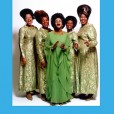
A scorcher from the golden age of gospel, via its cardinal label.
From 1960, during the family’s second decade with Savoy, featuring Gertrude Ward, Christine Jackson, Mildred Means and Vermettya Royster — and Clara, totally riveting and in-your-face with evangelistic fervour and raw soul.
Plus a rambunctious, floor-filling Wade In The Water, by Jessy Dixon and his Singers.
Handsomely sleeved (showing a contemporary but slightly different Wards lineup).
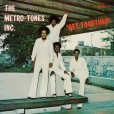
Dedicated ‘to the United Nations and especially young people’, this is slow-burning, steeply screwed, early-seventies Atlanta funk by James Conley and co, spun out of a line from Eliza Hewett’s nineteenth-century hymn, When We All Get To Heaven.
The flip is deadly, too: a super-soulful blend of Sly & The Family Stone with Kool & The Gang, movingly confused and sincere in its pleading (without threats or machismo) to be loved back.
Both sides come with instrumentals. Check part two of Get Together.
Beautifully sleeved.

Red hot gospel soul from 1983. Only ever issued as a test white-label; never before released commercially.
Plus some classic early-eighties soul vibes on the flip, as Helen Hollins — from James Cleveland’s Southern California Community Choir— magnificently busts loose Burt Bacharach, strutting resplendently onto the dancefloor with her dad, husband and two daughters Alicia and Francheasca in glorious cahoots.
Lovely spot-glossed sleeve.
Devilishly limited, all three of our Savoy singles.

Hebi is tough, stomping, mesmerizing romany funk, riding Far East from the Baltic Sea on clopping hooves of uranium, with synths from spaceways further out still. Weakheart deejays will scatter, but Sotofett has road-tested this on dubplate for six months, tearing up parties and dancefloors.
Deeply meditative, desolately beautiful, Haru will stop you in your tracks. Osaruxo’s violin could be a rebab or a shamisen, a reed instrument or a voice. Ravishing music.
Though music journalists made a big deal recently about the release of a 1965 rehearsal tape by Derek Bailey’s Joseph Holbrooke trio with Gavin Bryars and Tony Oxley, those early efforts were mere tentative steps along a cliff edge wearing a line safely attached to Coltrane. There’s still a whiff of jazz to Bailey and Parker’s work with the Spontaneous Music Ensemble up to and including 1968’s Karyobin.
But with the addition of Jamie Muir — the first great free improvising percussionist who didn’t start out as a jazz drummer — and the way-leftfield electronics of Hugh Davies, the MIC leapt right off that cliff.
These six tracks — tight, electric, pointillistic, brilliant, uncompromising and exhilarating — sound like nothing else that came before.
In a word, seminal.
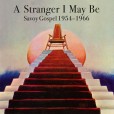
The first of three volumes surveying surely the mightiest Gospel label of them all.
Stomping, rollicking gospel music, intermingling with raw soul, searing blues, hard-rocking doo-wop and jazz, and storming r&b.
Infused and incandescent with the hurting, surging indignation of the Civil Rights movement, here are twenty-four precious scorchers by giants like the Staple Singers and Jimmy Scott, alongside devastating sides by less celebrated names like the Harmonising Five of Burlington, North Carolina, and teen-group the North Philadelphia Juniors, culminating triumphantly with slamming, sanctified versions of Hit The Road Jack and Wade In The Water. Drawn from nigh-impossible-to-find 78s, sevens and LPs, hardly any of these recordings have been reissued since their first release.
Presented in a gatefold sleeve, with full-size booklet; beautifully designed, with stunning, rare photographs and original Savoy artwork. Sound restoration and mastering at Abbey Road; pressed at Pallas.
Co-curated by Greg Belson, compiler of Divine Disco; with deep, extensive notes by Robert Marovich, author of A City Called Heaven: Chicago and the Birth of Gospel Music (University of Illinois), and host of the award-winning radio show Gospel Memories.

An extensive, sumptuous survey of surely the mightiest Gospel label of them all.
Sixty-one gems of stomping, rollicking, desolate, ravishing gospel music, intermingling with soul, blues, doo-wop, jazz, r&b, disco and boogie.
Presented as a sixty-page mini-book, with CDs suspended in card sleeves; perfect-bound, exorbitantly expensive to produce, lovely.

Seventeen gems of fierce funk, rapturous soul and transcendent disco and boogie, super-charged with celebration and affirmativeness, loaded with roaring choirs, rocking horns and popping bass guitars, from the years leading up to Savoy’s acquisition by Malaco.
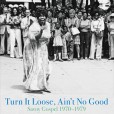
The second of three volumes presents sublime crossings of gospel with the soul, funk and jazz of the Black Power era. Twenty cuts dot dazzlingly between Muscle Shoals soul, screwed breakbeat, Mizells-style fusion, disco and proto-house. Triumphant re-workings of Sly Stone, Donny Hathaway and Herbie Hancock’s Head Hunters will have listeners throwing their pew cushions into the air.

Bedazzled nipper with red Honest Jons ball.
Bedazzled nipper with orange Honest Jons ball.

A dazzling survey of the last, bohemian flowering of the so-called Golden Era of Ecuadorian musica national, before the oil boom and incoming musical styles — especially cumbia — swept away its achingly beautiful, phantasmagorical, utopian juggling of indigenous and mestizo traditions.
Forms like the tonada, albazo, danzante, yaravi, carnaval, and sanjuanito; the yumbo, with roots in pre-Incan ritual, and the pasillo, a take on the Viennese waltz, arriving through the Caribbean via Portugal and Spain.
Exhumations like the astoundingly out-there organist Lucho Munoz, from Panama, toying with the expressive and technical limits of his instrument; and our curtain-raiser Biluka, who travelled to Quito from Rio, naming his new band Los Canibales in honour of the late-twenties Cannibalist movement back home, dedicated to cannibalising other cultures in the fight against post-colonial, Eurocentric hegemony. He played the ficus leaf, hands-free, laying it on his tongue. One leaf was playable for ten hours. He spent long periods living on the street, in rags, when he wasn’t in the CAIFE studio recording his chamber jazz-from-space, with the swing, elegance and detail of Ellington’s small groups, crossed with the brassy energy of ska — try Cashari Shunguito — and an enthralling other-worldliness.
Utterly scintillating guitar-playing, prowling double bass, piercing dulzaina, wailing organ, rollicking gypsy violin, brass, accordion, harps, and flutes. Bangers to get drunk and dance to. Slow songs galore to drown your sorrows in, with wildly sentimental lyrics drawn from the Generacion Decapitada group of poets (who all killed themselves); expert heart-breakers, with the raw passion of the best rembetica, but reined in, like the best fado.
Fabulous music, like nothing else, exquisitely suffused with sadness and soul. Hotly recommended.
Sumptuously presented, in a gatefold sleeve and printed inners, with a full-size, full-colour booklet, with wonderful photos and excellent notes. Limpid sound, too, courtesy of original reels in Quito, and Abbey Road in London; pressed at Pallas.

Impatiently returning to the golden age of Ecuadorian musica national, this second round of retrievals is more of a selectors’ affair: less reverent, more free-flowing, with more twists and turns. There is no let-up in the quality of the music, maintaining the same judicious, heart-piercing balance between emotional desolation and dignified endurance, the same bitter-sweet play between affective excess and formal sublimity.
This time around, the woman steal the show. Laura and Mercedes Suasti were child stars, with an exclusive Radio Quito contract. Unlike nearly all the men here, they lived long and prospered: Mercedes died last year, at the age of 93. Gladys Viera and Olga Gutierrez both came to Ecuador from Argentina. To start, Gladys plugged the scandalous new Monokini swimwear; Olga performed for visiting British royalty in 1962. Olga was glamorous but tough. She would make little of the amputation of one of her legs: ‘I don’t sing with my leg.’ She is accompanied on our opener by quintessentially reeling, sultry musica national: haunted-house organ, twinkling xylophone, Guillermo Rodriguez’ heart-plucking guitar-playing, and lilting, dance-to-keep-from-crying double-bass. ‘Sometimes I think that you will leave me with no memories,’ she sings, ‘that you hold only disappointments in store for me… In the future your love will search me out, full of regret. By then it will be too late, there will be no consolation, only disappointment awaiting you.’
Other highlights include the two contributions of Orquesta Nacional: Ponchito Al Hombro, like an off-the-wall forerunner of the Love Unlimited Orchestra, beamed into the tropics from an unknowable time and space; and the tone poem Atahualpa, a mystical yumbo invoking Quito’s most ancient inhabitants, the Kichwa. Also the tremulous, gypsy-flavoured violin-playing of Raul Emiliani, who arrived in Quito from Italy, suffering PTSD from the Second World War; the inscrutable, sardonic experimentalism of organist Lucho Munoz; and the mooing and whistling of Toro Barroso — cow-thief school of Lee Perry — in which a muddy bull dashes home to his darling chola, fearless, full of desire.
Lavishly presented, with a full-size, full-colour booklet, with transporting art-work and expert notes. Luminous sound, by way of Abbey Road, D&M and Pallas.
Truly spell-binding music.

Gonzalo Benitez and Luis Alberto Valencia were kingpins of the musica nacional movement in Ecuador. Check them out on the cover, on a rooftop in Quito’s Old Town, surveying their dominion.
In 1970, when Valencia collapsed onstage during a performance of the yaravi Desesperacion — ‘My heart is already in ashes’ — and died four days later, aged 52, his coffin was carried through those city streets on the shoulders of a throng of his fans.
They began singing as a duo in their mid-teens. During twenty-eight years together they recorded more than six hundred songs, for Discos Ecuador, Nacional, Granja, Ortiz, Rondador, Onix, Fuente, Real, Tropical, Fadisa, RCA Victor — and of course CAIFE.
Their exquisitely romantic harmonising is a sublime blend of collected forbearance and abject self-annihilation, underpinned and elaborated by the heart-piercing, improvisatory guitar-playing of Bolivar Ortiz. Effectively the third member of the group. ‘El Pollo’ sets the tone and intensity for everything that follows: listen to his soloing at the start of our opener, Lamparilla.
Musically a pasillo — a cross between a Viennese waltz and the indigenous yaravi rhythm — Lamparilla draws its verses from a poem by Luz Martinez from Riobamba, written in 1918 when she was 15, under the influence of Baudelaire and Mallarme. Another pasillo here, Sombras (‘Shadows’) is one of the best-loved songs in the musica nacional canon, setting poetry about undercover sex and lost love by the Mexican poet Maria Pren, which was considered pornographic on publication in 1911. ‘When oblivion comes / I will lose you to the shadows / To the hazy gloom / Where one warm afternoon I laid bare my unbridled feelings for you / Never again will I search out your eyes / Or kiss your mouth.’
And Benitez & Valencia looked back still further, to the indigenous roots of Ecuadorian music, as the key to its future. Carnaval de Guaranda is their take on a song dating back to the era of the Mitimaes, a broad group of Bolivian tribes conquered by the Incas and displaced to Ecuador. ‘Impossible love of mine / I love you for being impossible / Who loves what is impossible / Is the truest lover.’
Fiercely beautiful, desolate music from the shadowy mists of time, the lip of oblivion, for anyone who had a heart, for anyone who ever dreamed.

Classic soul sides rewound as state-of-the-art dance music: brilliant, epic house; hard-funk breakbeat.

The out-of-this-world recordings of Dilson de Souza, leading a kind of tropical chamber jazz on leaves from a ficus tree.
Dilson was from Barra do Pirai, in the Brazilian countryside; moving to Rio as a young man, where he worked in construction. He recorded his first record in 1954, for RCA Victor. He travelled to Quito around 1957, soon hooking up with Benitez & Valencia, who introduced him to the CAIFE label.
Dilson played the leaf open, resting on his tongue, hands free, with his mouth as the resonator. Though a leaf can also be played rolled or folded in half, this method allowed for more precision, a tethered brilliance. A picked ficus leaf stays fresh, crisp and clean-toned for around ten hours. He could play eight compositions, four at each end, before it was spent.
Biluka plays trills and vibratos effortlessly, with utterly pure pitch, acrobatically sliding into notes and changing tone on the fly. In Manuco, he leads Los Caníbales into a mysterious landscape on a rope pulled from an Andean spaghetti western, and corrals and teases them into a dialogue. A leaf, a harp, a xylophone, and a rondador — joined in Bailando Me Despido (Dancing As I Say Goodbye) by a saucy organ, doing sloshed call-and-response. In Anacu de Mi Guambra, Biluka shows his full range of antics, hiccuping melodically over a set of magic tricks. His expressiveness was boundless.
The eucalyptus leaf is popular among Aboriginal Australians. In China, they’ve played leaves for 10,000 years. In Cambodia, people play the slek, a leaf plucked from either the sakrom or the khnoung tree. But ain’t nobody like Biluka, ever.
Astounding music.

Magnificent Wolof drum music, performed by an extended griot family in the mystical setting of Lac Rose, outside Dakar.
Doudou Ndiaye Rose — who died in 2015 — is a key drummer in the musical history of the world. He developed a system of five hundred original drumming patterns, ancient and new. Amongst the modern rhythms here is Bench Mi — ‘under the Baobab tree,’ a spot where where problems get solved. Also Hibar Yi — ‘passing on information’ — the theme-tune of Senegalese TV national news for decades — and Les Rosettes, the signature rhythm of Senegal’s first ever all-female percussion group, convened by Doudou, and named after his grandmother.
These original compositions sit alongside important traditional rhythms, familiar to every Sabar player, such as Farwu Jar ( a courtship game sometimes resulting in a wedding), Ceebu Jin (also the name of the national dish of fish and rice), and Gumbé, often played after a successful harvest.
Recorded in joyful single takes, over seven consecutive days in February 2020, with no overdubs, mastered by Rashad Becker, the music is deep and thrilling, polyrhythmic to the bone, with a complex, pointillistic intensity at times evoking Jeff Mills in full flight.
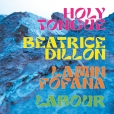
Four dazzling, extended engagements with mbalax master-drumming.
The contribution from Holy Tongue is chase-the-devil steppers — thumping, clangorous, reverberating — super-charged with energy and atmosphere. From the off, drummer Valentina Magaletti detonates a hard rain of small bombs, rounds of fire, ticking fuses. Musical co-ordinates are somewhere between classic On-U Sound crew like African Head Charge, The Mothmen, and Creation Rebel, and the experimental funk of the Pop Group and 23 Skidoo, at their funkiest. Thrillingly, the two dubs are increasingly deranged.
Adjusting the same wavelengths as her superb Workaround LP, Beatrice Dillon plays spaced-out, abstract synth-work against the bodily physicality of the ancient, shifting mbalax rhythms. The music is poised, mindful, tentative; but also limber, fleet, and magical.
Phantasmagorical and efflorescent, Lamin Fofana’s one-two is simply stunning. Both excursions are wide-open, beautiful, epic, and propulsive — the first mix is banging and headlong, the second more syncopated and serpentine — teeming with freshly sublime, funkdafied updates on Jon Hassell’s Fourth World possible musics.
The two parts of LABOUR’s Etu Keur Gui engage the same sequence of drum patterns (called bakks) from different perspectives. The duo performed portions of this piece at the opening ceremony of the Dakar Biennial in 2022, at the Grand National Theater, with thirty sabar players from the family of Doudou Ndiaye Rose. This Wolof phrase for the inside-yard of a home — a meeting-place, an architectural breather — doubles here as a metaphor for inner space on a metaphysical level; and Pan Sonic, Muslimgauze, Zoviet France, early Shackleton… all ghost across the threshold.
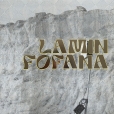
Epic, grooving, extravagantly creative, perfectly attuned blends of complex mbalax drumming, field recordings, thumping kick-drum, and cosmic, bubbling, jamming synths and electronics.
The opening is suitably liminal, haunted by a diachronic sense of times past, present, and to come: ancestral ghosts, scratched playback, scraps of old recordings, voices strangulated or just out of range; puttering drums; futuristic, kosmische keys. Part II picks up the pace; III gives the drummers some, and heightens the atmosphere of enchantment. Jon Hassell’s Fourth World music courses through a kind of Dream Theory In Dakar.
Toco SOS, the second side, is a thumping, throbbing, mesmeric future-classic; perfect for fahr’n fahr’n fahr’n on the Autobahn… in a spacecraft. Expert hand percussion, call-and-response singing, bin-trembling foot-drum, spaceways keys. Sleekly funky as prime Popol Vuh.
Both sides range expansively by way of Berlin, where Lamin resided for a few years: you can hear something of T++’s brilliant, landmark HJ record on the A, and elements of Mark Ernestus’ crucial Ndagga project, on the B.
Half an hour of stunning music; in a beautiful sleeve, with mirror lettering, and an intricate spot-gloss rendition of salt crystals, laid over a photograph of the salt mines at Lac Rose, outside Dakar.

Scintillating, alchemical kosmische; visionary, deep, and luminous; and beautifully sleeved, with gold foiling and silver ink.
Works In Metal fans out a set of acid treatments and finely sharpened blades — cutting, shaping, suspending form. Sounds are melted down and forged as if liquid metal.
The works are paired. Arc’s Blue Flame previews the smoking volatility at the album’s core. Echoes and resonance soften the dissonant, bright textures; all overlaid with Fofana’s signature, percussive kick drums. Welding drills into the discordant thrills and spills of metamorphosis. Sparks fly and the bittersweet arc of change unfolds.
Fofana discreetly folds in text, poetry, and field recordings, spooring their decomposition and recomposition with a prismatic point of view. The coupling Obscure Light (Decomposition) and Obscure Light (Recomposition) marks something new in his music. The pulse is brightly honed, cascading beyond the dancefloor, exultingly eluding musical genre.
Works in Metal is perhaps Fofana’s most narrative album. At its heart is the killer, extended Lure of the Fragment / So Another Sound Suggests Itself. Melodies circle in call-and-response patterns, balancing proximity and distance, signalling the inward gravity required to work with metal. A nested story-line, with birds flying in; an album within an album. Dredging up memories and associations, Fofana filters in selections from his sound-archives. Layered with synths, field recordings become instruments in their own right. The last three minutes proffer precious clarity — a memory, in miniature, flashed onto molten metal.
In 1943 Suzanne Césaire declared that ‘our surrealism will then supply them the leaven from their very depths. It will be time finally to transcend the sordid contemporary antinomies: Whites-Blacks, Europeans-Africans, civilized-savage: the powerful magic of the mahoulis will be recovered, drawn from the very wellsprings of life. Colonial idiocies will be purified by the welding arc’s blue flame. The mettle of our metal, our cutting edge of steel, our unique communions — all will be recovered’. Works in Metal is a tribute to her prophecy; its enactment, sculpted in sound.