

Killer EP. Next-level Shackleton.
Taking off from Beaugars Seck’s foundational sabar drum rhythms — recorded by Sam in Dakar in February 2020 — Shackleton has constructed a trio of intricately layered, luminous, enchanted, epic excursions. The second is more dazzled and meandering, with jellied bass, insectile detail, and discombobulated jabbering; the third is more liquid, fleet of foot, and psychedelic, with a grooving b-line and funky keyboard stabs, scrambled eastern strings and hypnotic vocalese.
The harmonium in The Overwhelming Yes sounds like Nico blowing in chillily from up the desert shore.
The overall mood is wondrous, twinkling with light, onwards-and-upwards; an uncanny, dubwise mix of the ancient and the futuristic.
Mark Ernestus’ Version is stripped, trepidatious, mystical, and stranger still, with just a snatch of the original melody, extra distortion and delay, and crystal-clear drum sound.
So… Twenty minutes of startlingly original music, with Shackleton the maestro at the top of his game, and a characteristically evilous dub by Mark Ernestus. Mastered by Rashad Becker; handsomely sleeved.
Sick to the nth. Love 4 Ever.
Signature Shackleton — paranoia flaring into dancefloor fire, gripping and rolling. With a chilled and crackling King Midas Sound, Hitomi forlorn. And finally The Bug himself, digital only, getting in your face.
A malevolent scorcher, with Middle Eastern percussion harking back to Hamas Rule; a ravening, scrabbling T++ remix. And a new departure — rich and spry, computer-unbound — with a truly epic, stunning Mordant.
No-one else makes music like this: devilishly complex but warm and intuitive, stirring together a dizzying assembly of outernational and outerspace influences, whilst retaining the subby funk-and-hot-breath pressure of Shackleton’s soundboy, club roots.
The result is an evolutionary, truly alchemical music — great shifting tides of dub, minimalist composition and choral song (Five Demiurgic Options); ritual spells to ward off the darkness (Before The Dam Broke, The Prophet Sequence); radiophonia and zoned-out guitar improv (Seven Virgins); even the febrile, freeform psychedelia of eighties noise rock (Sferic Ghost Transmits / Fear The Crown).
Over the five years since Music For The Quiet Hour, Vengeance’s vocal and lyrical range has rolled out across this new terrain. Throughout these six transmissions he’s hoarse preacher, sage scholar and ravaged bluesman; blind man marching off to war, and exhausted time-traveller warning of impending socio-ecological catastrophe.
Six dialogic accounts of our conflicted times, then, expanding beyond the treacly unease of the duo’s early collaborative work into something subtler and more emotionally shattering — its shades of brightness more dazzling, and its darkness even murkier.
“We almost didn’t hear it when the foundations went.”
Shackleton’s most expansive, ecstatic and hallucinatory music to date. Four extended excursions channeling Congotronics way to the east, with an aura of restrained mania reminiscent of the feral pomp and gallows humour of Coil’s moon-musick phase.
The pairing with Tomasini is a match made in heaven. Swooping from deep growl to piercing falsetto, his four-octave voice both heightens the taste for the theatrical that’s always been integral to Shackleton’s music, and makes explicit the latter’s kinship to the occult energies of the UK’s post-industrial underground.
As the title suggests, these are shadowy songs rich with allusions to bodily ritual and psychic exploration, with Tomasini’s lyrics framed by luminous whirls of hand-struck drums and synthetic gamelan, bells and tumbling organ melodies, all earthed by dubwise bass. You Are The One escalates from delicate choral chant to full-bore psychedelic organ freakout; Rinse Out All Contaminants is a slow incantation, to purge all negative thoughts; the melodies of Father You Have Left Me are smudged like early Steve Reich, then burned out by snarling subs; and the magnificent Twelve Shared Addictions balances elliptical melodies like spinning plates, gradually unfurling into a breakneck storm of voice and hammered keys.
An astounding compilation of the breakneck Shangaan dance output of the Nozinja studio in Soweto, recorded between 2006 and 2009.
Soulful American folk: a gorgeous, heart-stopping mixture of the longing you get in saudade — singers like Cesaria Evora and Joao Gilberto — and political protest. Will Oldham’s in there; so is Dionne Warwick.
‘An album of cathartic intimacy, built around electronic textures and sparse percussion, with White’s gently yielding, half-spoken vocals pitched pleasingly between Laurie Anderson and Joni Mitchell’ (Mojo).
Back with a pared-down, western sound. Bitter-sweet and nostalgic, but cut with longing, fantasy and hopefulness, in a daze (sometimes child-like) over lost love, lost innocence, lost years. ‘****’ (Mojo).

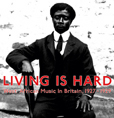
Thirty-five stingers from an HMV run of more than four hundred 78s, recordings made in Uganda and Kenya from the mid-1930s till the mid-1950s.
The second half of the CD.
‘A wicked sense of pacing, of beauty and absurdity, and an instinctive ear for musical action’ (The New York Times). ‘There’s no theme or continuity… unless you count sheer awesomeness’ (Fader).

Torsten Profrock’s occult homage to UK garage.
Two-step waylaid in the scuffed, churning, sub-heavy terrain running from his Chain Reaction days to Monolake, mysteriously entangled with the distressed tracks of old Ugandan 78s.
This started out a couple of years ago as a grounation drumming session above the old headquarters of the Mystic Revelation Of Rastafari, in Wareika Hill, Kingston, JA. Four funde, a repeta and a bass drum. Back in London, contributing flute and guitar, Kenrick Diggory unbottled the deep rootical psychedelia and sheer awe of Hunting — the Keith-Hudson-versus-Count-Ossie wonder of the world — and Tapes added electronics, a shot of Drum Song… and a giddily intense binghi dub.
‘Terry Hall has returned with his best work in decades… a daring, thoughtful set’ (The Guardian); ‘***** the real message lies in the boldness of its musical vision… world music album of the year’ (The Times).
‘Recorded as Blair and Bush were conspiring to strike fear and loathing into the region responsible for these grooves, it’s every bit as topical as Ghost Town, as eerie as War Crimes’ (Time Out).
Nominally this is a collaboration between Terry Hall and Mushtaq, once of British-Asian pioneers Fun-Da-Mental — but ‘everybody we worked with had a story to tell,’ recalls Terry Hall, ‘and their stories became part of the record. We were blessed with the range of people we found.’ A Tunisian singer, a Syrian flautist, an Egyptian who had settled in Iraq, a twelve-year old Lebanese girl, a blind Algerian rapper from Paris, a choir of Polish gypsy refugees brought in from a social club in Leytonstone, the clarinettist who recorded the original Pink Panther theme; singers in Hebrew, English, Arabic, Romany. ‘Everybody had a sense of something in common in their minority and oppression and struggle. In the end, it felt more like we were editing a film than making a record.’
A year in development, the album is also a powerful reflection of the time in which it was made and the storm that was gathering: Bush and Blair were intent on Armageddon in Iraq; in the refugee camps on the West Bank, atrocities were being committed on a daily basis; closer to home, sections of the British media used the fear of terrorism to whip up a hate-fuelled campaign against asylum seekers and other minorities pushed to the margins of society.
‘What was going on as we were making the record seemed to make it more and more political. We had something to say, but we wanted to avoid being worthy or preaching and keep the words to a minimum.’
The second son of King Jammy, Trevor James aka Baby G is at the cutting edge of the new wave of dancehall producers. Jammy’s stalwarts Ward 21 and newcomers Rasta Youth on the mic.
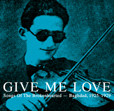
Stunningly beautiful, poignant music from Bilād al-Shām — ‘the countries of Damascus’, known nowadays as Syria, Lebanon and Palestine — including performances from the very first recording sessions in the region.
The legendary, moody Beirut singer Būlus Ṣulbān is here — some historians have him singing before Egypt’s Pasha Ibrāhīm Bāshā during his military campaign in Syria, in 1841 — and Ḥasība Moshēh, Jewish ‘nightingale of the Damascene gardens’. Thurayyā Qaddūra from Jerusalem; Yūsuf Tāj, a folk singer from Mount-Lebanon; Farjallāh Baiḍā, cousin to the founders of Baidaphon Records… Musical directors like the lutist Qāsim Abū Jamīl al-Durzī and the violinist Anṭūn al-Shawwā (followed by his son Sāmī); such virtuosi as the qanun-players Nakhleh Ilyās al-Maṭarjī and Ya‘qūb Ghazāla, and lutist Salīm ‘Awaḍ.
Even at the time, notwithstanding such brilliance, public music-making was frowned upon as morally demeaning, especially for women. Musical venues were generally dodgy. Ṣulbān once cut short a wedding performance for the Beiruti posh, after just one song, he was so disgusted with his audience.
‘If I had to tell you about the catcalls,’ one commentator wrote about the musical theatre of the time, ‘the stomping of feet, the sound of sticks hitting the ground, the noise of the water-pipes, the teeth cracking watermelon seeds and pistachio nuts, the screams of the waiters, and the clinking of arak glasses on the tables, I would need to go on and on and on…’
Two EPs of storming, squinty Shangaan Electro to herald the European tour of Tiyiselani, the Tshetshas and producer Dog, in the summer of 2011.
‘CD Of The Week… the best soul album — in the real sense of the word — you’ll hear this year… classic, blistering afro-beat’, Daily Telegraph; ‘as tight as a pressure cooker… fierce and fun’, The Wire.
Carl Craig back on Honest Jon’s, in devastating form: nervy and urgent, epic and apocalyptic, kicking and funky. Lagos re-tooled in Detroit.
This mix by Mark Ernestus — one half of the Basic Channel, Maurizio and Rhythm And Sound teams — kicks off our series of reworkings of tracks from Tony Allen’s Lagos No Shaking album.
Like a dream, but authoritatively, this remix from Jamaica magnificently crosses the Afrobeat of Fela Kuti with the grounation reggae tradition of Count Ossie.
Tipped by the New York Times: ‘I have heard no more beautiful record this year… a righteous calm takes over the album like a spirit force.’
‘brilliant… concise, deeply romantic, totally original ****’ (Mojo); ‘freewheeling and delightfully quirky ****’ (The Guardian); ‘CD Of The Week… terrific’ (The Observer); ‘like nobody ****’ (Sunday Times).