
Your basket is empty

Pure worries from Leipzig — three club burners steeped in Detroit traditions, distilling the explorations in collective, nervy hypnosis of KM live sets. As the music slowly unfurls, there he is at every turn, subtly tweaking its parameters, redistributing its weight, pricking its grooves into a state of utterly infectious perpetual movement.
The two visions of Chilazon track opposite pathways: the first is twelve minutes of gorgeous, dubwise, aquatic techno, spattered with kicks and razor-sharp hi-hats, and smeared with ghostly echoes; then a terse mesh of broken drums, escalating to a quiet yet feverishly intense peak. Lanthanum is calligraphic swordplay, its toms and bass stabs warily circling one another in a graceful steppers’ dance, spaced-out and fathoms-deep.
Fierce, subtle music, radically strange and unafraid of the deep, but with a killer understanding of rhythm. Lush drum-machine nocturnes, gnarly electronica and glorious flowerings of zoned-out dubspace: an evolutionary music, continuously engaged with experimentation both in the studio and the club.
Whether prepared solo, or jointly with his spar Mix Mup, a Kassem Mosse recording is less of a stand-alone creation than the next thrilling installment of an unstoppable groove. True to form, Disclosure dazzlingly extends some of the most mystical, essential dancefloor-rooted music of the last decade, from dusty, dream-state techno on Workshop and Mikrodisko, to frazzled beatdowns on Trilogy Tapes and Nonplus.
Pedigree techno and house are the lifeblood of Disclosure, yet with something newly microscopic about them. Its mesmerising juggle of pointillistic percussion, melting-wax chords and fleshy bump’n’grind suggests biological processes at work, as if Mosse has zoomed right into the cellular metabolism ticking away at the core of the music.
These textures are woven into some of KM’s richest and most emotionally complex material so far, constantly enlivened by forays into jazz, dub and beyond. Check the farty-bottom, broken-down, steel-pan minimalism of Collapsing Dual Core, just the job for coursing around Detroit in a car at night; and Phoenicia Wireless’ dastardly, intricate combination of glowering John Carpenter synths, heavy static and junked consoles on remote, as if the beats are fighting a wave of dirt, soot and fossilisation. The frantic, interstella tarantella of Galaxy Series 7; the wonky bump-and-hustle and heavy-lidded drama of Purple Graphene, to close.
Expertly pieced-together and paced, Disclosure brilliantly registers all the self-contained coherence and artistic authority of an album proper, yet shadowed throughout by the open-ended and questing spirit so vital to Mosse’s music. Its intimate enactments of non-closure, and its sense that anything could happen at any moment; its thematic play between excess and incompleteness, babble and tongue-tied stutter, and-you-don’t-stop grooving and entropy, wobble and the pause-button.
Trash and ready in a spiffy Bankhead sleeve, too.
Double bim. Bim, bim.
‘**** CD Of The Week… everything her followers have long cherished about Keineg… An uncompromising and long overdue return’ (Sunday Times).
**** Daily Mirror; **** Financial Times.
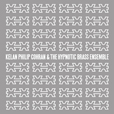
Brand new recordings, this is majestic, surging, scintillating music — with swing, jump and shout, Sun Ra, Mingus and Gil Evans, Arab-Andalusian music, hip hop and New Orleans funk all coursing through.
‘*****’, The Independent; ‘captivating… Q Recommends’; ‘there is no end of exhilarating music on this beguiling album’, The Sunday Times; ‘full of heartstopping musical twists and turns’, The Beat.
‘*****’, The Independent; ‘a vibrancy and energy that make it impossible to sit still’, Metro; ‘shines from Shina to Shina’, The Beat; ‘CD Of The Week… astonishing’, Daily Telegraph; ‘incendiary’, The Observer.
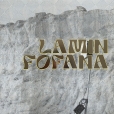
Epic, grooving, extravagantly creative, perfectly attuned blends of complex mbalax drumming, field recordings, thumping kick-drum, and cosmic, bubbling, jamming synths and electronics.
The opening is suitably liminal, haunted by a diachronic sense of times past, present, and to come: ancestral ghosts, scratched playback, scraps of old recordings, voices strangulated or just out of range; puttering drums; futuristic, kosmische keys. Part II picks up the pace; III gives the drummers some, and heightens the atmosphere of enchantment. Jon Hassell’s Fourth World music courses through a kind of Dream Theory In Dakar.
Toco SOS, the second side, is a thumping, throbbing, mesmeric future-classic; perfect for fahr’n fahr’n fahr’n on the Autobahn… in a spacecraft. Expert hand percussion, call-and-response singing, bin-trembling foot-drum, spaceways keys. Sleekly funky as prime Popol Vuh.
Both sides range expansively by way of Berlin, where Lamin resided for a few years: you can hear something of T++’s brilliant, landmark HJ record on the A, and elements of Mark Ernestus’ crucial Ndagga project, on the B.
Half an hour of stunning music; in a beautiful sleeve, with mirror lettering, and an intricate spot-gloss rendition of salt crystals, laid over a photograph of the salt mines at Lac Rose, outside Dakar.
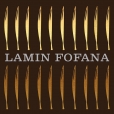
Scintillating, alchemical kosmische; visionary, deep, and luminous; and beautifully sleeved, with gold foiling and silver ink.
Works In Metal fans out a set of acid treatments and finely sharpened blades — cutting, shaping, suspending form. Sounds are melted down and forged as if liquid metal.
The works are paired. Arc’s Blue Flame previews the smoking volatility at the album’s core. Echoes and resonance soften the dissonant, bright textures; all overlaid with Fofana’s signature, percussive kick drums. Welding drills into the discordant thrills and spills of metamorphosis. Sparks fly and the bittersweet arc of change unfolds.
Fofana discreetly folds in text, poetry, and field recordings, spooring their decomposition and recomposition with a prismatic point of view. The coupling Obscure Light (Decomposition) and Obscure Light (Recomposition) marks something new in his music. The pulse is brightly honed, cascading beyond the dancefloor, exultingly eluding musical genre.
Works in Metal is perhaps Fofana’s most narrative album. At its heart is the killer, extended Lure of the Fragment / So Another Sound Suggests Itself. Melodies circle in call-and-response patterns, balancing proximity and distance, signalling the inward gravity required to work with metal. A nested story-line, with birds flying in; an album within an album. Dredging up memories and associations, Fofana filters in selections from his sound-archives. Layered with synths, field recordings become instruments in their own right. The last three minutes proffer precious clarity — a memory, in miniature, flashed onto molten metal.
In 1943 Suzanne Césaire declared that ‘our surrealism will then supply them the leaven from their very depths. It will be time finally to transcend the sordid contemporary antinomies: Whites-Blacks, Europeans-Africans, civilized-savage: the powerful magic of the mahoulis will be recovered, drawn from the very wellsprings of life. Colonial idiocies will be purified by the welding arc’s blue flame. The mettle of our metal, our cutting edge of steel, our unique communions — all will be recovered’. Works in Metal is a tribute to her prophecy; its enactment, sculpted in sound.
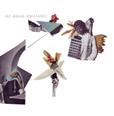
‘The bad influences’, from Bogota, with their third album for us: twenty-eight gorgeous variations of saudade, in a warmly acoustic, post-punk take on Tropicalismo — impromptu, snapshot and sublime.

‘one of the most charming idiosyncrasies I have heard all year… where truth is seized accidentally and musical shambles are sweet, virtuous and silly… like watching early Bunuel without subtitles’ (Plan B).
Spherical collections of stars form around black holes in situ; that is, locally to their cosmic neighbourhoods. It is said that future space colonization will rely on sourcing supplies in situ. Construction in situ uses raw materials at the site: colossal sculptures such as Naqsh-e Rustam, the Leshan Giant Buddha and Mount Rushmore were built in this fashion.
Wild, organic machine grooves, with a mind’s eye on naked treetops and an early sunset. Melody breathes out from dubwise fx, percussion by turns sinewy and floating, sub blasts and stripped synth arrangements. Keys on air.
Spacious, witty, melancholic, deadly.
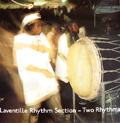
Thirteen and twenty-two minute slices of carnival thunder and lightning from the hill above Port Of Spain in Trinidad. Lengths of steel, assorted bits of metal, African drums. An Honest Jon’s recording.

Originally released in 1980: the final work to emerge from the Black Ark studio, before its permanent destruction, crossing the soundworld of Roast Fish Collie Weed And Cornbread into new hybrids.

Ravishingly beautiful, achingly precious songs and instrumentals, sumptuously presented: the Royal Court Orchestra in 1906 through to a hauntingly soulful Hafez setting by Moluk Zarrabi of Kashan, from 1933.
The first of three 10” comprising Charlotte Courbe’s third album; her compelling return to Honest Jon’s after two decades, laced with surprise and subversiveness, and a refreshing, unique candour.
After a cancer diagnosis last year, Charlotte felt the urge to produce and release new music. “It became like a vital thing.”
MRI Song and Planet Ping Pong were recorded during chemotherapy. Mind Contorted is a duet with Terry Hall, also featuring Terry’s son Theodore and Noel Gallagher on guitars, in a cover of Daniel Johnston. The song Fourteen Years is the oldest inclusion, announcing a fresh, freer direction.
The sleeve exclusively presents new work by John Stezaker, in the first of a triptych.
“I put out the first Le Volume Courbe single in 2001… she reminded me of a female Syd Barrett… real psychedelic soul” (Alan McGee).
“Inspiring originality, fiercely independent, beautiful music, always years ahead of its time. I remember hearing Charlotte’s music for the first time and being immediately taken by the freshness, great melodies and utterly unique approach” (Kevin Shields).
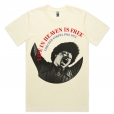
With the HJ logo in red & blue on the back.

With the Honest Jons logo in red & blue on the back. Click through for snaps and alternative colours.
These are AS Classic tees: ‘relaxed fit; heavyweight, 220 GSM, 100% combed cotton. Built to last with neck ribbing, side seams, shoulder-to-shoulder tape, and double needle hems, plus preshrunk fabric for minimal shrinkage.’
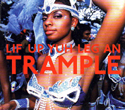
‘a terrific soca compilation… a vital contemporary follow-up to London Is the Place for Me’, Village Voice; ‘*****, Compilation Of The Month’, Touch; ‘chaotic and compelling… an ace selection’, Time Out.
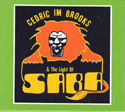
‘... compelling and eccentric mix of lopsided funk, freaky jazz and African disco, which gets through more rhythms than some people hear in a lifetime’, Time Out ; ‘***** pure bliss’, Kevin ‘The Bug’ Martin, Muzik.

‘So it is that Honest Jon’s has (again) unearthed an episode of black music history in Britain: these are tough cuts — in no way easy listening, but absolutely essential’ (**** The Observer).

‘an exquisitely poignant, evocative record’, Daily Telegraph; ‘wonderful… album of the year’, Sunday Times; ‘simply a classic album. Music by the people, for the people,’ The Voice.

London Is The Place For Me
2: Calypso And Kwela, Highlife And Jazz From Young Black London
Honest Jon's Records
‘superlative’, Mojo; ‘sensational’, The Observer; ‘hugely evocative and poignant’, Daily Telegraph; ‘*****’ The Times, Metro; ‘sheer joy from start to finish’, Sunday Telegraph.